Travelling photo and video backup users
If you offload files away from your main computer, capacity for the shoot and a connection that works with your transfer device matter more than a drive’s connector shape alone.


Choose a portable SSD for regular, cable-connected photo and video transfers, but check the devices, cable and file system in your workflow before choosing a drive. Direct recording needs explicit support from the phone or camera and has stricter requirements; a portable hard drive can suit infrequently accessed archives, while cloud storage can provide a separate copy.
If you offload files away from your main computer, capacity for the shoot and a connection that works with your transfer device matter more than a drive’s connector shape alone.
If you want footage to go straight to external storage, check the exact capture device and recording mode. Apple and Blackmagic Design document such workflows for particular devices; support cannot be assumed for every USB-C phone or camera.
If a drive travels with your equipment, compare the protection claims for the exact model and their limits. A rugged enclosure does not replace a separate copy of important files.
Start with where files are captured and copied: regular offloads favour a portable SSD, while direct recording requires a specifically supported device and mode. For a large, seldom-used archive, consider a portable hard drive; use cloud storage as an additional destination when connectivity and its terms suit you.
| Concern | What to check | Who this matters to |
|---|---|---|
| Working capacity | Estimate the space your usual photo and video formats need over a shoot or trip, then check the exact drive capacity and leave room for incoming files. | If I cannot offload again until I reach a computer, I need space for several shoots without deleting originals early. Around 26% of consumers put working capacity first. |
| Device and format compatibility | Check USB-storage support, the ports and data cable on each device, and a file system they can all use. Apple says iPad external storage must have one data partition. | Moving files between my computer and mobile devices only helps if each can read the drive. For around 26% of consumers, cross-device access is the primary need. |
| Recording and editing workflow | For direct recording, check the exact device and mode against its drive-speed, power, format and cable requirements. For editing, check the computer’s port and the drive’s stated speeds. | I want to record to the drive or work from large files without an avoidable transfer step, so the complete connection matters. Around 21% of consumers prioritise this workflow. |
| Protection in transit | Compare the exact model’s stated water, dust and drop claims, including their test limits; keep another copy of files that matter. | When I carry a drive between locations, damage during transport is my main concern. Around 16% of consumers place physical protection first. |
| Privacy if a drive is lost | Check whether encryption works with the devices you use and how you will keep its password or recovery information separately. | If I carry personal or client material, I want to limit access should the drive go missing. Around 11% of consumers make that protection their primary concern. |
USB-C identifies the connector, not what a phone, camera, port or cable can do. Apple specifies recording-mode and cable requirements for Final Cut Camera, while Samsung says its T7 Shield’s maximum speeds depend on the host and connection.
Check the capture-device model and recording mode, then match the drive, file system and cable to its stated requirements.
A different cable or adapter may be needed to make the intended connection work.
A format that suits one part of the workflow may not suit another. Apple lists supported iPad formats and requires a single data partition; its Final Cut Camera direct-recording instructions specify exFAT.
List every device and app that must use the drive before formatting it. Copy existing files elsewhere first, because reformatting erases them.
Samsung describes the T7 Shield’s IP65 and drop protection as controlled-test claims and says liquid and dust damage are not covered under its warranty.
Use a rating to understand the stated protection of that model, not as permission to expose the drive to every condition. Protect it in transit and retain another copy.
A portable drive can still be lost, damaged or overwritten. External storage and cloud services are separate destinations in Apple’s iPad file-transfer guidance.
Confirm that transferred files open before removing originals, and keep important material in another destination.
Maintaining that second copy takes additional copying time and may require another storage destination.
The T7 Shield line is relevant when you want a portable SSD with stated protection for travel and location work.
The cited Extreme Portable SSD 2 TB variant is relevant to buyers comparing capacity, stated physical protection and a password-protection feature.
The XS1000 line is relevant when a compact drive and connections to computers with different USB ports are priorities.
These portable SSDs are choices for carrying and transferring photo or video files. If you intend to record directly to one, confirm support for the exact phone or camera, recording mode, format, power requirements and cable before buying.
 No image available
Consider this 4 TB drive if your main need is carrying a large photo or video working library between computers.
The title specifies USB Type-C 3.2 Gen 2. Check the ports, cable and file system used by your devices; keep a separate copy of important files.
 No image available
Consider the ES5 for location transfers if its stated physical-protection features match how you carry a drive.
The product title specifies USB 3.2 Gen 2×2, up to 2,000 MB/s read and write, and IP65. Its Apple ProRes support is a listing claim: check the precise phone, mode, cable, format and power requirements before relying on direct recording.
 No image available
This 2 TB model is worth considering when you want a portable drive for moving photo and video files and the magnetic set suits your device setup.
The title specifies USB 3.2 Gen 2 and speeds of up to 1,050 MB/s read and 1,000 MB/s write. Check your device, app and file-system requirements rather than assuming the magnetic attachment enables direct recording.
 No image available
Consider this 1 TB drive for portable file transfers when its capacity fits the amount you need to offload.
The title specifies USB Type-C 3.2 Gen 2. Confirm the exact host and cable for your transfer workflow, and check the capture device’s instructions separately if you plan to record straight to the drive.
 No image available
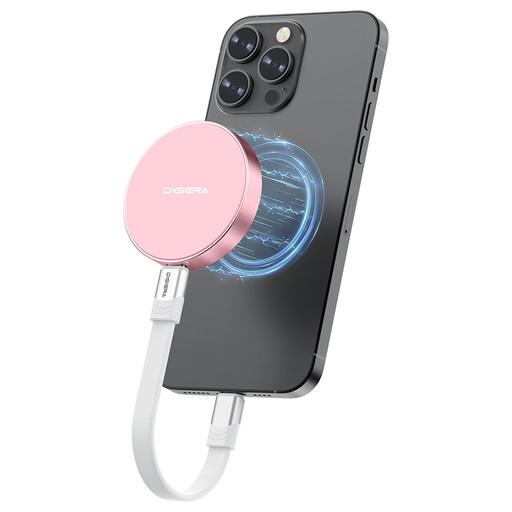
Consider this magnetic 1 TB drive for a mobile file-transfer setup if its connection and attachment suit your device.
The title specifies USB 3.2 Gen 2×2 and claims transfer speeds up to 2,000 MB/s. Check host and cable support for that interface; confirm the exact device and recording requirements before relying on any direct-recording claim.
Apple documents direct external ProRes recording for iPhone 15 Pro, iPhone 16 Pro and iPhone 17 Pro models. Its Final Cut Camera instructions specify an iPhone 15 Pro or later, an exFAT-formatted external SSD and a cable rated for the chosen recording mode; a USB-C socket alone does not establish support.
Yes, an iPad can use supported external storage for file transfers when the drive meets its connection and format requirements. Apple lists exFAT among the supported formats and says the external device must have one data partition; check your iPad and app before relying on the workflow.
exFAT is a practical option when every device and app in your workflow supports it. Apple identifies it as a Windows-compatible format and requires it for the specified Final Cut Camera external-recording workflow; copy existing files elsewhere before reformatting, which erases the drive.
No: direct recording depends on the camera model and its recording settings, not just its connector. Blackmagic Design documents external USB-disk recording for the URSA Broadcast G2; for another camera, check its manual for supported media, formats and power requirements.
Check encryption if the portable SSD will carry personal or sensitive client material that could be exposed if the drive is lost. The Information Commissioner’s Office identifies encryption as protection against unauthorised access after loss or theft; also check how the drive is unlocked on your devices and keep its password separately.