
24/7 Customer Support

Free returns

Same-day & Next-day Delivery

Quality Guaranteed

Unlock Your Welcome Offers: FREE Delivery | Up to 80% OFF | Free 30-day JoyPlus trial
Download the APP
A portable tyre inflator can be useful for topping up pressure at home, preparing for a long motorway journey or dealing with an underinflated tyre away from a petrol station. However, compact air compressors vary considerably in power, battery capacity, connection type and vehicle compatibility.
For UK drivers, electric vehicle owners, motorcyclists, cyclists and outdoor users, the right choice depends less on a headline pressure figure and more on how, where and how often the pump will be used.
A label such as 150 PSI air compressor or 160 PSI may look impressive, but maximum pressure is not the same as inflation speed. It represents the upper operating limit under specified conditions. A pump may still take longer with a large SUV tyre, a completely flat tyre or repeated use.
Look for additional information such as airflow, motor power, duty cycle and stated inflation examples. For occasional top-ups, a smaller cordless tyre pump may be sufficient. Larger vehicles or frequent use may require a more powerful portable air compressor.
A rechargeable air pump removes the need to reach a 12V socket, which is particularly convenient for cyclists and electric vehicle owners. The compromise is battery capacity and charging time.
A battery-powered car tyre inflator may be suitable for several top-ups, but repeated inflation can drain the battery quickly. Some models also require cooling between uses. Check the stated battery capacity, charging method and whether the product can operate while connected to a vehicle power supply.
Some ultra-compact air pumps are designed for low-pressure inflatables rather than tyres. For example, the Baseus PocketGo is listed for items such as swimming rings, yoga balls and small air mattresses, with a pressure limit of 3.5 kPa. It is explicitly not suitable for car, motorcycle or bicycle tyres.
Before buying, confirm that the product supports your valve type and intended use. A pump for a bicycle may not be suitable for a car or van, while some models exclude trucks, trailers, RVs and off-road vehicles.
A 12V tyre inflator connects to a vehicle’s 12V DC socket, often called the cigarette lighter socket. It does not depend on a built-in battery, but the cable must reach each wheel. A 3-metre cable can make it easier to reach the rear tyre of a car without moving the vehicle.
Cordless models are easier to use beside a bicycle, motorcycle or parked EV, but they need regular charging. If you keep a pump in the car for emergencies, check its charge level periodically.
A digital tyre inflator should display pressure in a unit you recognise, such as PSI, bar or kPa. Preset controls and automatic shut-off can reduce the chance of continuing to inflate after reaching the recommended level.
Always use the tyre pressure shown on your vehicle’s tyre placard, handbook or manufacturer information. Do not use the maximum PSI printed on the inflator as your vehicle’s recommended pressure.
Airflow is often shown in litres per minute, while power may be listed in watts. These figures can help with comparisons, but real-world performance depends on tyre size, starting pressure, ambient temperature and valve connection.
A 100% duty cycle, where specifically stated by the manufacturer, may be relevant to users who need repeated inflation. Other models may need a cooling pause after extended operation. For roadside use, an LED light, secure hose connection and easy-to-read controls can be more useful than a high headline pressure.
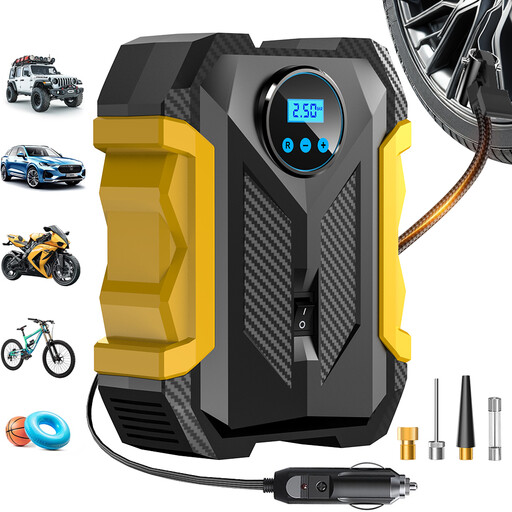
Why This Fits Their Persona: A practical wired option for UK motorists who want a straightforward car tyre inflator for routine pressure checks, motorcycles, bicycles and sports balls.
Its 12V connection avoids reliance on a small internal battery, while the digital display provides a visible pressure reading.
Listed with 150 PSI capacity, LED lighting and a 12V cable for vehicle use.
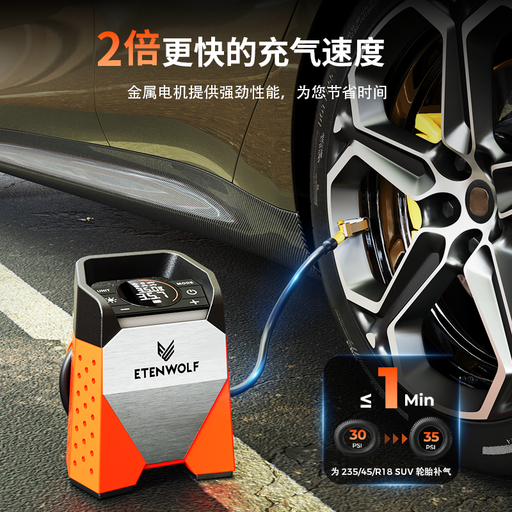
Why This Fits Their Persona: Suited to drivers who want a higher-capacity unit for passenger cars, SUVs, light trucks, bikes and balls, with the flexibility of battery power.
The listing specifies a 100% duty cycle and includes several adapters, helping cover more than one inflation task.
Listed at 160 PSI, with 1.25 CFM airflow, a lithium-ion battery and automatic shut-off via the digital interface.
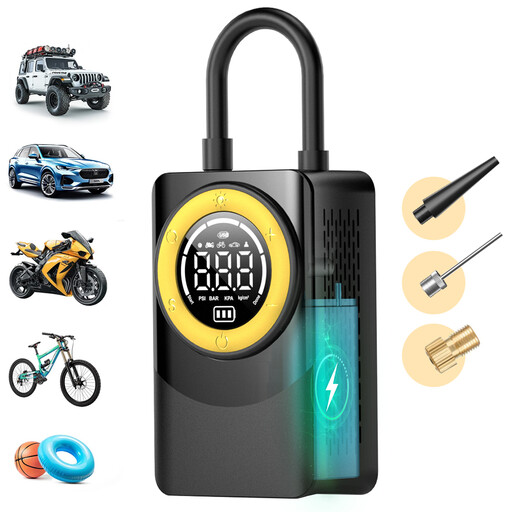
Why This Fits Their Persona: A cordless format for EV owners, commuters and drivers who prefer not to route a power cable around the vehicle.
Its built-in battery removes dependence on a 12V socket, while the digital display helps users set a target pressure.
Listed as compatible with electric vehicles, standard cars, motorcycles and bicycles, with integrated pressure measurement.
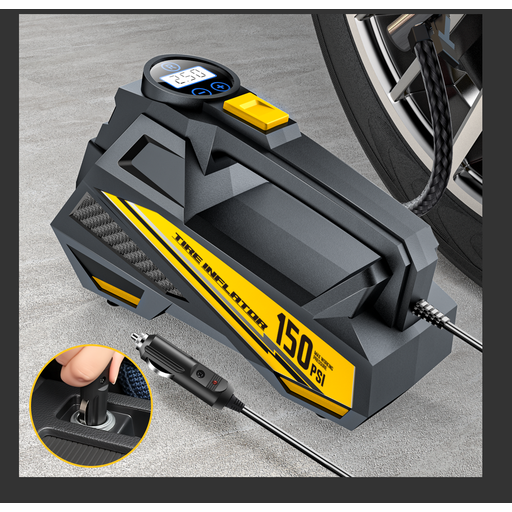
Why This Fits Their Persona: A wired choice for households with cars, motorcycles and bicycles that need one compact pump for several types of inflatables.
The corded design avoids uncertain battery runtime during repeated jobs; users should still follow the stated cooling guidance.
Listed with a 12V motor, 150 PSI maximum pressure and compatibility with cars, motorcycles, bikes and balls.
For a 12V model, start the vehicle engine before inflation where the instructions require it, and park safely with the handbrake applied. For a cordless model, charge it indoors before a journey rather than waiting for a roadside emergency.
Electricity use is generally modest for occasional pressure top-ups, but battery charging time and replacement battery availability may matter over several years. Keep the hose, adapters and charging cable together, and inspect the cable and valve connector for wear.
A tyre inflator is intended to restore pressure, not repair punctures. If a tyre repeatedly loses air, arrange an inspection. On a motorway or unlit road, prioritise personal safety and use your vehicle’s warning equipment rather than remaining in an unsafe position.
We have compiled a complete, real-time list of products that fully satisfy these strict selection criteria and UK safety regulations.
Lifespan depends on storage, heat exposure, frequency of use and battery care. Keep the unit dry, avoid blocking ventilation and follow the manufacturer’s recommended operating intervals. Cordless models should be recharged periodically when stored.
Many models can inflate EV tyres, but compatibility is not automatic. Check the product listing, valve connection and pressure range. An EV’s recommended tyre pressure remains the figure shown by the vehicle manufacturer, not the inflator’s maximum rating.
A digital display, preset pressure control and automatic shut-off can make inflation easier and more repeatable. They are useful features for regular maintenance, but they do not replace checking the correct pressure or inspecting a damaged tyre.