
24/7 Customer Support

Free returns

Same-day & Next-day Delivery

Quality Guaranteed

Unlock Your Welcome Offers: FREE Delivery | Up to 80% OFF | Free 30-day JoyPlus trial
Download the APP
A portable tyre inflator can be useful for topping up car tyres at home, preparing a bicycle for a ride or dealing with gradual pressure loss at the roadside. However, choosing one is not simply a matter of selecting the largest PSI number on the box.
Some pumps look powerful on paper but inflate slowly, overheat during repeated use or depend on a cable that cannot comfortably reach every wheel. Others have a rechargeable battery but offer limited runtime, making them less suitable for larger tyres. The right choice depends on how often you will use it, what you need to inflate and whether you prefer cordless convenience or continuous 12V power.
A 150 PSI air compressor or 160 PSI tyre pump may sound powerful, but maximum pressure is only the upper operating limit. It does not tell you how quickly the pump can raise a tyre from one pressure to another.
Airflow, motor power, cylinder design and duty cycle also affect performance. For occasional top-ups, a compact pump may be sufficient. For SUV tyres, motorcycle tyres or several inflatables in one session, look for stated airflow, inflation times and cooling requirements.
Battery-powered models are convenient because they do not need a socket or trailing cable. Yet battery capacity and runtime vary considerably. A small electric tyre pump may be suitable for bicycle tyres and footballs but struggle with repeated car-tyre inflation.
Check the battery capacity, charging time and the manufacturer’s stated number of tyres per charge. Keep the unit charged before a long journey, and remember that cold weather can affect rechargeable battery performance.
Most car tyres use Schrader valves, while many road bicycles use Presta valves. A car tyre inflator may not connect directly to a Presta valve unless an adapter is supplied.
For broader use, check whether the package includes a Presta adapter, inflation needle and tapered nozzle. These accessories determine whether the pump can handle bicycle tyres, sports balls, air beds and other inflatables without buying extra parts.
A cordless air compressor is convenient for garages, car parks and roadside use. A 12V tyre inflator connected to a vehicle’s cigarette-lighter socket can provide continuous power, which may be more suitable for larger tyres or repeated inflation.
Corded models often offer longer operating sessions, but you need to check cable length. A short lead may not reach the rear wheel of an SUV or small van. Some portable air compressors combine battery operation with vehicle power; always follow the supplied instructions and check the actual connection method.
A digital tyre inflator with a preset pressure function allows you to select the target value before inflation. An automatic shut-off tyre pump then stops when that setting is reached, reducing the chance of overinflation.
Use the pressure shown on your vehicle’s tyre placard, usually found inside the driver’s door frame, fuel flap or handbook. Do not rely on the maximum PSI printed on the pump as a recommended vehicle setting. Pressure readings can also vary between devices, so use the inflator as a practical guide and check the tyre when cold where possible.
Airflow is commonly shown in litres per minute or cubic feet per minute. Higher airflow can shorten inflation time, although real-world results depend on tyre size and starting pressure.
Duty cycle matters if you need to inflate several tyres. A model designed for short top-ups may require cooling breaks, while a stated 100% duty cycle indicates continuous operation under the manufacturer’s specified conditions. Compact dimensions and weight are also important if the pump will live in a glove compartment, motorcycle storage box or bicycle bag.
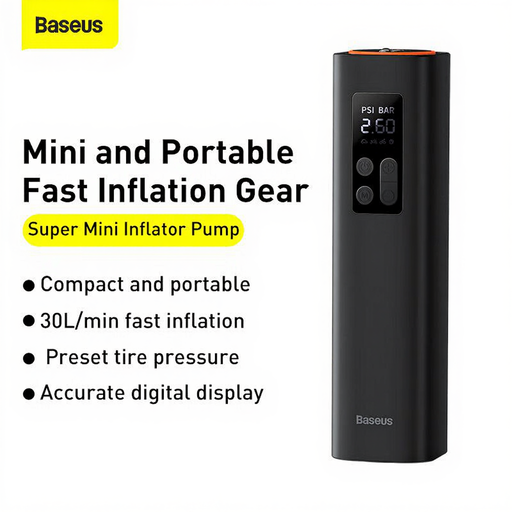
Why This Fits Their Persona: Its compact format suits UK drivers who want a pump for occasional car, bicycle or electric-vehicle top-ups without using much boot or glovebox space.
The included 3-metre 12V cable helps address limited reach, while three air nozzles support more than vehicle tyres.
Ultra-mini design; supplied with a 12V power cable, air hose and three nozzles.

Why This Fits Their Persona: This cordless option suits drivers who value a larger battery, digital controls and one device for car, motorcycle, bicycle and ball inflation.
The 7,500mAh battery and stated 45-minute wireless runtime provide more information than a headline PSI figure alone.
160 PSI maximum pressure; four preset modes, digital display, auto-stop and LED lighting.
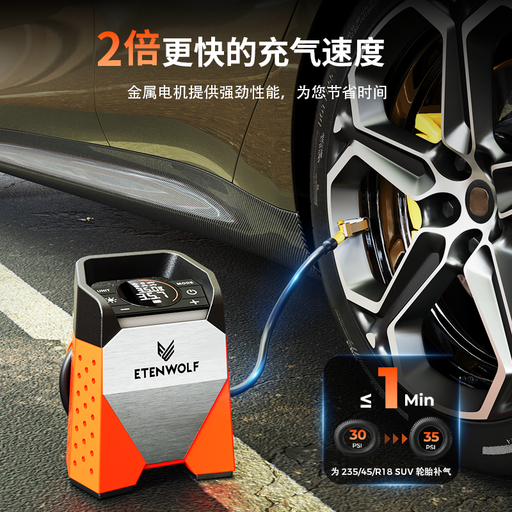
Why This Fits Their Persona: Its stated 1.25 cubic feet per minute airflow and 100% duty-cycle specification may appeal to SUV, light-truck and multi-tyre users who need more sustained operation.
It provides airflow, power and duty-cycle figures rather than relying only on its 160 PSI maximum-pressure label.
160 PSI maximum operating pressure; supplied with a Presta adapter, needle and tapered nozzle; listed at £41.99 after promotion.
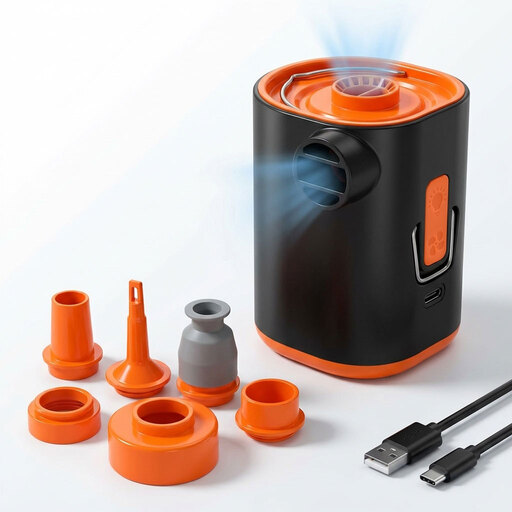
Why This Fits Their Persona: The compact cordless design, integrated hook and LED illumination suit camping, cycling trips and general outdoor preparation.
Its stated airflow and charging information make it easier to judge outdoor suitability than a vague “fast inflation” description.
30W motor; 300L/min airflow; 12 LED beads delivering stated 260-lumen illumination; supports inflation and deflation.
We have compiled a complete, real-time list of products that fully satisfy these strict selection criteria and UK safety regulations.
It can be useful for correcting gradual pressure loss before a journey or managing a low tyre away from home. It does not replace a spare wheel, repair kit or roadside assistance, particularly where a tyre is damaged or completely deflated.
Lifespan depends on battery care, storage conditions, workload and operating temperature. Follow the recommended duty cycle, keep the unit dry and avoid repeatedly running it beyond its stated limits. Battery runtime will usually reduce as the rechargeable cell ages.
A cordless model draws power while charging, while a 12V tyre inflator uses the vehicle’s electrical system during operation. The running cost is generally modest for occasional top-ups, but frequent use on several large tyres requires more energy and may make a corded or higher-capacity model more practical.