
24/7 Customer Support

Free returns

Same-day & Next-day Delivery

Quality Guaranteed

Unlock Your Welcome Offers: FREE Delivery | Up to 80% OFF | Free 30-day JoyPlus trial
Download the APP
A portable tyre inflator can be useful for correcting gradual pressure loss, preparing a bicycle for a weekend ride or dealing with an underinflated tyre away from a petrol station. However, product listings often emphasise headline figures while leaving out the details that affect everyday use.
The main buying traps are easy to overlook:
The right choice depends on your vehicle, how often you expect to use it and whether you prioritise battery-free operation, portability or automatic pressure control.
A 12V tyre pump draws power from a vehicle’s DC outlet, commonly known as the cigarette lighter socket. It does not depend on a built-in battery, but the engine should generally be running during use to reduce the chance of draining the vehicle battery. Check the socket, fuse rating and cable length before buying.
A cordless tyre inflator is easier to use beside a car, motorcycle or bicycle because there is no cable running back to the vehicle. The trade-off is charging time and finite runtime. Battery capacity is usually shown in mAh, but mAh alone does not tell you exactly how many tyres the pump can inflate. Motor power, tyre size and pressure rise all influence actual usage.
Electric vehicle drivers should also check whether the vehicle provides a usable 12V outlet and whether the product’s instructions permit this application. Some compact pumps are designed for electric vehicles, while others are more suitable for bicycles, motorcycles or sports equipment.
A high maximum pressure is useful for bicycle tyres and some inflatables, but car owners should also look for airflow, often listed in litres per minute (L/min). Higher airflow can support quicker top-ups, although published figures may be measured without the resistance of a tyre.
Look for:
Never set pressure by guesswork. Use the vehicle manufacturer’s recommended cold-tyre pressure, normally found on the driver’s door frame, fuel flap or in the handbook. A tyre inflator is intended for air pressure maintenance; it does not repair punctures or damaged valves.
A digital tyre inflator with a preset and auto-stop function can reduce the need to watch the display continuously. Confirm that the screen shows the units you use, such as PSI, bar or kPa. A built-in pressure gauge is also useful for checking the starting pressure before inflation.
For bicycles, check the valve connection. Many car and motorcycle pumps use Schrader fittings, while road bicycles commonly use Presta valves. An adapter may be necessary. For balls and inflatable equipment, check that the package includes the required needle or nozzle.
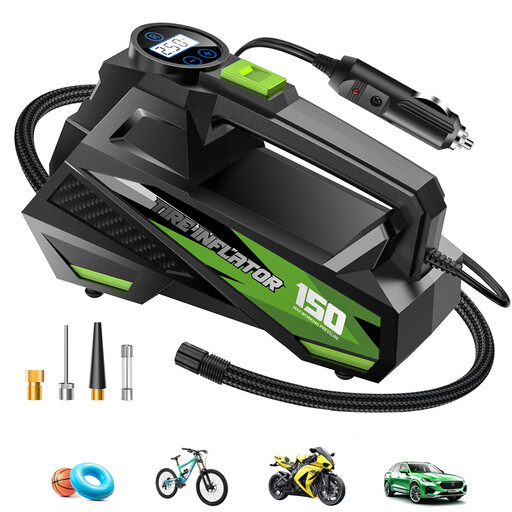
Why This Fits Their Persona: A practical choice for drivers who want a compact car air pump without having to remember to recharge a battery. The extended power cord is useful when reaching each wheel from a vehicle’s 12V socket.
The wired design avoids reliance on battery charge. Users should still follow the manual’s cooling breaks and run the vehicle engine during car or motorcycle use.
Portable format; extended power cord; stated suitability for cars, motorcycles and bicycles.
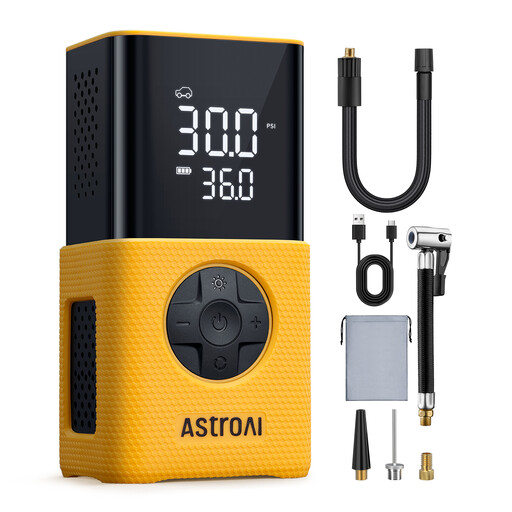
Why This Fits Their Persona: Suitable for drivers wanting cordless operation, digital controls and a compact unit for a boot, bike rack or backpack.
Its rechargeable design includes preset pressure and auto-off functions, so you do not need to rely solely on watching the display. It is stated as unsuitable for off-road vehicles, RVs, trucks and trailers.
150 PSI stated maximum; 4 pressure units; USB-C input/output; three lighting modes.
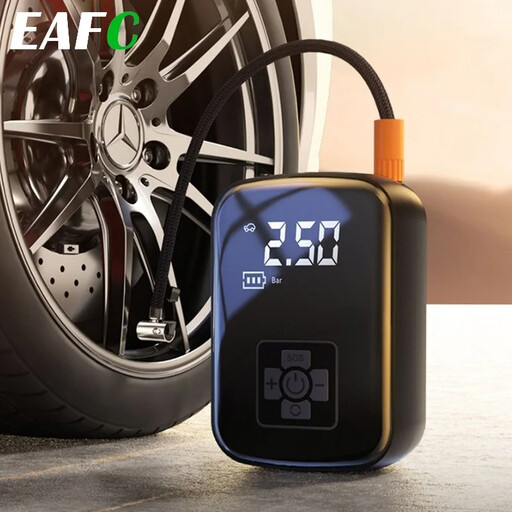
Why This Fits Their Persona: A multi-purpose option for households and outdoor users who need one pump for car, motorcycle and bicycle tyres, balls and selected inflatables.
The specification lists a pressure range, airflow and battery runtime rather than only a headline PSI figure. A 15–25-minute stated battery life still makes charging before trips important.
3–150 PSI stated range; 25 L/min airflow; five inflation modes; automatic stopping and lighting.
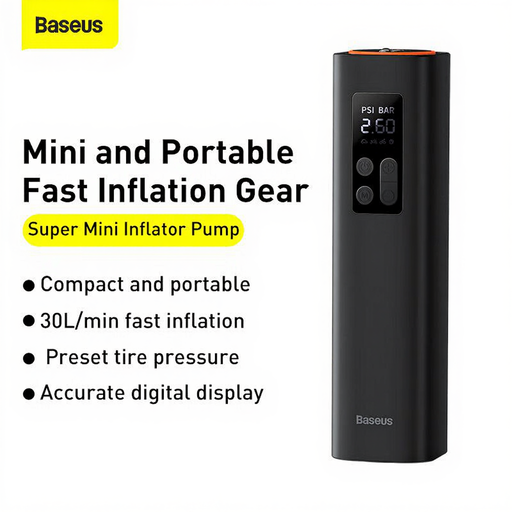
Why This Fits Their Persona: A compact wired option for electric vehicle owners who want a pump that stores easily and reaches around the car with a long lead.
The included 3-metre 12V cable addresses reach problems. Check your EV’s 12V outlet specifications before use and confirm the vehicle’s recommended tyre pressure separately.
3-metre power cable; air hose and three nozzles included; stated compatibility with car, bicycle and electric vehicle tyres.
We have compiled a complete, real-time list of products that fully satisfy these strict selection criteria and UK safety regulations.
It can be a useful contingency tool for gradual pressure loss and routine checks, particularly on long journeys or in areas with limited access to a forecourt compressor. It is not a substitute for a spare-wheel plan, breakdown cover or professional puncture repair.
Runtime varies according to battery capacity, tyre size, starting pressure and operating temperature. For example, listed specifications may describe a number of top-ups or a runtime of around 15–25 minutes. Charge the unit before travel and avoid leaving it unused for long periods without checking its charge level.
No. The maximum PSI is only one specification. Check the product’s stated vehicle compatibility, airflow, connector type and duty cycle. Large vehicles, trailers and off-road tyres may require a higher-capacity compressor, while a small motorcycle tyre inflator or bicycle pump may be more appropriate for two-wheelers and sports equipment.