
24/7 Customer Support

Free returns

Same-day & Next-day Delivery

Quality Guaranteed

Unlock Your Welcome Offers: FREE Delivery | Up to 80% OFF | Free 30-day JoyPlus trial
Download the APP
A portable tyre inflator can be useful for routine pressure checks, bicycle maintenance and roadside top-ups. However, choosing one based only on a large PSI number or a low headline price can lead to disappointment. Some models are designed for occasional bicycle use, while others are intended for car tyres, SUVs or trailers.
Before buying a car tyre inflator, consider how you will power it, how accurately it displays pressure and whether its operating limits match your vehicle.
A label such as 150 PSI air compressor describes the maximum pressure setting, not necessarily the speed or suitability of the pump for every vehicle. A compact inflator may reach a high pressure in theory but take longer when filling a larger SUV tyre.
Airflow, measured in litres per minute, is also important. For occasional pressure adjustments, a modest airflow may be adequate. For multiple car tyres or larger wheels, a higher airflow can reduce waiting time. Always compare the stated airflow with your intended use rather than selecting by PSI alone.
A 12V tyre pump connects to a vehicle’s cigarette lighter or accessory socket. It can run for longer without relying on an internal battery, but the engine should be running during use to reduce the risk of draining the vehicle battery. You also need enough cable length to reach all four wheels.
A cordless tyre inflator is easier to use away from the car and can be practical for motorcycles, bicycles and sports equipment. The trade-off is that the battery must be charged before an emergency. Battery capacity, charging time and the number of tyres supported per charge deserve attention.
A digital tyre pump with auto shut-off can make inflation more convenient, but it does not replace checking the vehicle manufacturer’s recommended pressure. Find the correct figure on the vehicle’s tyre placard, commonly located inside the driver’s door area or in the handbook.
A built-in reading can also differ slightly from a separate gauge. Connect the hose securely, allow the display to settle and recheck pressure when the tyres are cold where possible.
For cars and family vehicles, decide whether you prefer a rechargeable tyre inflator, a 12V model or a dual-power design. A long cable, such as a 3-metre lead, can make a significant difference when reaching the rear wheels of an estate car or SUV.
For use in a garage, driveway or roadside setting, check whether the inflator requires the engine to be running. Keep the power connection dry and avoid using damaged cables or hoses.
The required pressure depends on the tyre, not the pump’s maximum rating. Passenger cars commonly require considerably less than 150 PSI, whereas some trailers, caravans and commercial applications may have different requirements. Confirm the inflator’s vehicle compatibility before ordering.
Useful figures to compare include:
A car tyre inflator should fit standard Schrader valves. Cyclists may need a Presta adapter, while balls, air mattresses and other inflatables require separate nozzles.
Look for a clear display with units such as PSI, BAR or kPa. An LED light can be useful during a dark roadside stop, but it should be treated as a convenience feature rather than a substitute for reflective clothing, hazard lights or appropriate roadside precautions.
For regular monitoring rather than occasional manual checks, a tyre pressure monitor or aftermarket TPMS can display pressure and temperature while driving. These systems are different from inflators: they identify changes, but they do not add air.
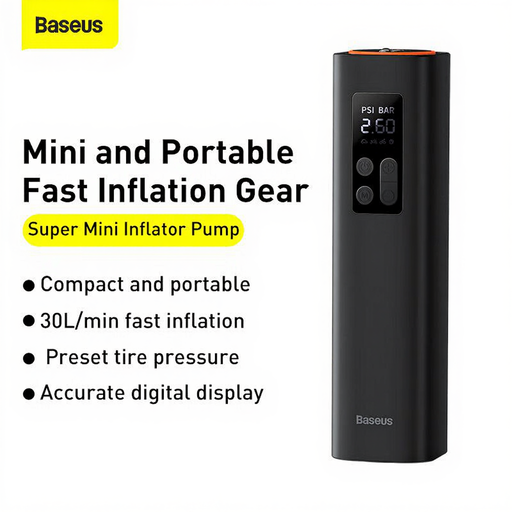
Why This Fits Their Persona: A compact wired option for drivers who want a straightforward emergency roadside inflator for cars, bicycles and electric vehicles.
Its 3-metre 12V cable avoids the short-lead problem, while three nozzles clarify its multi-purpose use.
Compact storage; 3-metre power cable; supplied with three air nozzles.

Why This Fits Their Persona: Suits commuters and travellers who prefer cordless operation, preset modes and a compact unit for car or bicycle storage.
The stated 4000mAh battery, preset function and auto-off feature make capacity and operation clearer than a PSI-only listing.
150 PSI setting; 17L/min airflow; USB-C input/output and three light modes.
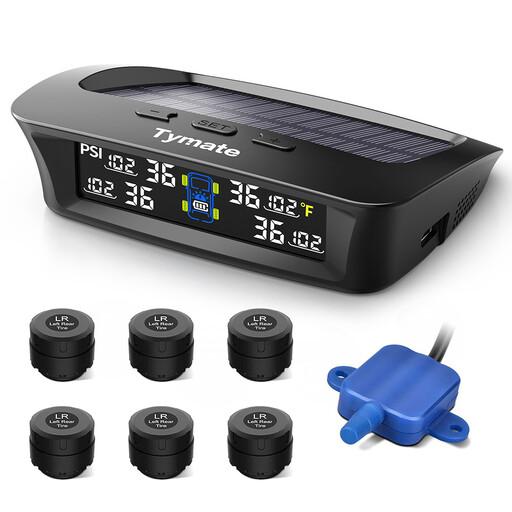
Why This Fits Their Persona: Designed for RV, trailer and light-truck users who need ongoing pressure and temperature visibility across a longer vehicle combination.
The listed vehicle-length limit, pressure range and repeater requirement help buyers check compatibility before purchase.
0–87 PSI monitoring range; solar charging; external sensors and a repeater for vehicles up to 50 feet.
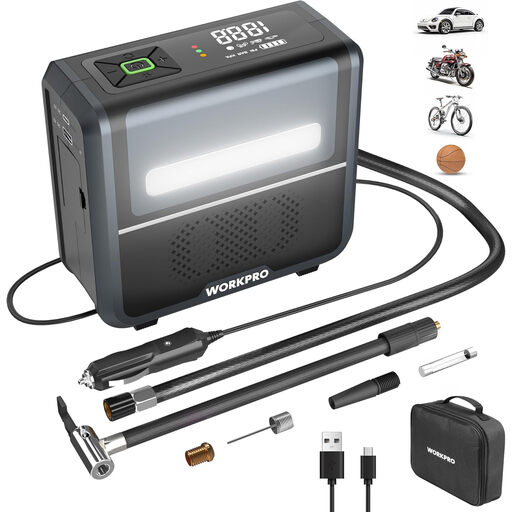
Why This Fits Their Persona: A flexible choice for households needing one tool for car tyres, motorcycle tyres, bicycles and sports equipment.
Dual power modes reduce dependence on a charged battery, while preset modes make different inflation tasks easier to separate.
150 PSI setting; rechargeable or 12V operation; digital display, auto shut-off and LED light.
A pump is intended for inflation and pressure maintenance. It should not be used to repair a puncture or replace a spare wheel, breakdown service or professional inspection. If a tyre repeatedly loses pressure, arrange an appropriate inspection.
We have compiled a complete, real-time list of products that fully satisfy these strict selection criteria and UK safety regulations.
It can be a practical addition for correcting gradual pressure loss or dealing with an underinflated tyre away from home. Choose a model with suitable vehicle compatibility, a readable gauge and either a charged battery or a sufficiently long 12V cable.
Battery runtime varies with tyre size, starting pressure, temperature and the unit’s duty cycle. Recharge the device periodically, even if it has not been used, and follow the manufacturer’s storage guidance. A dual-power model can provide an alternative when the internal battery is empty.
No. A tyre inflator adds air and may display pressure while connected. A TPMS monitors pressure, and some systems also monitor temperature during driving. For regular journeys, the two products can serve different purposes: one corrects pressure, while the other helps identify changes that may require attention.