
24/7 Customer Support

Free returns

Same-day & Next-day Delivery

Quality Guaranteed

Unlock Your Welcome Offers: FREE Delivery | Up to 80% OFF | Free 30-day JoyPlus trial
Download the APP
A slow puncture or an under-inflated tyre is more than just an inconvenience; it affects your vehicle's handling, fuel efficiency and overall safety. A portable tyre inflator seems like a simple solution, but the market is flooded with options that often over-promise and under-deliver. As a Joybuy Product Recommendation Officer, my role is to help you see past the marketing jargon and choose a tool that genuinely serves its purpose.
Before you add any device to your basket, it's crucial to be aware of the common pitfalls that lead to buyer's remorse. Many UK drivers find their new gadget is either impractical or unreliable when they need it most.
To avoid these traps, focus on a few key technical details. These are the non-negotiable factors that separate a dependable tool from a glovebox gimmick.
Your first decision is how the device will be powered. This choice directly impacts its convenience and reliability.
Don't be swayed by maximum pressure claims alone. While most inflators offer a max PSI far beyond what a car tyre needs (typically 30-40 PSI), the real measure of speed is airflow.
Beyond power and speed, certain features are essential for a safe and hassle-free experience.
Based on these practical criteria, we've matched a few standout products to different user needs. These recommendations are chosen to directly address the common pitfalls and deliver reliable performance.
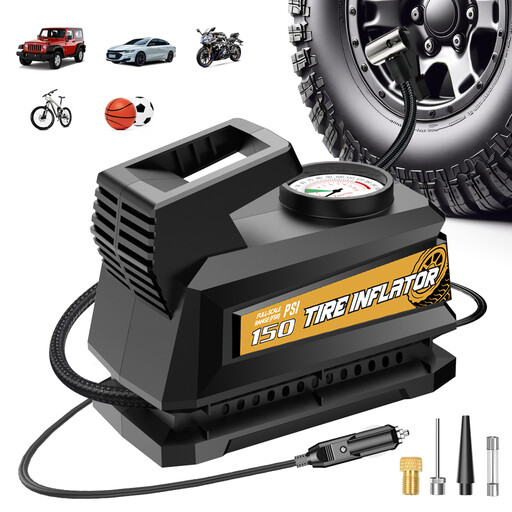
Why This Fits Their Persona: This is for the UK driver who wants a simple, reliable tool for routine pressure checks and emergencies. It lives in the boot of the car and is always ready to go, without any worries about a dead battery.
It completely bypasses the "cordless convenience trap." By drawing power directly from the car's 12V socket, it offers consistent performance and will never run out of battery during use.
Its plug-and-play design is incredibly straightforward. There are no batteries to charge or modes to cycle through, making it a dependable, no-fuss solution for any driver.
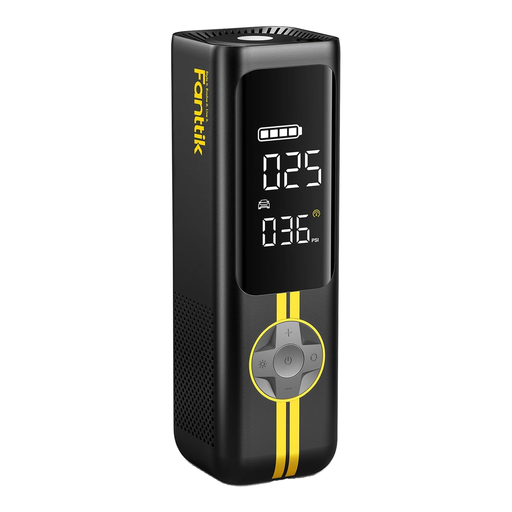
Why This Fits Their Persona: This user appreciates high-performance gadgets that combine functionality with a sleek design. They need a versatile tool for their car, bike and other inflatables, and value features like a power bank and a clear, modern interface.
It tackles the "rapid inflation" myth and battery life issues head-on. Its specifications note a continuous 40-minute runtime and the ability to pump 16 tyres, demonstrating genuine endurance. The fast inflation claims are also backed by specific car tyre scenarios.
Its all-in-one functionality is a major plus. It serves as an inflator, a power bank for your phone and a flashlight. The dual-screen display and preset modes make it exceptionally user-friendly.
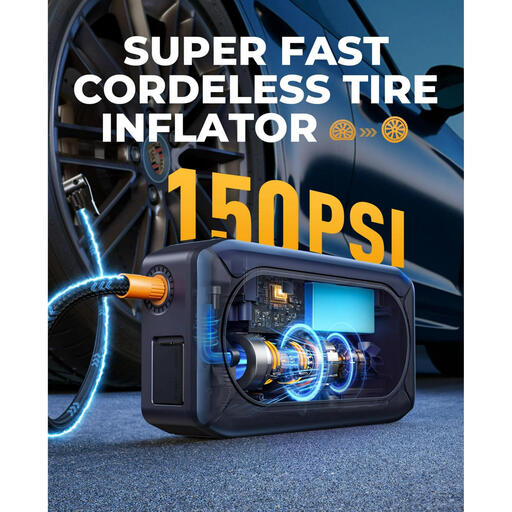
Why This Fits Their Persona: For the driver who wants to be prepared for anything. This isn't just an inflator; it's a complete roadside emergency kit, capable of jump-starting large petrol and diesel engines in addition to inflating tyres.
This device is built for heavy-duty use, sidestepping the pitfall of flimsy construction. Its primary function as a powerful jump starter means its battery and internal components are engineered for high-demand situations, including reliable tyre inflation.
The 5-in-1 functionality (jump starter, air compressor, power bank, LED flashlight and safety protections) offers exceptional value and peace of mind, consolidating multiple emergency tools into one compact unit.
We have compiled a complete, real-time list of products that fully satisfy these strict selection criteria and UK safety regulations.
The lifespan of a portable tyre inflator depends on its build quality, motor and how it's used. A well-made device from a reputable brand can last for many years with proper care. For cordless models, battery health is key; avoid leaving it completely discharged for long periods. For all models, it's important to respect the recommended continuous run time (usually 10-15 minutes) to prevent the motor from overheating.
No, a 12V inflator should not be left plugged into your car's power socket. It is designed for temporary use and should only be connected when you are actively inflating a tyre. For safety and to avoid draining your car's battery, always unplug the device and store it away after use.
Gauges on quality inflators are generally accurate, often to within ±1 PSI. This is crucial for the auto shut-off feature to work correctly. However, accuracy can be a weak point on very cheap, unbranded models. It is a good practice to occasionally cross-reference the reading with a separate, trusted manual or digital pressure gauge to ensure your inflator remains calibrated.