
24/7 Customer Support

Free returns

Same-day & Next-day Delivery

Quality Guaranteed

Unlock Your Welcome Offers: FREE Delivery | Up to 80% OFF | Free 30-day JoyPlus trial
Download the APP
A portable tyre inflator can be useful for routine pressure checks, topping up tyres before a motorway journey or handling a slow leak at the roadside. However, product pages often highlight a large PSI figure or several extra functions without explaining how the pump performs in practical conditions.
The most common buying mistakes are:
A sensible choice depends on your vehicle, how often you expect to use the pump and whether you need a compact emergency tool or a higher-output portable air compressor.
The maximum pressure is useful for understanding the pump’s operating range, but it should not be confused with your vehicle’s recommended pressure. Most UK cars display the correct setting on the driver’s door pillar, fuel flap or in the handbook. Follow that figure rather than setting the pump to its maximum.
Airflow is another important comparison. Some listings provide a measurement in litres per minute (L/min) or cubic feet per minute. A higher airflow can reduce inflation time, although actual results vary with tyre size, starting pressure, battery charge and ambient temperature.
For occasional bicycle or ball inflation, a small rechargeable tyre pump may be adequate. For SUVs or repeated car use, consider a model with a higher airflow and a stated duty cycle. A 100% duty-cycle claim should still be interpreted alongside the manufacturer’s instructions, as heat, battery capacity and operating conditions affect real-world use.
A cordless tyre inflator removes the need to find a 12V socket, which is helpful for bicycles, motorcycles and roadside use. Look at the battery capacity, charging connection and whether the pump can also run from a vehicle’s 12V DC supply.
Capacity is normally shown in mAh, but this does not guarantee a particular number of tyre inflations. A larger tyre needs more air and inflating from a very low pressure uses more energy than a small top-up. For regular car use, a dual-power model can provide additional flexibility.
Also check the charging time and whether a USB-C cable, 12V lead or mains adaptor is included. Keeping the unit charged in the car is important; a rechargeable pump that has been stored empty may not help during an emergency.
A digital tyre pressure gauge makes it easier to set and monitor a target value. An automatic shut-off air pump should stop when the preset pressure is reached, reducing the chance of over-inflation. Nevertheless, check the reading before driving and inspect the valve connection for leaks.
For UK motorists, compatibility with standard car Schrader valves is essential. Cyclists may also need a Presta valve adapter. Some multi-purpose kits include a sports-ball needle and tapered nozzle, making them suitable as a motorcycle and bicycle pump or for household inflatables.
Look for clear instructions, stable construction, insulated cables and appropriate conformity markings such as CE or UKCA where applicable. These markings should not replace sensible checks of the seller, included documentation, warranty terms and product compatibility.
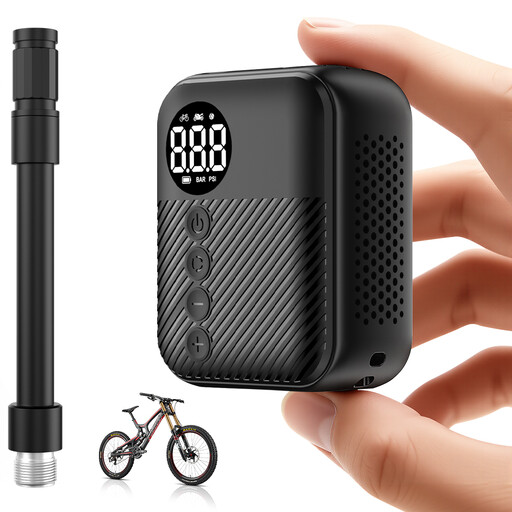
Why This Fits Their Persona: Its pocket-sized format suits cyclists, motorcyclists and drivers who want a compact backup for a glove compartment, pannier or backpack.
The listing specifies a rechargeable battery and digital gauge rather than relying only on a headline pressure figure.
150 PSI stated range, rechargeable operation and digital pressure display; listed for bikes, motorcycles, cars and balls.
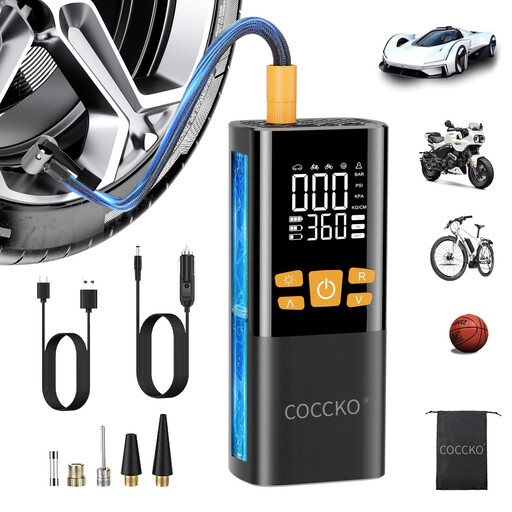
Why This Fits Their Persona: It is designed for drivers wanting more information and flexibility from a rechargeable car tyre inflator used on longer journeys.
Its stated 6000mAh battery and 3m vehicle charging cable address the limitations of relying on a small cordless battery alone.
32L/min stated airflow, 6000mAh battery, five inflation modes, LCD display and LED/SOS lighting.
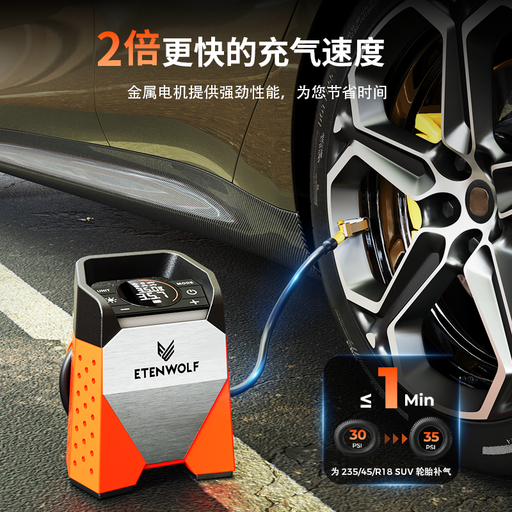
Why This Fits Their Persona: Its stated airflow and duty-cycle specifications may suit drivers who regularly maintain several car, SUV or bicycle tyres.
The listing gives both a 160 PSI maximum and 1.25 CFM airflow, providing more useful information than PSI alone.
160 PSI stated maximum, 1.25 CFM airflow, included Presta adapter and inflation needle; the listing also states a 100% duty cycle.
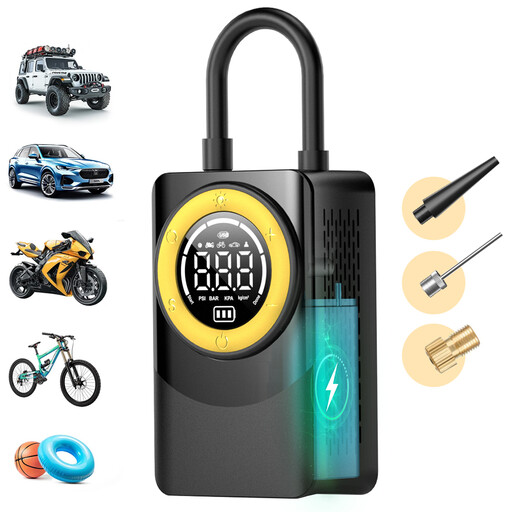
Why This Fits Their Persona: The cordless format is convenient for EV owners and households that also maintain motorcycle or bicycle tyres.
It includes a built-in battery and digital display, so use does not depend on reaching a 12V socket.
Wireless operation, built-in battery and digital pressure display; the listing also states compatibility with cars, motorcycles and bicycles.
We have compiled a complete, real-time list of products that fully satisfy these strict selection criteria and UK safety regulations.
Before inflating, park safely away from traffic, apply the handbrake and check the recommended pressure. Attach the hose firmly, select the correct unit such as PSI or BAR and remain nearby while the pump operates. Allow a high-output unit to cool if its instructions require pauses.
Store the pump dry and keep the battery charged periodically. Inspect the hose, connector and charging lead for damage. An inflator is intended to restore pressure; it should not replace a tyre inspection or professional attention where there is visible damage, a recurring pressure loss or a warning light.
It can be a practical emergency roadside tyre inflator for pressure top-ups, particularly on long journeys or in areas where a service station may not be nearby. Choose a model with suitable battery capacity and confirm that it fits your tyre valve.
Battery runtime depends on tyre size, starting pressure, temperature and usage frequency. To support battery life, avoid leaving the device fully discharged for long periods, do not overcharge it unnecessarily and follow the supplied storage guidance.
A 150 PSI rating covers the pressure range of many car tyre inflators, but it does not mean your tyres should be inflated to 150 PSI. Use the vehicle manufacturer’s recommended setting and select a pump with automatic shut-off and a readable digital gauge.