
24/7 Customer Support

Free returns

Same-day & Next-day Delivery

Quality Guaranteed

Unlock Your Welcome Offers: FREE Delivery | Up to 80% OFF | Free 30-day JoyPlus trial
Download the APP
A portable tyre inflator can be a useful addition to a car boot, motorcycle storage box or cycling kit. It may help with routine pressure checks, seasonal adjustments and minor roadside top-ups. However, product listings often focus on maximum PSI or “fast inflation” without explaining the limits that matter in everyday use.
Before buying, UK motorists should look beyond headline figures. Check the power source, pressure controls, valve compatibility, battery capacity and cooling requirements. The right choice depends on whether you need occasional car maintenance, a compact bicycle pump or a more capable portable air compressor for several tyres.
A 150 PSI tyre inflator or 160 PSI model may sound powerful, but maximum pressure is not the same as airflow or real-world inflation time. A pump’s motor, airflow rate, hose design and duty cycle all affect performance.
Maximum PSI is a ceiling, not a recommended setting. Most UK cars require considerably less pressure, commonly around 30–40 PSI, but you should always follow the figure on the vehicle’s tyre placard or owner’s manual. SUVs, electric vehicles, motorcycles and bicycles may require different settings.
A cordless tyre pump is convenient when you are away from a socket, but its runtime depends on battery capacity, temperature and load. Inflating a bicycle tyre or ball uses less energy than raising the pressure of a car or SUV tyre.
Some battery-powered models also require pauses for heat dissipation. A compact design is easy to store, but it may not suit repeated inflation across multiple large tyres. Check the stated operating time and charging method rather than relying on “wireless” in the title.
A car tyre normally uses a Schrader valve, while many road bicycles use a Presta valve. A bicycle air pump or multi-purpose inflator should include the appropriate adapter if you intend to switch between vehicles and sports equipment.
For a 12V tyre inflator, check that your vehicle has a suitable 12V socket and that the cable reaches all four wheels. A long lead can be more practical than a short cable, particularly on larger cars or vans. For cordless models, confirm how the battery is recharged before storing it in the boot.
A digital tyre inflator should let you set or monitor pressure in a clearly readable format. Useful units include PSI, bar and kPa, as UK vehicle information may use PSI or bar depending on the manufacturer.
An automatic stop air pump is helpful because it stops when the preset pressure is reached. It reduces the need to watch the display continuously, but it does not replace checking the recommended pressure or ensuring the connector is securely attached.
Inflate car tyres when they are cold where possible. Driving warms the air inside the tyre and can affect the reading. Connect the hose firmly, check for air leakage and replace the valve cap after use.
Cordless inflators offer flexibility for cars, motorcycles and bicycles. Look for battery capacity, charging time and whether a power cable is included as a backup. The EAFC model listed below uses two 2000mAh battery units and also includes a power cable.
A wired electric tyre inflator can be practical for regular car use because it does not depend on a charged internal battery. Models with a 3-metre lead can reach different wheels without moving the compressor, although the vehicle may need to be running to avoid excessive battery drain.
A small car tyre air pump may be suitable for topping up one or two tyres, bicycle tyres or balls. It may be less appropriate for repeated inflation on SUVs, light trucks or larger recreational vehicles.
Look for stated inflation times, airflow information and duty-cycle guidance. A 150 PSI rating does not automatically mean the pump is suitable for heavy-duty or commercial tyres. The product’s compatibility information should take priority over the headline number.
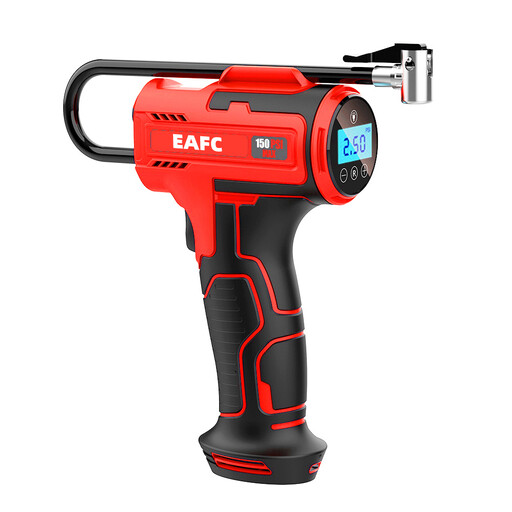
Why This Fits Their Persona: A cordless option for drivers who want one compact inflator for car, SUV, motorcycle, bicycle and ball use.
Its digital display and automatic stop help avoid relying on guesswork or manually watching the pressure throughout inflation.
7.4V battery system, built-in LED light and stated inflation times of 60 seconds for a motorcycle or electric bike and 300 seconds for a small car.
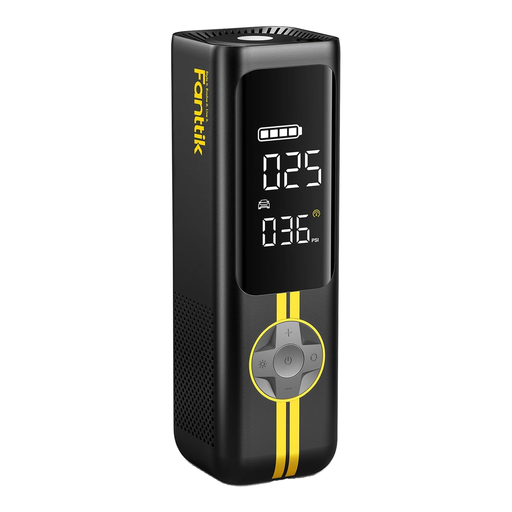
Why This Fits Their Persona: Suits motorists wanting cordless control, multiple presets and additional functions for regular travel and outdoor use.
The listing states a 150 PSI maximum, but also gives a vehicle-specific 56-second inflation figure and a 40-minute typical operating time.
Four preset modes, three pressure units, automatic stop, LED light and USB power-bank output.
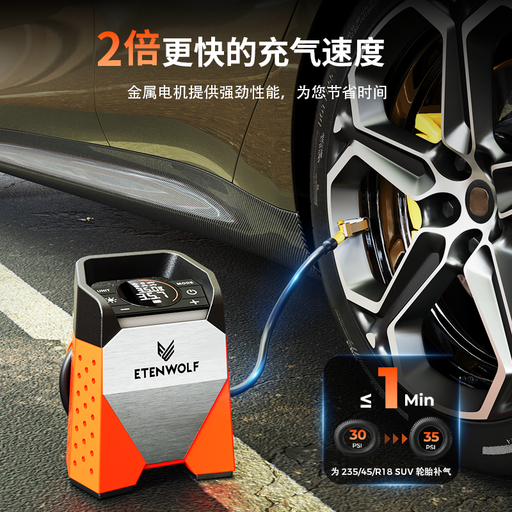
Why This Fits Their Persona: A practical match for drivers who regularly maintain car, SUV, bicycle or ball pressures and want a battery-powered unit.
Its specifications include a 100% duty-cycle description, rather than presenting maximum PSI alone as a measure of suitability.
160 PSI maximum operating pressure, 1.25 CFM airflow and included Presta adapter, ball needle and tapered nozzle.
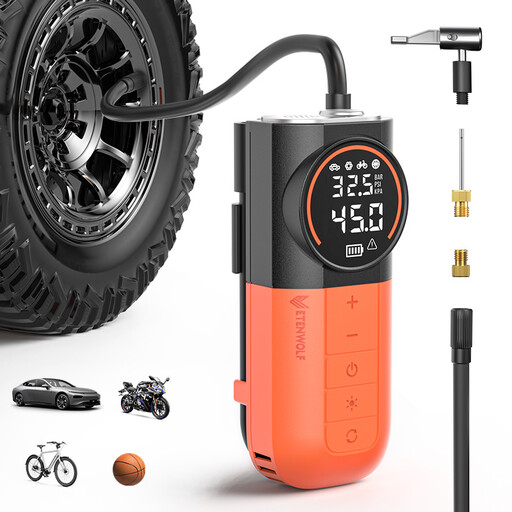
Why This Fits Their Persona: Its compact 0.65kg format is suited to motorcycle storage, bicycle bags and everyday roadside carrying.
It combines a digital gauge and automatic stop with stated guidance to pause periodically for heat dissipation.
20L/min airflow, 160 PSI maximum operating pressure, LED light and adapters for Schrader, Presta and balls.
We have compiled a complete, real-time list of products that fully satisfy these strict selection criteria and UK safety regulations.
It can be useful for routine pressure top-ups and minor air-loss situations. It is not a substitute for repairing a puncture or replacing a damaged tyre. Keep a separate pressure gauge if the inflator’s display cannot be checked against a reliable reference.
Some models list cars and SUVs as compatible, but performance varies with tyre size, starting pressure and battery charge. Check the stated vehicle range and inflation times. Larger tyres may require a wired compressor or a model with a longer operating cycle.
A 12V model draws power from the vehicle socket, so its direct running cost is generally limited. Use the engine where the instructions advise this, and avoid prolonged operation with the engine off, as the pump can place a considerable load on the vehicle battery.