
24/7 Customer Support

Free returns

Same-day & Next-day Delivery

Quality Guaranteed

Unlock Your Welcome Offers: FREE Delivery | Up to 80% OFF | Free 30-day JoyPlus trial
Download the APP
A portable tyre inflator can be useful for correcting gradual pressure loss, preparing a bicycle before a ride or handling an unexpected roadside problem. However, product listings often focus on impressive maximum-pressure figures while leaving out details that matter more in daily use.
Before buying a car tyre inflator or cordless tyre inflator, check how it is powered, whether its pressure display is practical to read and whether it is suitable for your vehicle. The right model depends on your routine: a driver who keeps an emergency pump in the boot may prioritise reach and continuous power, while a cyclist may need a compact rechargeable air pump.
A listing may describe a 150 PSI tyre inflator, but maximum pressure is not the same as inflation speed or suitability for large tyres. Most UK cars require pressures considerably below this figure, while larger vehicles, caravans and commercial tyres may need a more specialised compressor.
Look for additional information such as airflow rate, approximate inflation time and intended vehicle types. A high PSI figure can be useful for flexibility, but it should not be the only deciding factor.
A rechargeable air pump is convenient, particularly for bicycles, motorcycles and outdoor activities. Yet battery capacity, charging time and operating duration vary considerably. A small cordless unit may be suitable for topping up a tyre, but repeated inflation of several car tyres can require more time and cooling between uses.
For longer roadside use, a 12V air compressor connected to the vehicle may avoid battery-runtime concerns. Remember that many corded models should be used with the engine running, in line with the product instructions, to reduce the risk of draining the vehicle battery.
Car and motorcycle tyres generally use Schrader valves, while many bicycles use Presta valves. Sports balls and inflatables require different attachments. Check the included accessories and confirm that the connection is secure before inflating.
A pump with several adapters is more versatile, but extra nozzles are only useful if they are clearly labelled and easy to store. For an emergency roadside inflator, also consider hose length and power-cable reach.
Choose between:
Electric vehicle owners should check the location and output of the vehicle’s 12V socket. Do not assume that every EV provides the same access or power arrangement. A portable car air compressor should also be stored where it remains accessible if the boot is full.
A digital tyre pressure pump with a selectable target pressure can make routine top-ups easier. Useful features include:
Compare the pump’s displayed reading with the pressure recommended by the vehicle manufacturer, usually found on the driver’s door frame, fuel flap or handbook. Do not use the maximum value printed on the tyre sidewall as your everyday target.
Compact dimensions help with glovebox, boot or bicycle-bag storage, but smaller pumps may take longer to inflate a car tyre. Check the stated inflation time, operating temperature and whether the manufacturer recommends cooling breaks.
A built-in light may be helpful during a night-time breakdown, but it should be treated as a convenience feature rather than a replacement for hazard lights, a warning triangle or a high-visibility jacket. Check that the product includes appropriate instructions, charging equipment and valve adapters. Where relevant, review the presence of CE or UKCA marking, the supplied UK instructions and the seller’s compliance information.
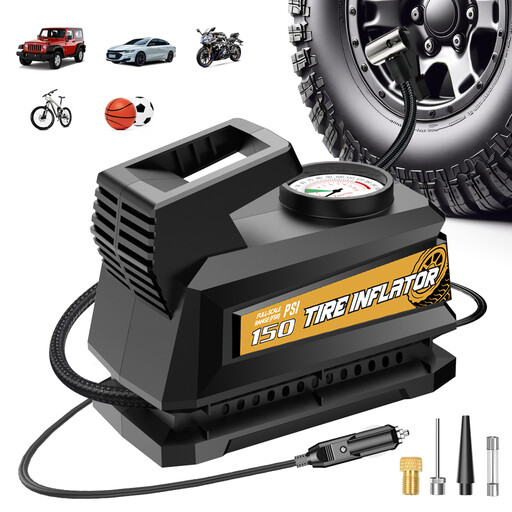
Why This Fits Their Persona: A straightforward option for UK drivers who want a compact pump for occasional car, motorcycle, bicycle or ball inflation without relying on a rechargeable battery.
Its 12V plug-and-play design avoids uncertainty about battery charge. Use the vehicle’s socket as directed and allow cooling during extended sessions.
22-cylinder design, lightweight construction and compatibility with car, motorcycle and bicycle tyres.
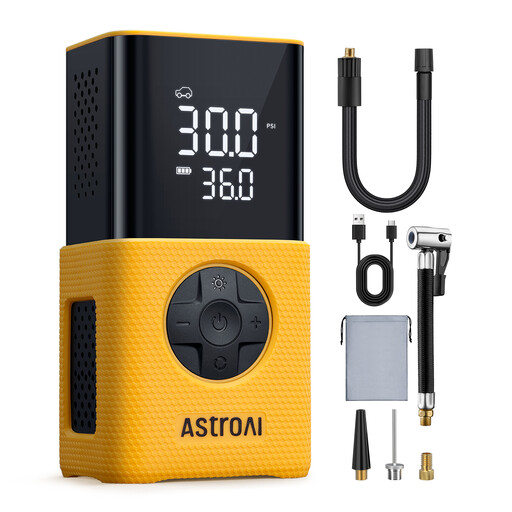
Why This Fits Their Persona: Suitable for motorists and cyclists who value cordless operation, pressure presets and a display with multiple measurement units.
The stated 4,000mAh battery, auto-off function and five inflation modes make runtime and operation details clearer than a PSI-only listing.
150 PSI maximum pressure, 17L/min airflow, USB-C input/output and integrated light with three modes.
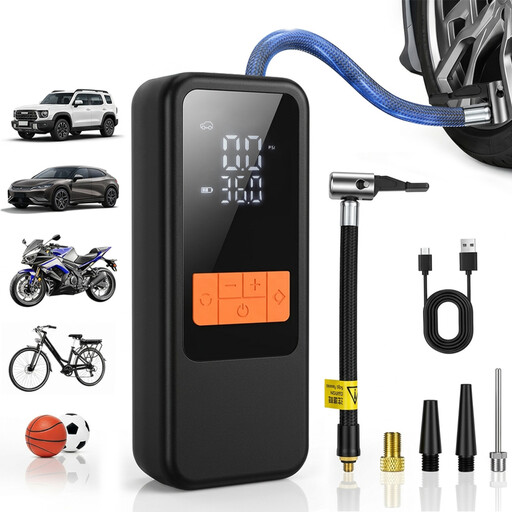
Why This Fits Their Persona: A practical match for users who need one rechargeable device for car top-ups, motorcycle trips, bicycle rides and sports equipment.
Its stated 25-minute runtime and approximately 7–8-minute inflation time for an empty tyre set more realistic expectations than a headline pressure figure alone.
4,000mAh battery, 150 PSI maximum pressure, five modes, USB power-bank output and SOS lighting.
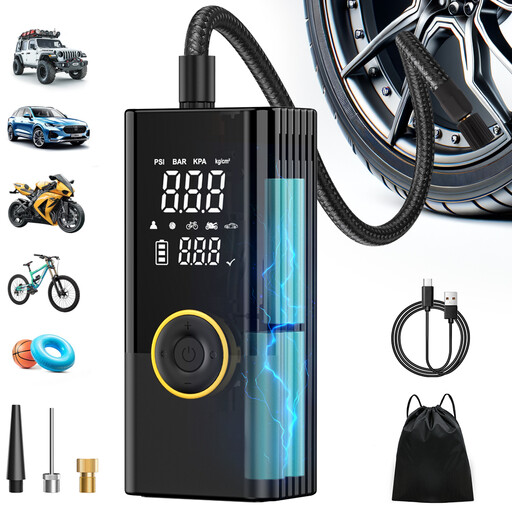
Why This Fits Their Persona: Its cordless format is convenient for cyclists, motorcyclists and sports enthusiasts who may not have access to a vehicle socket.
The digital display and stated lighting function address two common problems: uncertain pressure readings and poor visibility outdoors.
Wireless operation, digital pressure monitoring, built-in lighting and modes for motorcycles, bicycles and balls.
We have compiled a complete, real-time list of products that fully satisfy these strict selection criteria and UK safety regulations.
Yes, but avoid prolonged exposure to damp conditions, direct sunlight and extreme temperatures. Store the pump, cable and adapters together, and check the battery level of a cordless model before a long journey. A corded model should remain accessible rather than buried under luggage.
Lifespan depends on frequency of use, storage, battery care and whether the pump is operated within its stated duty cycle. Allow a motor to cool between extended inflation sessions, keep connectors clean and stop using the unit if the cable, hose or casing is damaged.
Both use relatively small amounts of energy for occasional top-ups, but the practical difference is usually convenience rather than running cost. A cordless pump draws power when recharged, while a 12V model uses the vehicle’s electrical system during operation. Choose based on access to a socket, expected runtime and how often you inflate tyres away from your car.