
24/7 Customer Support

Free returns

Same-day & Next-day Delivery

Quality Guaranteed

Unlock Your Welcome Offers: FREE Delivery | Up to 80% OFF | Free 30-day JoyPlus trial
Download the APP
A portable electric tyre inflator can be useful for topping up car tyres on the driveway, preparing a bike before a weekend ride or dealing with low pressure during a journey. However, product listings often make similar pumps appear interchangeable when their batteries, airflow, valve fittings and intended uses can be very different.
This guide from the Joybuy Product Recommendation Officer focuses on the specifications that matter in everyday UK use, along with common buying traps to avoid.
A rating such as 150 PSI air compressor or 160 PSI describes the maximum pressure the motor may reach under specified conditions. It does not tell you how quickly the pump will inflate a car tyre.
For practical comparison, also check:
A compact bike pump may reach 150 PSI but still be unsuitable for repeated car-tyre inflation. Conversely, a larger cordless tyre inflator may be more appropriate for several vehicle tyres but heavier to carry.
Car and motorcycle tyres commonly use Schrader valves. Many road bikes use Presta valves, while some sports equipment requires a needle or tapered nozzle. A Presta and Schrader valve pump is therefore more flexible for households with different types of equipment.
Do not assume an adapter is included. Some models combine both fittings in one hose, while others require a separate adapter that may not be supplied.
An automatic shut-off tyre pump stops when its preset value is reached, which can reduce the risk of continuing to inflate accidentally. It does not remove the need to set the correct pressure.
For a car, use the pressure shown on the vehicle’s tyre placard or in the handbook, rather than the maximum pressure printed on the tyre sidewall. Check the reading before and after inflation, particularly if the pump has been used in cold or hot conditions.
A rechargeable air pump is convenient for bikes, motorbikes and occasional roadside use because it avoids a 12V cable. Look for:
A higher mAh figure can indicate more stored energy, but motor efficiency and airflow also affect real-world usage. For regular car use, a corded 12V portable car tyre pump may be preferable because it can draw power from the vehicle while the engine is running. This avoids relying entirely on a small internal battery.
A built-in digital tyre pressure gauge should display the units you use. PSI is common in the UK, while BAR and kPa may also be available. A clear LCD or LED screen is useful in a dark car park or at the roadside.
Check the lower end of the pressure range as well as the maximum. A pump intended for bicycle tyres may offer fine adjustment at higher pressures, whereas a vehicle inflator should support the pressure range required by your car, SUV or motorcycle.
Before buying, confirm the connection type and package contents. Useful accessories may include:
A bike tyre inflator can be compact enough for a saddle bag, but a car-focused unit may include a longer hose, stronger motor and more substantial battery.
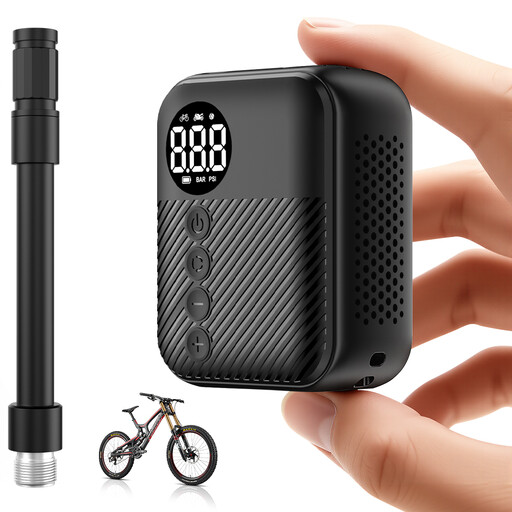
Why This Fits Their Persona: Its pocket-sized rechargeable format suits cyclists, electric bike users and motorists who want a compact backup for occasional top-ups.
The digital gauge makes the target pressure visible, while its rechargeable design avoids dependence on a 12V socket. Check the included fittings before using it with a Presta valve.
150 PSI maximum pressure listed; digital gauge and rechargeable battery in a pocket-sized design.
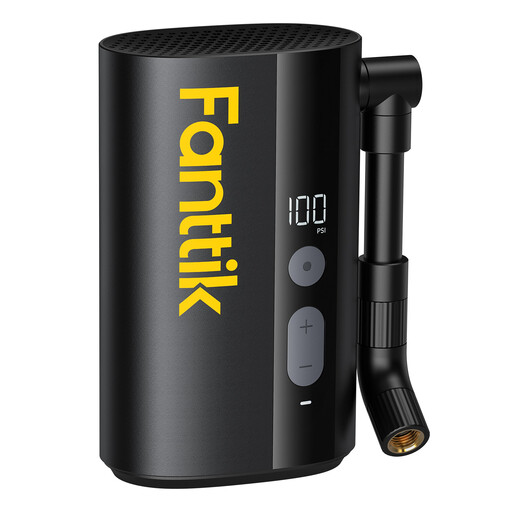
Why This Fits Their Persona: Designed for regular road, mountain and electric-bike riders who value integrated fittings and quick, repeatable inflation.
The listing specifies an all-in-one hose with Presta and Schrader valve compatibility, reducing the risk of losing a separate adapter. It is marked for bicycle use only, so it should not be selected for cars.
5000 mAh battery; stated 150 PSI maximum pressure; automatic shut-off and 10 L/min airflow.

Why This Fits Their Persona: Its larger battery and vehicle presets suit drivers, motorcyclists and outdoor travellers who may need to inflate several items away from home.
Its specifications state 7500 mAh capacity, 35 L/min airflow and automatic shut-off. The listing specifies Schrader compatibility; a separate Presta adapter is required and not included.
160 PSI maximum pressure; four preset modes for cars, motorcycles, bikes and balls; LED lighting and power-bank function.
We have compiled a complete, real-time list of products that fully satisfy these strict selection criteria and UK safety regulations.
A pump should support routine pressure adjustments, not replace roadside assistance for a damaged or punctured tyre. Do not continue inflating if the valve, sidewall or tyre appears damaged.
It can be useful for correcting gradual pressure loss or preparing for a long journey. Choose a car-rated model with a suitable hose length, clear gauge and enough battery capacity for your vehicle. A corded 12V model may suit drivers who prefer not to maintain a rechargeable battery.
The service life depends on charging habits, storage temperature, operating heat and how often the motor is used. Battery capacity will gradually reduce over time. Follow the manufacturer’s charging and cooling instructions, and avoid leaving the pump fully discharged for extended periods.
Some models are marketed for all three, but compatibility still depends on the valve connector, pressure range and motor capacity. A bike tyre inflator may be designed for bicycle use only, while a larger emergency tyre inflator may support cars, motorcycles, bikes and balls. Always check the product’s stated limitations before purchase.