
24/7 Customer Support

Free returns

Same-day & Next-day Delivery

Quality Guaranteed

Unlock Your Welcome Offers: FREE Delivery | Up to 80% OFF | Free 30-day JoyPlus trial
Download the APP
A portable tyre inflator can be a useful addition to a car boot, motorcycle pannier or cycling bag. It may help with gradual pressure loss, seasonal checks and roadside top-ups, but choosing by headline figures alone can lead to disappointment.
A stated 150 PSI air pump rating does not automatically mean the device is suitable for inflating a car tyre quickly. Maximum pressure is a limit, not a measure of everyday performance. Similarly, a compact rechargeable air pump may be convenient but have limited runtime, while a 12V tyre inflator may offer longer operation but require access to the vehicle socket.
Before buying, watch for three common pitfalls:
For most cars in the UK, the recommended tyre pressure is printed on the vehicle’s tyre placard or listed in the handbook. It is often well below 50 PSI, so a 150 PSI maximum rating provides headroom. However, the more useful figures are airflow, expressed in L/min, and the stated inflation time.
A high-pressure car tyre inflator with a digital pressure display is generally more practical for routine top-ups than a low-pressure pump designed for air mattresses or swimming rings. For example, the Baseus PocketGo is specified for inflatables requiring no more than 3.5 kPa, and is expressly not suitable for car, motorcycle or bicycle tyres.
A rechargeable air pump should be judged by its battery capacity, charging time and expected workload. The Porbi Portable Air Pump Q16 has a 4000mAh battery, a stated 25-minute runtime and supports inflating approximately two empty 195-size car tyres, with an estimated seven to eight minutes per empty tyre.
For occasional roadside use, cordless operation avoids trailing cables. For several tyres or repeated inflation, a corded 12V tyre inflator connected to the vehicle may be more suitable. Run the car engine when using a 12V socket, following the product instructions, to reduce the risk of draining the vehicle battery.
A digital tyre pressure gauge makes it easier to set a target value, particularly when switching between PSI, bar or kPa. An automatic shut-off air pump stops when the preset pressure is reached, helping reduce the chance of over-inflation and allowing hands-free operation.
Check whether the displayed pressure is a live reading or merely a preset value. Attach the hose securely to the valve, verify the reading before starting and compare it with the vehicle manufacturer’s recommendation. A pump’s display should support checking, not replace the vehicle handbook or tyre placard.
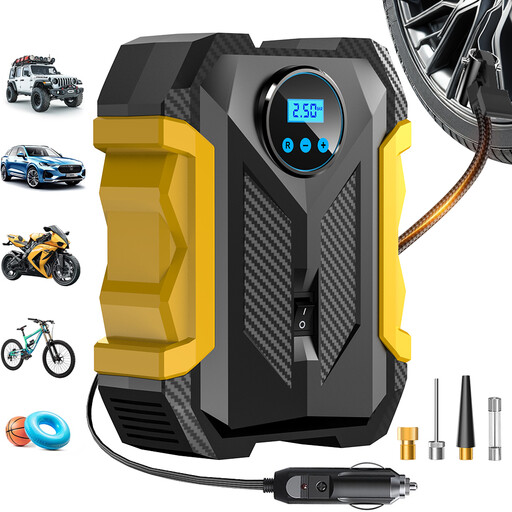
Why This Fits Their Persona: A straightforward option for UK motorists who want a boot-friendly pump for occasional car, motorcycle, bicycle or ball inflation without relying on a built-in battery.
The 12V wired design avoids uncertain cordless runtime, while the digital display makes the target pressure visible during use.
150 PSI stated maximum pressure; includes a digital display, LED light and 3m cord.
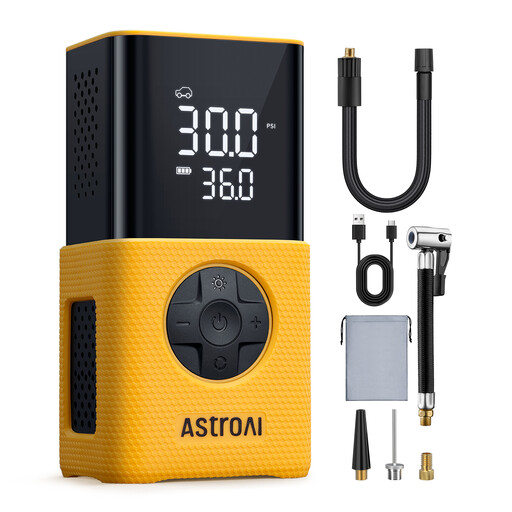
Why This Fits Their Persona: Suitable for drivers and riders who value cordless portability, selectable modes and additional emergency-use functions.
Its stated battery capacity, preset function and automatic shut-off make the cordless format easier to manage than a basic pump without pressure controls.
150 PSI maximum pressure; 4000mAh battery, five modes, four pressure units and LED functions.
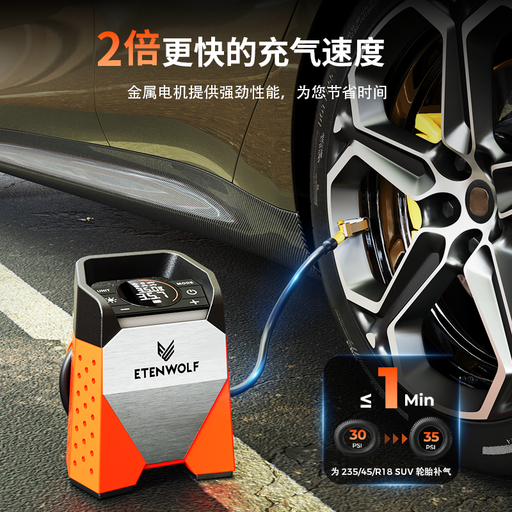
Why This Fits Their Persona: A larger battery-powered format for motorists who prioritise stated inflation performance and compatibility with cars, SUVs, bikes and balls.
The listed 100% duty cycle and 160 PSI maximum are more informative for repeated use than relying on a pressure number alone. Check cooling and vehicle compatibility before extended sessions.
132W maximum power; includes Schrader, Presta and tapered nozzle accessories.
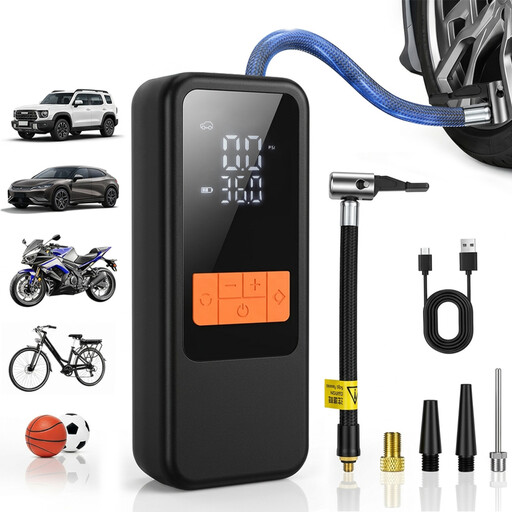
Why This Fits Their Persona: Its compact 67mm by 67mm by 174mm body suits cycle bags, motorcycle storage and car glove compartments.
The stated runtime and inflation times set clearer expectations than an unspecified “fast” claim. It also offers dedicated car, motorcycle, bicycle, ball and custom modes.
150 PSI maximum pressure; USB-C charging, power-bank output and two LED modes.
We have compiled a complete, real-time list of products that fully satisfy these strict selection criteria and UK safety regulations.
It can be useful for correcting gradual pressure loss or handling a low tyre during a journey. It is not a replacement for checking tread, sidewall damage or punctures. Drivers should still carry out regular tyre checks and seek professional assistance when a tyre is damaged.
Runtime depends on battery capacity, tyre size, starting pressure, temperature and how continuously the motor operates. Product specifications may give an estimated number of tyres or minutes, but these figures are usage conditions rather than a universal guarantee. Fully charge the pump before storing it for an emergency.
A 12V inflator does not require separate battery charging, but it uses the vehicle’s electrical system and needs a suitable socket. A cordless model is more flexible away from the car, while a wired pump may be preferable for repeated use. Compare your normal parking location, number of tyres and storage needs before choosing.