
24/7 Customer Support

Free returns

Same-day & Next-day Delivery

Quality Guaranteed

Unlock Your Welcome Offers: FREE Delivery | Up to 80% OFF | Free 30-day JoyPlus trial
Download the APP
By the Joybuy Product Recommendation Officer
An underinflated tyre can turn a routine commute, weekend ride or campsite arrival into a frustrating delay. A portable tyre inflator provides a practical way to handle pressure top-ups without searching for a petrol station, but choosing the right model requires more than looking at the highest PSI number on the box.
Marketing descriptions often make compact pumps appear suitable for every vehicle and inflatable. In practice, battery size, airflow, power connection and intended pressure range can make a significant difference. This guide explains the main buying traps and highlights suitable options for different UK users.
A 150 PSI tyre pump may sound powerful, but maximum pressure is only the upper limit the pump can reach under specified conditions. It does not necessarily indicate how quickly it will inflate a car tyre.
For everyday use, also check the airflow rate, measured in litres per minute (L/min), and look for an estimated inflation time. A model that reaches 150 PSI but has a low airflow rate may take longer to inflate a nearly empty car tyre.
A cordless tyre inflator is convenient for roadside use, cycling and outdoor activities, but its runtime depends on battery capacity, tyre size and starting pressure. Some compact rechargeable air pumps are designed mainly for top-ups rather than repeated inflation from flat.
Check the stated charging time and operating period. For example, the Porbi Q16 has a 4000mAh battery, approximately 25 minutes of runtime and a stated inflation time of around 7–8 minutes for an empty car tyre. That makes it important to recharge the unit after demanding use rather than leaving it in the glove compartment indefinitely.
Not every portable air pump is a tyre inflator. Low-pressure inflators for swimming rings, yoga balls and small air mattresses are not suitable for car, motorcycle or bicycle tyres.
The Baseus PocketGo, for example, is specified for low-pressure inflatables up to 3.5kPa and is explicitly unsuitable for car, motorcycle and bicycle tyres. Always match the pump’s pressure range and connector with your intended use.
A digital tyre inflator should allow you to select a target pressure and monitor the reading. Useful pressure units include PSI, bar, kPa and kg/cm², as UK vehicle manufacturers commonly provide recommendations in PSI or bar.
Automatic shut-off can reduce the risk of continuing to inflate after reaching the selected setting. However, it should be treated as a convenience feature, not a replacement for checking your vehicle manufacturer’s recommended pressures. Find those figures in the vehicle handbook, fuel flap or door-frame label.
There are three common designs:
For a 12V model, follow the product instructions. Some products advise running the engine during use to reduce the risk of draining the vehicle battery. Keep the cable, hose and valve connector free from damage, and allow the unit to cool between extended inflation sessions where instructed.
Airflow gives a more useful indication of practical performance than PSI alone. A pump offering around 25–26L/min may be suitable for occasional car top-ups, while a smaller bicycle pump may be more appropriate for compact storage and cycling emergencies.
Also check the included hose, valve adapters and cable length. A bicycle tyre pump may need a Presta valve adapter, while a car-focused inflator may include nozzles for balls and other small inflatables. An integrated portable air compressor with LED light can be helpful during night-time roadside use, but lighting does not replace reflective clothing, hazard lights or a warning triangle where appropriate.
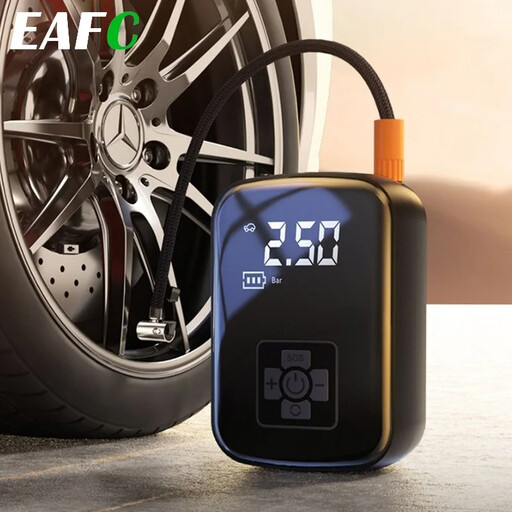
Why This Fits Their Persona: A compact rechargeable air pump for drivers who want one device for car, motorcycle, bicycle and ball inflation without relying solely on a cable.
Its 3–150 PSI range, five inflation modes and automatic shut-off provide more control than a basic low-pressure inflator.
3600mAh battery, 25L/min airflow, digital pressure setting and built-in lighting.
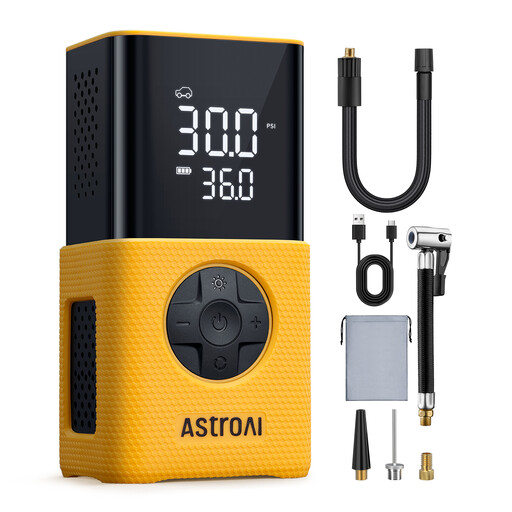
Why This Fits Their Persona: Suitable for motorists and cyclists who value a compact cordless design with selectable units and a clear digital interface.
The stated 17L/min airflow and preset auto-off function give buyers more practical information than a maximum PSI figure alone.
150 PSI maximum pressure, 4000mAh battery, five modes, four pressure units and LED modes.
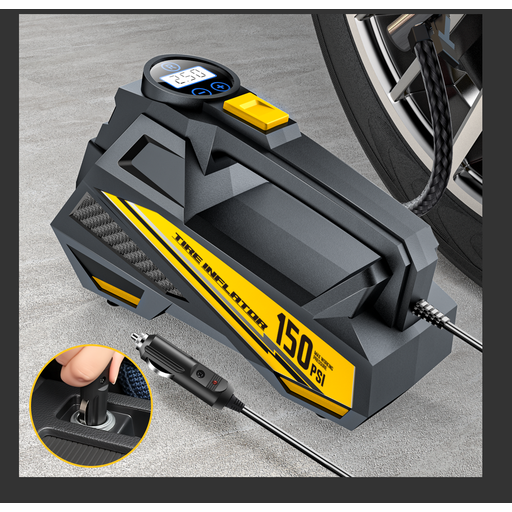
Why This Fits Their Persona: A corded option for vehicle owners who prefer a 12V car air compressor and do not want to monitor a rechargeable battery.
The wired design avoids cordless runtime limits, while the stated 12V supply identifies the intended vehicle power source.
150 PSI maximum pressure, 12V motor and compatibility details covering cars, motorcycles, bicycles and balls.
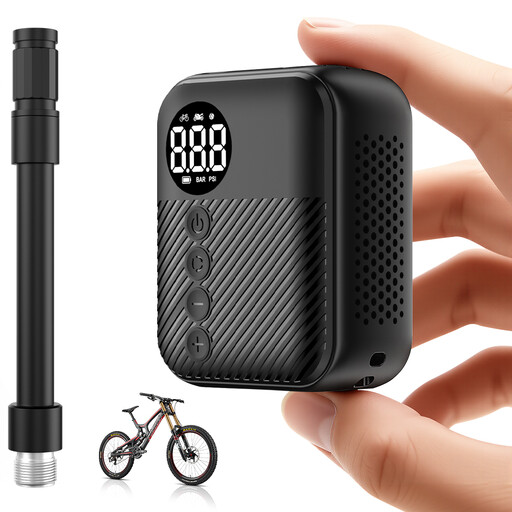
Why This Fits Their Persona: Its small rechargeable format suits cyclists, motorcyclists and anyone carrying an emergency pump in a backpack or storage box.
The digital gauge helps users monitor pressure instead of relying on an unmarked manual pump.
Pocket-sized construction, rechargeable battery and stated 150 PSI maximum pressure.
We have compiled a complete, real-time list of products that fully satisfy these strict selection criteria and UK safety regulations.
Do not use a tyre inflator to repair a puncture. If a tyre loses pressure repeatedly, arrange an inspection or contact roadside assistance.
Some models can inflate a car tyre from flat, but the time varies with tyre size, starting pressure, airflow and battery condition. Compact cordless units are often more convenient for pressure top-ups. Check the manufacturer’s stated inflation time before relying on one for a complete inflation.
Battery runtime depends on workload and storage conditions. A pump such as the Porbi Q16 specifies approximately 25 minutes of operation on a full charge, while other models provide different figures. Recharge it after use and avoid storing it completely empty for long periods.
A rechargeable air pump uses electricity during charging, while a 12V car tyre inflator draws power from the vehicle. Occasional pressure top-ups generally involve modest energy use, but extended inflation sessions can place greater demand on the battery or vehicle electrical system. Follow the supplied instructions and allow the compressor to cool when advised.