
24/7 Customer Support

Free returns

Same-day & Next-day Delivery

Quality Guaranteed

Unlock Your Welcome Offers: FREE Delivery | Up to 80% OFF | Free 30-day JoyPlus trial
Download the APP
A portable tyre inflator can be useful for correcting gradual pressure loss, preparing for a long journey or dealing with an underinflated tyre away from home. It may also inflate bicycle tyres, motorcycle tyres and sports balls, depending on the included fittings.
However, product listings can make small compressors appear more capable than they are. Before buying, UK drivers, cyclists, motorcyclists and electric vehicle owners should look beyond headline figures and check how the pump is powered, how pressure is controlled and whether it is suitable for repeated use.
A label such as 150 PSI tyre inflator describes the maximum stated pressure, not how quickly the device will inflate a car tyre. A compact pump may reach a high maximum pressure but still need cooling breaks or take longer with larger vehicle tyres.
Look for practical information such as airflow, stated inflation times and supported vehicle types. A motorcycle tyre pump or bicycle inflator usually has a lighter workload than a car compressor.
A cordless tyre inflator is convenient at the roadside, but its battery must be charged before use. Capacity, charging time and continuous operating time affect whether it can top up one tyre or several.
A 12V tyre inflator powered from a vehicle socket avoids dependence on an internal battery, although it requires the engine or suitable power supply to be used responsibly. Check the cable length and vehicle socket rating before purchase.
Some mini air pumps are designed for air mattresses, swimming rings or inflatable toys. They may move a large volume of air but produce insufficient pressure for car, motorcycle or bicycle tyres. Always check the stated pressure range and compatibility.
For example, the Baseus PocketGo Portable Air Pump is specified for inflatable items requiring no more than 3.5 kPa and is not suitable for vehicle tyres. It should not be confused with a car tyre pump.
Choose a pump that covers your vehicle’s recommended pressure with room to spare. The correct pressure is shown in the vehicle handbook, on the driver’s door frame or inside the fuel flap. Do not inflate to the pump’s maximum rating unless that is the manufacturer’s specified requirement for the item.
A digital tyre pressure gauge makes the target easier to set and read. Pressure may be displayed in PSI, bar or kPa, so select the unit that matches your vehicle information. Accuracy claims should be treated as product specifications rather than a substitute for checking with a separate gauge where precise measurement is important.
An automatic shut-off tyre pump stops when the preset pressure is reached. This can reduce the need to watch the display continuously and helps avoid overinflation, provided the target has been entered correctly.
Before starting, secure the connector to the valve and check for air leaks. Inflate car tyres when they are cold where possible, as heat from driving can affect the reading.
Battery models are practical for roadside use, while corded models can suit drivers who keep the pump in the boot and regularly maintain several tyres. A long power lead, such as a 3-metre cable, can make it easier to reach all four wheels without moving the unit.
Check the instructions for operating limits and cooling breaks. Do not leave a compressor running unattended, and allow it to cool between extended inflation sessions. Keep cables, hoses and connectors dry and inspect them for damage.
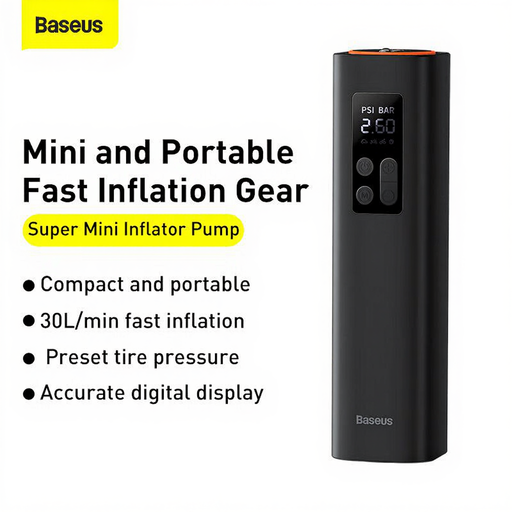
Why This Fits Their Persona: Its compact form suits drivers who want a straightforward emergency roadside air pump for the glove compartment or boot, with support for cars, bicycles and electric vehicles.
It uses a dedicated high-pressure hose and includes a 3-metre 12V cigarette-lighter cable, avoiding the limited reach of very short wired models.
Compact design; supplied with three air nozzles and a 3-metre 12V power cable.
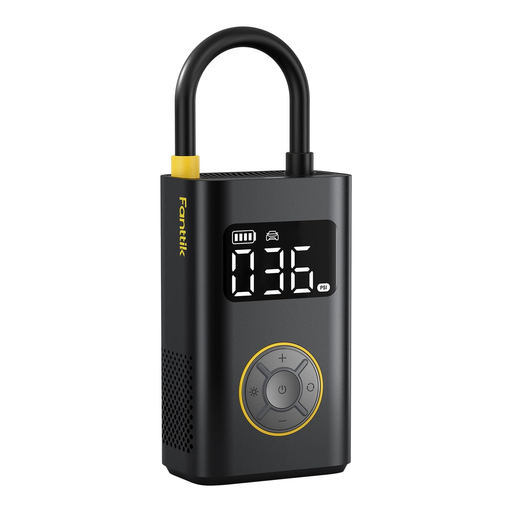
Why This Fits Their Persona: Drivers and EV owners who value cordless operation, clear controls and multi-purpose use may prefer its integrated hose and digital preset system.
Its stated 150 PSI maximum is paired with a digital display, preset modes and automatic shut-off, rather than relying on a pressure headline alone.
Stated one-minute inflation from 30 to 35 PSI for a compact car tyre; built-in accessory storage and up to 23 minutes of continuous operation according to the product description.
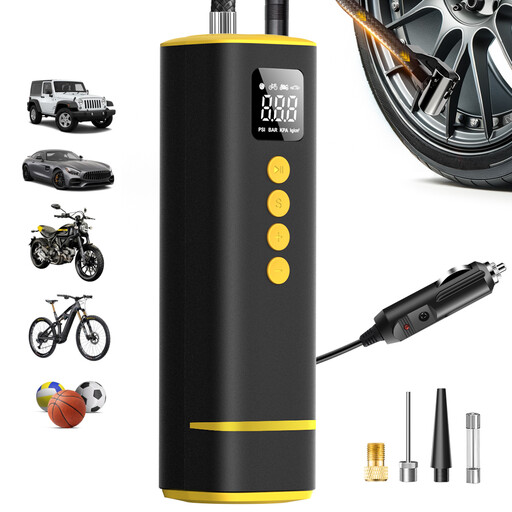
Why This Fits Their Persona: A wired design can suit households maintaining multiple cars, motorcycles or bicycles, particularly when a 12V socket is readily available.
The extended power cord addresses reach problems, while the wired connection avoids forgetting to recharge an internal battery before a journey.
12V 150 PSI specification; designed for cars, motorcycles and bicycles with an extended cable.
We have compiled a complete, real-time list of products that fully satisfy these strict selection criteria and UK safety regulations.
A portable inflator is intended to restore pressure or provide temporary assistance. A tyre that repeatedly loses air should be inspected by a qualified garage, as inflation does not repair punctures or damaged valves.
It can be useful for routine pressure top-ups and roadside situations, particularly when a vehicle has no spare wheel or when a public air machine is inconvenient. Select a model with the correct connector, suitable pressure range and a power source you can use reliably.
Battery life depends on tyre size, starting pressure, target pressure and the model’s operating limit. A small top-up generally uses less energy than inflating a heavily deflated car tyre. Charge the unit periodically and follow its cooling instructions rather than assuming the maximum advertised runtime applies to every use.
A 12V pump draws electricity from the vehicle, while a cordless model uses energy from its rechargeable battery. For occasional pressure checks, the direct running cost is usually modest; the more important considerations are battery charging, socket compatibility and whether the compressor needs cooling breaks.