
24/7 Customer Support

Free returns

Same-day & Next-day Delivery

Quality Guaranteed

Unlock Your Welcome Offers: FREE Delivery | Up to 80% OFF | Free 30-day JoyPlus trial
Download the APP
A portable electric tyre inflator can be useful for topping up a car, bicycle, motorbike or electric bike tyre at home and while travelling. However, product listings often highlight a large PSI figure or fast inflation time without explaining the conditions behind those claims.
The wrong pump may be inconvenient to carry, unsuitable for your valve type, slow on larger tyres or unable to complete several inflations on one charge. Before buying, consider these common pitfalls.
A product rated at 150 PSI or more is not automatically suitable for every vehicle. Maximum pressure indicates the highest pressure the compressor may reach under specified conditions; it does not tell you how quickly it inflates a car tyre or how long it can run continuously.
A compact bike pump may reach 150 PSI but still be intended only for bicycle tyres. For example, the Fanttik X9 Ace listing specifically states that it is for bicycle use only. Conversely, some cordless models support cars, motorbikes, bicycles and balls, but may not be suitable for vans, trailers, trucks or off-road vehicles.
Bicycles may use Presta or Schrader valves, while cars and most motorbikes generally use Schrader valves. Sports equipment usually requires a needle adapter. Check whether the package includes the connectors you need, rather than assuming that a universal-looking nozzle will fit everything.
A rechargeable air pump is convenient, but battery capacity, charging time and continuous operating limits vary significantly. Inflation figures are usually measured for a particular tyre size and pressure increase. A small bike tyre may inflate quickly, while a car tyre takes considerably more energy.
Look for information about battery capacity, estimated number of inflations and cooling requirements. An automatic shut-off air pump is also useful because it reduces the need to monitor the display constantly, but it does not remove the need to use the correct target pressure.
Choose a pressure range that matches your equipment. Many bicycle tyres require higher pressure than car tyres, while balls need a low-pressure setting. A 150 PSI air compressor can cover many bicycle and small vehicle applications, but compatibility remains more important than the headline figure.
For a car, compare the product’s stated vehicle suitability and inflation examples. If you drive an SUV, campervan, trailer or larger commercial vehicle, check the manufacturer’s instructions carefully before relying on a mini pump.
Airflow, commonly shown in L/min, gives a more useful indication of inflation performance than maximum PSI alone. A higher airflow can reduce waiting time, although actual results depend on tyre volume, starting pressure, valve connection and battery charge.
Published timings should be treated as guidance rather than a guarantee. A claim such as inflating a tyre from 30 to 36 PSI describes a small top-up, not inflating a completely flat tyre.
A clear digital tyre pressure gauge makes it easier to set and monitor pressure. UK users may encounter PSI, BAR or kPa, so a pump offering multiple units can be more convenient.
Before inflating a car, check the recommended pressure in the vehicle handbook or on the driver’s door-frame label. Measure when tyres are cold where possible. An automatic shut-off air pump should stop at the preset figure, but check that the valve connection is secure to prevent air leakage and inaccurate readings.
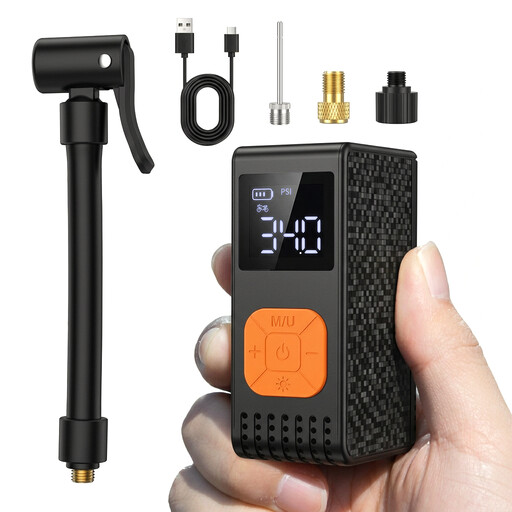
Why This Fits Their Persona: A straightforward choice for cyclists, motorcyclists and sports users who need a compact rechargeable air pump for occasional top-ups.
Its three stated modes identify use for motorcycles, bicycles and balls, making the intended applications clearer than a generic high-PSI claim.
1600mAh battery, Type-C charging, LED lighting and a stated bicycle inflation time of approximately 70 seconds from 0 to 2.06 BAR.

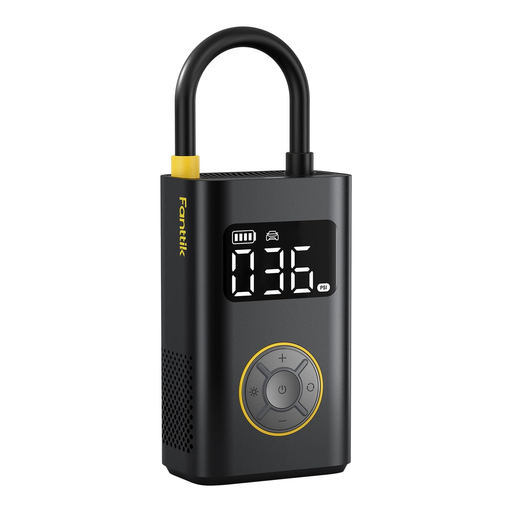
Why This Fits Their Persona: Suited to drivers who want a cordless tyre inflator with a digital interface, multiple presets and extra utility for roadside situations.
The listing states five modes, four pressure units and automatic shut-off, while also identifying that it is not intended for off-road vehicles, RVs, trucks or trailers.
150 PSI maximum pressure, 17 L/min airflow, 4000mAh battery, USB input/output and three lighting modes.
Why This Fits Their Persona: A practical fit for households covering compact cars, motorcycles, electric bikes, bicycles and sports equipment.
Its stated 4+N modes and integrated hose reduce setup decisions, while the listing specifies a 23-minute continuous working period and advises suitable use for compact cars.
150 PSI maximum pressure, automatic stop, accessory storage and a stated one-minute top-up from 30 to 35 PSI for a compact car tyre.
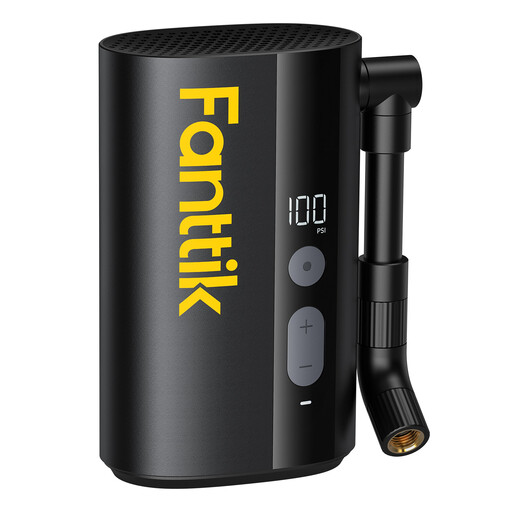
Why This Fits Their Persona: Designed for road, mountain and electric bike riders who value small size, valve flexibility and quick roadside top-ups.
The product is clearly marked for bicycle use, avoiding uncertainty about whether a mini compressor can handle car or motorbike tyres.
5000mAh battery, Presta and Schrader compatibility, automatic shut-off, 150 PSI maximum pressure and stated 10 L/min airflow.
We have compiled a complete, real-time list of products that fully satisfy these strict selection criteria and UK safety regulations.
Some are. Check the listing for explicit car compatibility, airflow, battery capacity and inflation examples. A bicycle-only bike pump should not be treated as a car tyre inflator, even if its maximum pressure is high.
Battery life depends on capacity, tyre size, pressure increase, temperature and usage frequency. Product listings may state an approximate number of tyres per charge, but this is normally based on a defined tyre size and pressure range. Recharge the unit before long journeys and periodically check stored equipment.
For occasional top-ups, a rechargeable pump uses relatively little electricity and avoids a separate trip. A 12V model draws power from the vehicle instead. Running cost is only one consideration: compare purchase price, charging arrangements, noise, inflation speed and whether the pump matches your tyres and valves.