
24/7 Customer Support

Free returns

Same-day & Next-day Delivery

Quality Guaranteed

Unlock Your Welcome Offers: FREE Delivery | Up to 80% OFF | Free 30-day JoyPlus trial
Download the APP
A portable tyre inflator can be useful for routine pressure checks, weekend cycling, motorbike maintenance and roadside emergencies. However, product listings often focus on eye-catching numbers rather than the details that determine whether a pump will suit your vehicle.
Before buying a car tyre inflator or cordless tyre inflator, watch for three common pitfalls:
Most UK cars have recommended tyre pressures well below 50 PSI, although the correct figure varies by vehicle and load. A 150 PSI tyre inflator or 160 PSI air pump therefore has more than enough stated pressure for many cars, SUVs, motorcycles and bicycles. It does not mean the pump should be operated at its maximum rating for every task.
For faster inflation, look for an airflow figure such as litres per minute or cubic feet per minute, plus clear information about inflation times. A compact electric tyre pump may be suitable for topping up pressure but slower when inflating a severely deflated car tyre.
Also check duty-cycle instructions. Continuous operation creates heat, so a pump that requires cooling breaks may be unsuitable for inflating several large tyres in succession.
A 12V tyre inflator connects to a vehicle’s cigarette lighter or DC socket. This can be practical for cars and electric vehicles, provided the socket is accessible and the cable reaches all four wheels. Some manufacturers advise running the vehicle during use to reduce the risk of draining its battery; follow the product instructions.
A rechargeable air compressor removes the cable from the inflation area, which is useful for bicycles, motorcycles, sports equipment and roadside situations. Battery capacity is commonly shown in mAh, but actual usage depends on tyre size, starting pressure, temperature and operating time. Fully charge a cordless unit before keeping it in the boot for emergencies.
A digital tyre pump with a pressure display lets you set a target value and monitor inflation. Automatic shut-off can help prevent over-inflation, but it should not replace checking the recommended pressure on your vehicle’s door-jamb placard, handbook or manufacturer’s guidance.
Look for:
For electrical products, review the listing and packaging for applicable conformity markings and safety information, including CE or UKCA details where relevant. Avoid relying on a single marketing label without checking the instructions, seller information and intended use.
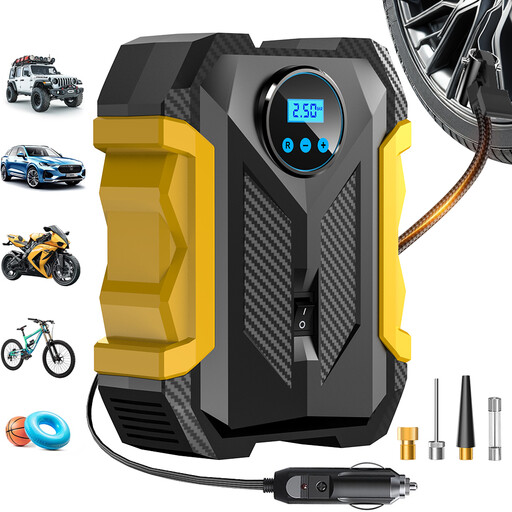
Why This Fits Their Persona: A practical choice for UK drivers who want a straightforward car tyre inflator for occasional pressure top-ups without managing a rechargeable battery.
Its 12V connection makes the power source clear, while the digital display helps users set and monitor a target pressure instead of relying only on a basic analogue gauge.
150 PSI stated maximum pressure; digital pressure display; suitable for cars, motorcycles, bikes and balls.
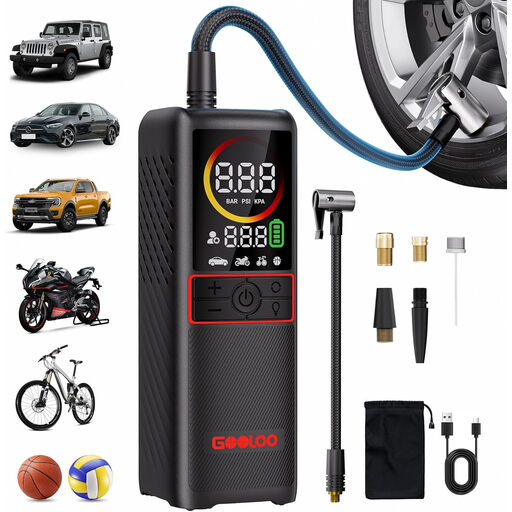
Why This Fits Their Persona: Suitable for motorists, EV owners and outdoor users who value cordless operation, a larger battery and multiple preset modes.
The 7500mAh rechargeable battery is specified, and the product includes preset car, motorcycle, bike and ball modes alongside manual pressure selection.
160 PSI stated maximum pressure; 35L/min airflow specification; PSI, BAR and kPa display; automatic shut-off and LED lighting.
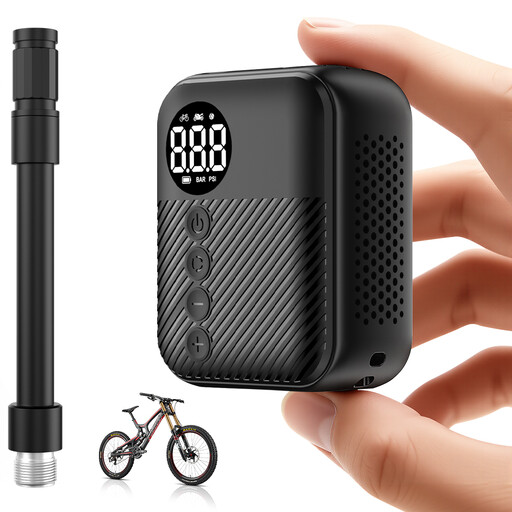
Why This Fits Their Persona: Its pocket-sized format suits cyclists and motorcyclists who need a compact emergency pump for a pannier, backpack or storage compartment.
The product is specifically described as rechargeable and pocket-sized, addressing the portability and battery assumptions that can be unclear in generic listings.
150 PSI stated maximum pressure; digital gauge; rechargeable design; intended for bike, motorcycle and car tyres.
We have compiled a complete, real-time list of products that fully satisfy these strict selection criteria and UK safety regulations.
It can be useful for correcting gradual pressure loss and handling an underinflated tyre before reaching a garage. It is not a substitute for a spare wheel, tyre sealant where appropriate, breakdown cover or professional repair after a puncture.
Battery life depends on capacity, tyre size, starting pressure and frequency of use. Keep the unit charged, follow its cooling instructions and avoid storing it permanently in very hot or cold conditions. For frequent multi-tyre use, a 12V model may be more suitable than a small rechargeable air compressor.
Not necessarily. Both ratings exceed the pressure required by many everyday tyres. Inflation speed is more closely related to airflow, motor design, hose connection, starting pressure and heat management. Compare these specifications together rather than choosing solely by the highest PSI figure.