
24/7 Customer Support

Free returns

Same-day & Next-day Delivery

Quality Guaranteed

Unlock Your Welcome Offers: FREE Delivery | Up to 80% OFF | Free 30-day JoyPlus trial
Download the APP
By Joybuy Product Recommendation Officer
A portable tyre inflator can be useful for routine pressure checks, topping up before a motorway journey or dealing with a slow loss of air away from a petrol station. However, buying the first compact air pump you see can create its own problems.
The main traps are not always obvious:
The right choice depends on your vehicle, how often you inflate and whether you prefer 12V power, battery operation or a combination of both.
A 12V car air pump connects to the vehicle’s cigarette-lighter socket. It does not rely on a built-in battery, making it suitable for keeping in a family car for occasional top-ups. The engine should normally be running during use to reduce the risk of draining the vehicle battery, and the cable must reach all four wheels.
A cordless tyre inflator is easier to use beside a motorcycle, bicycle or electric vehicle when no convenient socket is available. Its limitation is run time. Check the stated battery capacity, charging method and approximate number of tyres it can inflate per charge.
Some models offer dual power, combining a rechargeable battery with a 12V cable. This can be practical for longer journeys because the car socket provides a backup if the battery is low.
A specification such as 150 PSI tyre inflator or 160 PSI sounds substantial, but most UK passenger-car tyres are inflated to considerably lower pressures. The more useful questions are:
For example, a small bicycle air pump may be easy to carry but slow when filling a car tyre from near-flat. Conversely, a larger portable air compressor may be more suitable for family cars but less convenient for a cyclist’s saddlebag.
A digital tyre pressure gauge can make target settings easier to read than a basic analogue dial. Look for selectable PSI, BAR or kPa units if your vehicle handbook uses a measurement other than PSI.
An automatic shut-off tyre inflator stops when the preset pressure is reached. This helps reduce the need to watch the display continuously, but it does not replace checking the vehicle manufacturer’s recommended pressure. Use the pressure shown on the driver’s door pillar, fuel flap or handbook, and check car tyres when they are cold where possible.
Also confirm valve compatibility. Cars and most motorcycles use Schrader valves. Many bicycles use Presta valves, which may require a separate adapter. Nozzle storage is another practical detail: loose adapters are easy to misplace in a boot or pannier.
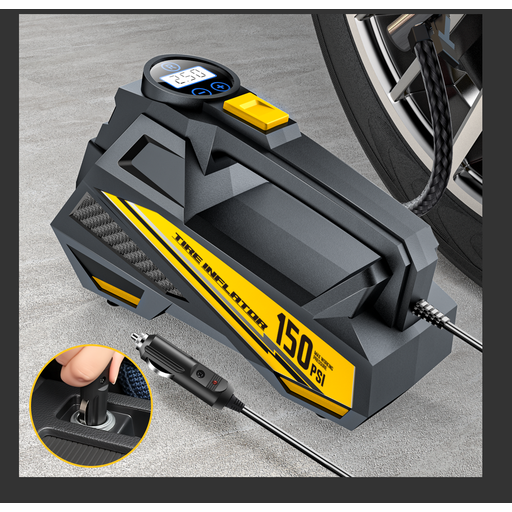
Why This Fits Their Persona: A straightforward option for UK drivers who want a compact car tyre inflator without managing a rechargeable battery. It is also listed for motorcycles, bikes and balls.
The 12V connection avoids uncertainty about battery charge. Its stated 150 PSI maximum should still be viewed as a ceiling rather than a guaranteed inflation speed.
12V operation; listed 150 PSI maximum; suitable for cars, motorcycles, bicycles and balls.
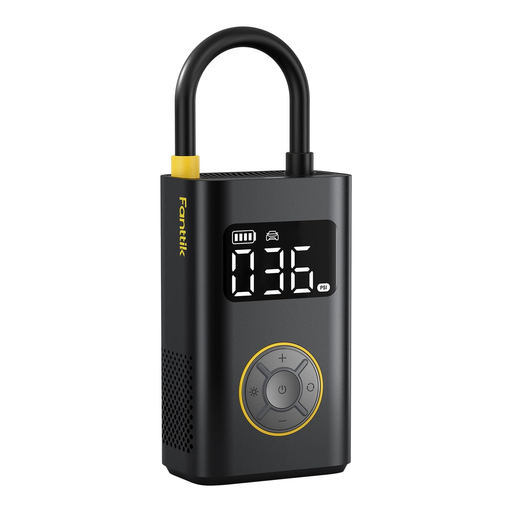
Why This Fits Their Persona: A cordless choice for drivers, electric-bike owners and commuters who value integrated storage and simple preset modes.
The integrated hose and accessory storage address the common problem of misplaced parts. Its listed 23-minute continuous run time should be considered when inflating several tyres.
150 PSI maximum; four preset modes plus manual mode; automatic shut-off; built-in hose storage.

Why This Fits Their Persona: Suited to households with several vehicles, frequent road trips or mixed use across cars, motorcycles, bicycles and sports balls.
Its 7,500mAh battery and stated 45-minute wireless operating time provide more capacity than pocket-sized pumps. It also has a digital display and automatic shut-off.
160 PSI maximum; PSI, kPa and BAR display; LED lighting; four preset inflation modes; power-bank function.
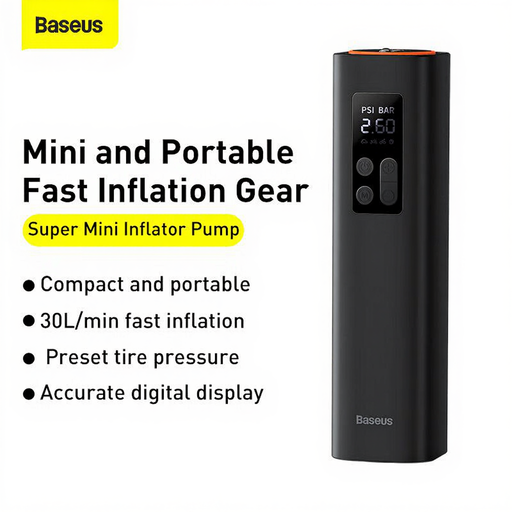
Why This Fits Their Persona: A compact wired option for keeping in a glove compartment, bike bag or EV storage area, with a long cable for reaching around a vehicle.
The 3-metre 12V cable reduces reach problems, while the included hose and three nozzles cover common tyre and inflatable uses. It requires access to a 12V socket.
Ultra-mini form; 3-metre power cable; three air nozzles; listed for cars, bicycles and electric vehicles.
We have compiled a complete, real-time list of products that fully satisfy these strict selection criteria and UK safety regulations.
It can be useful for pressure top-ups and minor roadside problems, particularly when a service station is not nearby. It is not a substitute for repairing a damaged tyre or contacting roadside assistance when a tyre has a serious puncture.
A 12V model draws power from the vehicle, while a rechargeable inflator uses electricity during charging. For occasional top-ups, the electricity cost is generally small; the more important consideration is whether the battery is charged and whether the pump can complete the required task before needing a break.
Some models are listed for all three, but check the valve fittings and included adapters. Car and motorcycle tyres commonly use Schrader valves, while many bicycles use Presta valves. A suitable adapter may be necessary, and a compact bicycle air pump may be more practical for cyclists who rarely inflate car tyres.