
24/7 Customer Support

Free returns

Same-day & Next-day Delivery

Quality Guaranteed

Unlock Your Welcome Offers: FREE Delivery | Up to 80% OFF | Free 30-day JoyPlus trial
Download the APP
A portable tyre inflator can be useful for routine pressure checks, seasonal adjustments and unexpected pressure loss on a UK journey. However, choosing one based only on a large PSI figure or a low headline price can lead to a pump that is inconvenient, slow or unsuitable for your vehicle.
From the Joybuy Product Recommendation Officer, this guide explains the specifications that matter, the common purchasing traps to avoid and which types of car tyre inflator, motorcycle pump or bicycle pump may suit different users.
A listing showing 150PSI air compressor capacity may appear powerful, but maximum pressure is not the same as inflation speed. Most family cars require considerably less pressure than 150PSI. Airflow, motor design, duty cycle and the pump’s suitability for the tyre size also affect how quickly it reaches the recommended level.
Treat the maximum PSI as a ceiling, not a promise of rapid inflation. For regular car use, also check whether the product is designed for 12V vehicle power, has an appropriate hose length and includes a readable pressure display.
A cordless tyre inflator is convenient because it avoids a cable running from the 12V socket. The trade-off is battery maintenance. A rechargeable air pump may need several hours to charge and may provide limited operating time before requiring a recharge.
For emergency use, check the stated battery capacity, charging method and whether the device can be used while charging. If it is stored in a car for long periods, recharge it periodically and avoid leaving it exposed to extreme heat or cold.
Compact electric pumps can become warm during extended operation. A sensible design should be used according to its instructions, with cooling breaks where advised. Never leave a 12V tyre inflator running unattended.
Also check the length of the power lead. A short cable may not reach all four tyres comfortably, especially on larger cars or vans. Cyclists should confirm whether the pump connects directly to their valve type or requires a Presta adapter. Nozzle compatibility is equally important if you plan to inflate footballs, basketballs, air beds or other inflatables.
A 12V tyre inflator draws power from a vehicle’s DC socket and can provide consistent operation without relying on an internal battery. The vehicle engine should generally be running during use, following the pump and vehicle instructions, to reduce the risk of draining the battery.
A cordless electric tyre pump is easier to use away from the car and can be practical for bicycles, motorcycles and sports equipment. Its limitations are charging time, battery runtime and storage conditions. For frequent roadside car use, a corded model may be a more predictable choice.
A digital tyre pressure gauge or integrated digital display makes it easier to set and monitor a target pressure. Always use the pressure recommended by your vehicle manufacturer, normally found in the handbook, on the driver’s door frame or inside the fuel flap. Do not rely solely on the maximum number shown on the pump.
Automatic shut-off can reduce the chance of continuing to inflate after the preset pressure is reached. Even with this feature, check the tyre pressure afterwards with a separate gauge where appropriate, particularly before a long motorway journey.
For car owners, a longer lead can simplify access to front and rear wheels. The Baseus model listed below includes a 3m 12V cigarette lighter power cable, while several compact cordless options prioritise storage convenience instead.
For mixed household use, look for supplied nozzles or adapters. A motorcycle tyre pump may need a secure connection for smaller valves, while a bicycle pump may require a Presta-compatible fitting. LED lighting is helpful during low-light roadside inflation, but it should be viewed as an illumination feature rather than a replacement for hazard lights or appropriate roadside safety equipment.
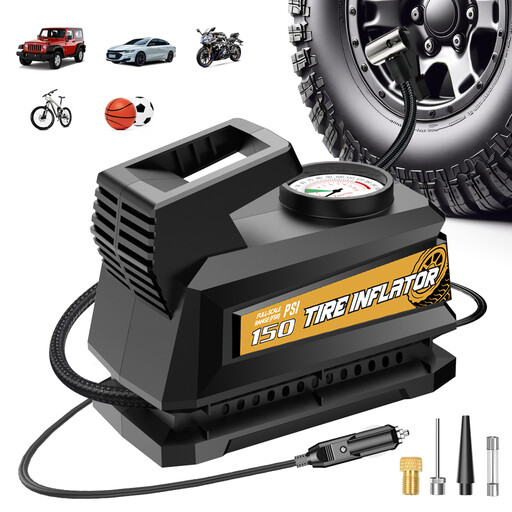
Why This Fits Their Persona: A straightforward option for drivers who want a compact pump for occasional pressure top-ups without managing a rechargeable battery.
Its 12V plug-in format avoids dependence on battery charge levels. The no-switch plug-and-play design also keeps the basic operation simple.
22-cylinder construction, portable form and lightweight design.
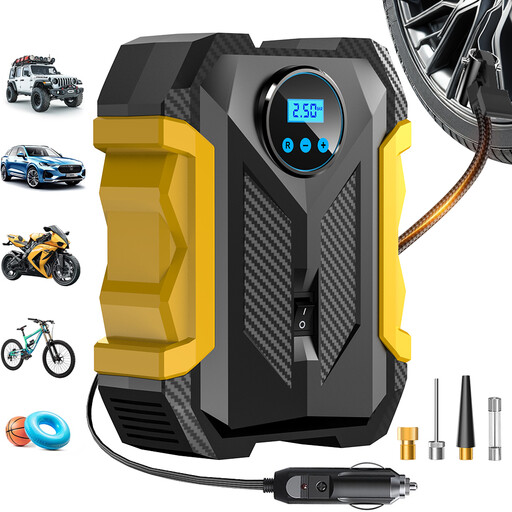
Why This Fits Their Persona: Suits drivers who value pressure monitoring, low-light visibility and a longer reach for cars, bikes and balls.
The digital display addresses the risk of judging pressure by appearance, while the 3m cord helps reduce reach problems around the vehicle.
150PSI stated maximum pressure, digital display, LED light and 3m cord.
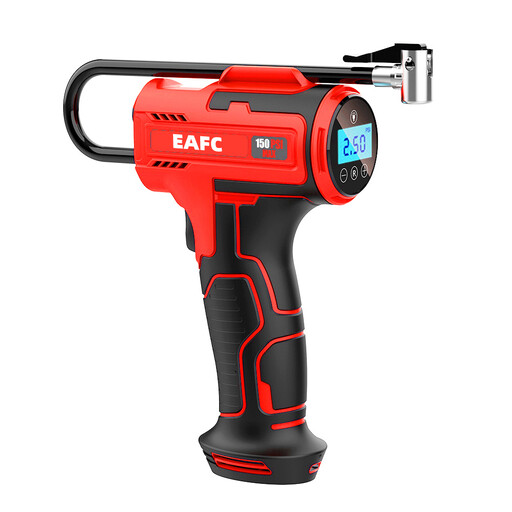
Why This Fits Their Persona: A cordless choice for EV drivers, motorcyclists and travellers who prefer not to depend on a vehicle power socket.
The stated 4,000mAh battery configuration and cordless design address cable access issues. Charge it before travel rather than assuming it will be ready after long storage.
Cordless 7.4V operation, automatic stopping, digital display and LED lighting.
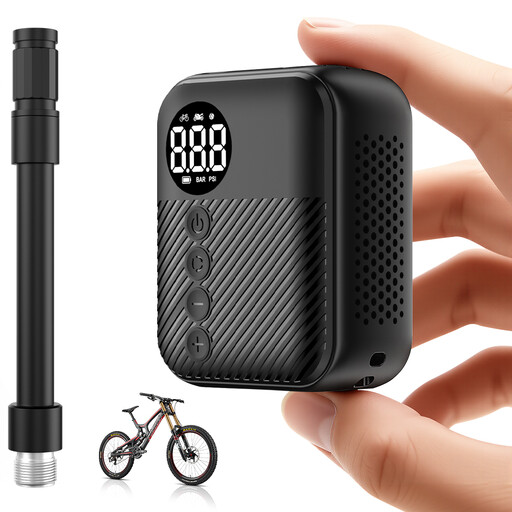
Why This Fits Their Persona: Its compact format is suited to cyclists, motorcyclists and travellers who need a rechargeable pump in a bag or storage compartment.
The digital gauge gives a visible pressure reading, while the rechargeable design avoids the need for a mains outlet or car socket during a ride.
Pocket-sized design, rechargeable battery, digital gauge and stated 150PSI maximum pressure.
A portable pump is intended for inflation and pressure maintenance. If a tyre repeatedly loses air, arrange an inspection rather than repeatedly topping it up.
We have compiled a complete, real-time list of products that fully satisfy these strict selection criteria and UK safety regulations.
Service life depends on usage frequency, storage, heat management and build quality. Occasional pressure top-ups place less demand on a pump than inflating several car tyres from very low pressure. Keep the hose and cable dry, avoid pulling the connector by its lead and follow the recommended duty cycle.
Yes, provided its pressure range, connector and battery capacity suit the vehicle. Cordless models are convenient for emergencies and do not rely on a 12V socket, but they must be charged in advance. For repeated inflation of larger car tyres, a corded 12V car tyre inflator may offer more consistent operating time.
A rechargeable air pump generally uses a modest amount of electricity per charge, while a 12V model takes power from the vehicle battery and alternator when the engine is running. The precise cost depends on charging frequency, electricity rates and inflation time. For most occasional users, convenience and correct tyre pressure are more significant considerations than the energy used by the pump.