
24/7 Customer Support

Free returns

Same-day & Next-day Delivery

Quality Guaranteed

Unlock Your Welcome Offers: FREE Delivery | Up to 80% OFF | Free 30-day JoyPlus trial
Download the APP
That dreaded dashboard warning light: low tyre pressure. It often appears at the most inconvenient times, leaving you to hunt for a petrol station with a working, clean and often coin-operated air machine. A portable tyre inflator seems like the perfect solution, a compact gadget to keep in your boot for peace of mind. Yet, the market is flooded with options, and many UK drivers end up with a device that fails when they need it most.
Before you buy, be aware of the common pitfalls that lead to disappointment. Many shoppers are lured by impressive-looking specifications that don't translate to real-world performance. Here are the key issues to watch out for:
To avoid these traps, you need to look past the marketing hype and focus on a few core parameters. Understanding these will help you select a reliable car tyre pump that suits your needs.
While PSI (Pounds per Square Inch) indicates the maximum pressure a pump can achieve, it doesn't tell you how fast it works. The more important figure is the airflow rate, measured in Litres Per Minute (L/min).
Your choice of power source depends on your priorities: convenience or guaranteed power.
A few key features separate a frustrating gadget from a genuinely useful tool. A digital tyre inflator with an automatic shut-off function is non-negotiable. This allows you to pre-set your tyre's required pressure (found on the sticker inside your driver's door jamb). The pump then inflates to that exact pressure and stops automatically, preventing dangerous over-inflation and allowing you to get on with other things while it works.
To help you choose, we've matched some promising models to common user profiles. These selections are based on their stated features and how they address the buying pitfalls mentioned earlier.
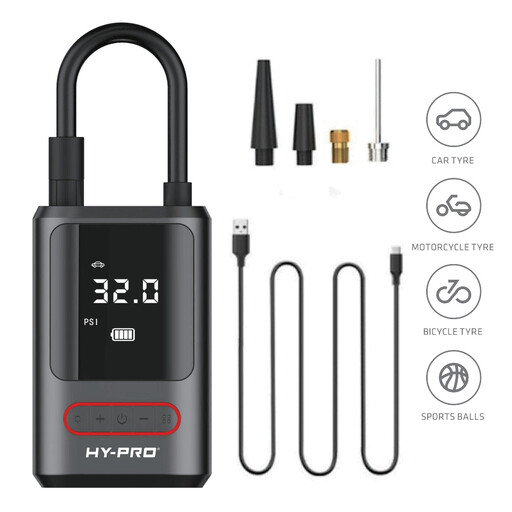
Why This Fits Their Persona: Ideal for the UK commuter who needs a straightforward, compact and affordable tool for routine tyre pressure checks and occasional top-ups. Its simple operation and small size make it easy to store in the glovebox or boot without taking up much space.
It focuses on core functionality. The clear digital PSI display provides accurate readings, helping to avoid the pitfall of unreliable analogue or poorly calibrated gauges. Its rechargeable design removes the need for a 12V socket, but its primary use is for top-ups, not inflating from flat, managing battery expectations.
Simplicity and Portability: Compact, lightweight and features simple button controls for user-friendly operation. Includes multiple valve attachments for versatile use on bikes and sports balls as well as cars.
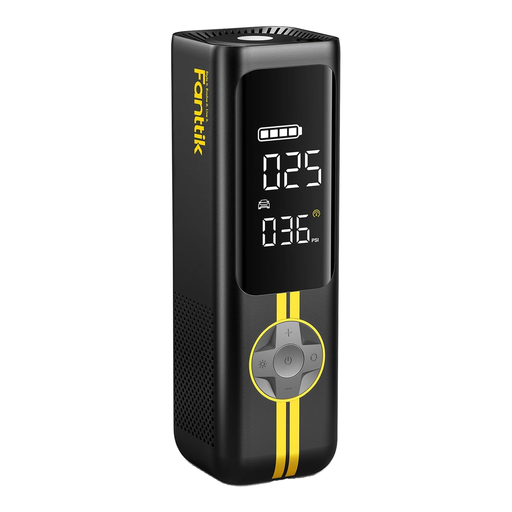
Why This Fits Their Persona: For the driver who values speed, power and technology. This user frequently goes on long road trips or has larger vehicle tyres (e.g., MPVs, SUVs) and wants an inflator that can do the job quickly and reliably without overheating.
It directly counters the "High PSI, Low Performance" trap by highlighting its fast inflation time (e.g., 56 seconds for 28-33 PSI on a medium tyre). It also addresses battery anxiety with a stated 40-minute continuous runtime and a cooling function, suggesting a more robust build designed for sustained use.
Speed and Endurance: Engineered for fast inflation and extended use. Multi-Functionality: Also serves as a power bank for charging devices and includes an LED light, adding value beyond simple inflation.
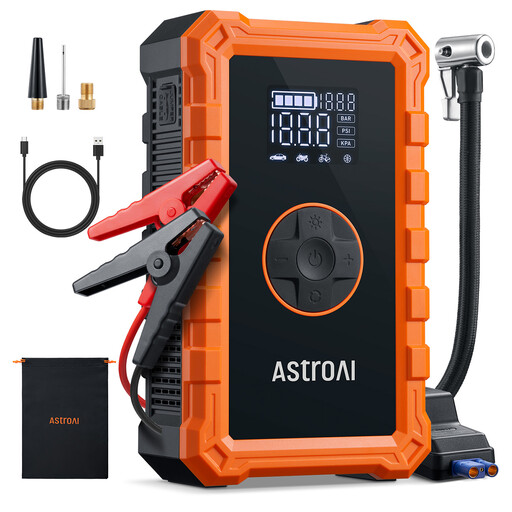
Why This Fits Their Persona: This is for the driver who wants a single, robust device to handle multiple roadside emergencies. They prioritise utility and preparedness, wanting a tool that can solve both a flat tyre and a dead battery, reducing the number of gadgets they need to carry.
By combining two high-demand functions (jump starter and compressor) into one unit, it justifies its potentially higher cost and larger size. It avoids being a "jack of all trades, master of none" by specifying its capabilities, such as a 1500A peak current for jump-starting and 150 PSI for inflation, showing it's designed for both tasks.
Ultimate Versatility: Acts as a jump starter, tyre inflator, power bank and multi-mode flashlight. Clear Information: The large 2.4" screen displays operational status, battery level and pressure readings clearly, enhancing ease of use during a stressful situation.
We have compiled a complete, real-time list of products that fully satisfy these strict selection criteria and UK safety regulations.
The lifespan of a portable tyre inflator depends on its build quality, motor and battery. A well-made device from a reputable brand should last for several years with proper care. Key factors include not running the motor continuously for longer than the manufacturer's recommendation (usually 10-15 minutes) to prevent overheating and maintaining the battery by charging it every 2-3 months, even when not in use.
Yes, but it's wise to be mindful of the battery. Extreme cold can temporarily reduce a lithium-ion battery's performance and capacity. While most units are designed to be stored in a vehicle, their efficiency will be highest if they are at a moderate temperature. If you live in an area with frequent sub-zero temperatures, it might be a good idea to bring the device inside to charge fully before a long journey.
This comes down to personal preference. A 12V air compressor offers peace of mind as it will always work as long as your car's battery is functional. A rechargeable air pump offers superior convenience, allowing you to inflate tyres on a car, bicycle or wheelbarrow anywhere on your property without being tethered by a cord. For those who want the best of both, some hybrid models offer both cordless operation and a 12V backup power option.