
24/7 Customer Support

Free returns

Same-day & Next-day Delivery

Quality Guaranteed

Unlock Your Welcome Offers: FREE Delivery | Up to 80% OFF | Free 30-day JoyPlus trial
Download the APP
That sinking feeling when the tyre pressure warning light illuminates your dashboard is a familiar one for many UK drivers. A quick trip to the petrol station pump seems simple, but they are often out of order, inconveniently located or require a frantic search for loose change. A portable tyre inflator seems like the perfect solution, but the market is flooded with gadgets that often fail to live up to their promises.
As a Joybuy Product Recommendation Officer, my role is to help you see past the marketing clutter. Before you buy, be aware of a few common pitfalls that lead to buyer's remorse.
To avoid these issues, focus on a few core parameters. This will ensure the electric tyre pump you choose is a reliable tool rather than a frustrating gadget.
Your first decision is how the device is powered. There is no single right answer; it depends entirely on your intended use.
Analogue dials can be difficult to read accurately. A digital tyre inflator provides a clear, precise reading of the current pressure. The most crucial feature, however, is automatic shut-off. This allows you to pre-set your vehicle's required pressure (e.g., 35 PSI) and the inflator will automatically stop once it reaches that target. This simple function prevents dangerous over-inflation and allows you to attend to other things while it works.
A robust build is essential for a tool designed for roadside use. Pay attention to the air hose and the valve connector. A screw-on brass connector is generally more durable and provides a better seal than a plastic, lever-style one. Also, check what nozzles are included. Most kits come with adaptors for sports balls and other inflatables, adding to the device's versatility. For wired models, a long power cord (at least 3 metres) is vital to ensure you can comfortably reach all four tyres.
Instead of a one-size-fits-all approach, we have matched a few noteworthy products to specific user needs.
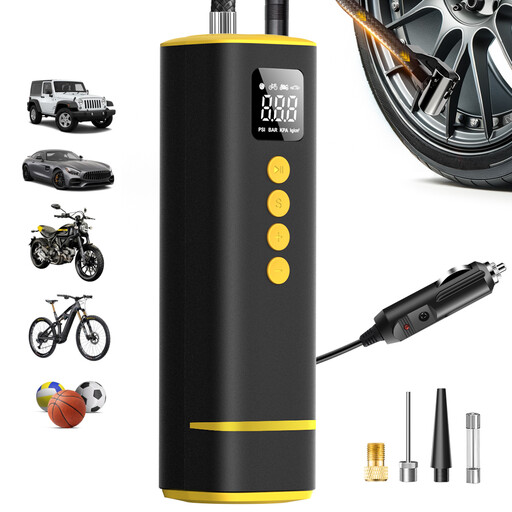
Why This Fits Their Persona: This is for the driver who wants a simple, reliable tool to keep in the boot for emergencies or occasional top-ups. It's a no-fuss device that is always ready to go, drawing power directly from the car.
It completely sidesteps the 'cordless convenience trap' by using the car's 12V socket, ensuring you have consistent power for as long as you need it, without worrying about a dead battery.
The extended power cord is a major practical benefit, easily reaching all four tyres on most cars. Its straightforward, wired design prioritises reliability over complex features.
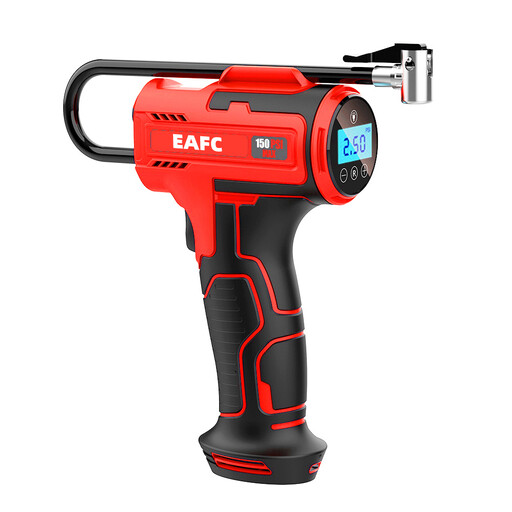
Why This Fits Their Persona: Perfect for the user who values convenience for regular tyre maintenance on their car, motorcycle or bicycle. The cordless design makes routine pressure checks quick and easy without being tethered to the vehicle.
It provides a specific 4000mAh battery capacity, a tangible metric that counters the vague claims of weaker models. The digital display and auto-shutoff feature also prevent issues with inaccurate gauges.
The combination of cordless freedom, a substantial battery and a built-in LED light for night-time use makes it a versatile and practical all-rounder.
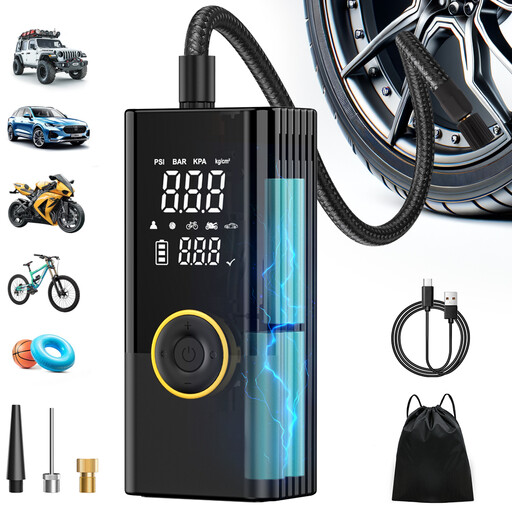
Why This Fits Their Persona: This user needs a powerful and efficient tool to manage multiple vehicles, from an SUV to family bikes and sports balls. The emphasis is on speed and the ability to handle frequent use without faltering.
It directly addresses the 'exaggerated inflation speeds' pitfall. The mention of a '22-cylinder' core suggests a more powerful motor designed for faster airflow, reducing the time spent on each tyre compared to basic models.
Its stronger inflation mechanism makes it suitable for larger tyres and more frequent use. The smart digital operation and cordless design provide both power and convenience.
We have compiled a complete, real-time list of products that fully satisfy these strict selection criteria and UK safety regulations.
Charge times vary, but most models take between 3 to 5 hours for a full charge via a USB-C cable. The longevity of the charge depends on the battery's mAh rating and the work it's doing. A good quality inflator should be able to top up four car tyres by a few PSI on a single charge. However, inflating a tyre from completely flat will use significantly more power. It is good practice to recharge the device after any significant use.
It is generally advisable to store electronic devices with lithium-ion batteries within a moderate temperature range. Extreme cold can temporarily reduce battery performance, while extreme heat (such as in a car on a hot summer day) can degrade the battery's long-term health and lifespan. If you store it in your car, try to keep it out of direct sunlight, perhaps in the glove box or under a seat.
Most portable inflators rated to 150 PSI have enough pressure capacity for SUV and light commercial van tyres, which typically require 35-45 PSI. The main difference is the volume of air required. A small, portable car air compressor will take longer to inflate a large SUV tyre compared to a smaller car tyre. For these larger vehicles, a more powerful cordless model or a reliable 12V wired inflator is often the better choice to ensure the job gets done efficiently.