One-pan cooks short on space
If you mainly make small meals and want to clear the worktop afterwards, a portable hob is worth considering. Check that your saucepan meets the chosen induction model’s cookware and pan-size requirements.


For a one-person pan of creamy leeks, a portable single-zone induction hob is a sensible choice if you want to put the hob away afterwards and have a compatible saucepan. Choose a built-in induction or ceramic hob when this purchase also needs to serve as a permanent kitchen hob; the extra zones bring an installation decision that the leek dish alone does not require. Check the pan, its base size and the exact model’s electrical and fitting instructions before ordering.
If you mainly make small meals and want to clear the worktop afterwards, a portable hob is worth considering. Check that your saucepan meets the chosen induction model’s cookware and pan-size requirements.
If creamy leeks are only one of the meals you need to cook, a built-in hob may make sense. The worktop cut-out, connection method and electrical requirements matter alongside the number of zones.
Check your small saucepan before choosing induction. If it is not induction-compatible, a ceramic electric hob avoids that particular cookware requirement, though you still need to check the pan against the chosen hob’s instructions.
Decide whether you need a hob just for this one-pan meal or a permanent replacement for the kitchen. That choice determines which cookware and installation checks deserve attention first.
Choose it when: you want to cook one pan and store the hob between uses.
Trade-off: the pan must suit induction, and one zone cannot heat a second pan at the same time.
Choose it when: you are fitting a permanent hob and want more zones for other meals.
Trade-off: it still needs compatible pans, and fitting requirements depend on the exact model.
Choose it when: you want a permanent electric hob without induction’s cookware requirement.
Trade-off: the glass can remain hot after cooking, and the chosen model’s fitting requirements still need checking.
| Concern | What to check | Who this matters to |
|---|---|---|
| One-pan cooking and storage | Check whether the hob is portable and where you can place and store it safely. | If I cook one portion and need the worktop back afterwards, I want a hob I can put away rather than a kitchen alteration. Around 42% of consumers put storage and avoiding alterations first. |
| Saucepan fit and heat control | For induction, check pan compatibility and the model’s pan-base range; compare its available controls with how you cook. | When cooking creamy leeks in my existing small saucepan, I need the pan to work on the hob and want to adjust the heat as the dish cooks. Around 33% of consumers place pan fit and control first. |
| Permanent fitting and capacity | Check the number of zones, worktop cut-out, connection method and electrical requirements for the exact model. | If I am replacing my kitchen hob, it also needs to accommodate meals that use more than one pan. For around 25% of consumers, permanent fitting and future capacity take priority. |
Induction heats a compatible pan directly, while a ceramic hob heats an element beneath the glass. The distinction affects which saucepan you can use and how you treat the surface after cooking.
Check your current pan and the exact hob’s cookware instructions before choosing between them.
Choosing induction may mean obtaining a compatible saucepan if your current one does not work with it.
A hob’s external size does not tell you its required worktop cut-out or electrical connection. AEG states that its HK614000CB ceramic model is hardwired only, with a 6000 W total electrical loading; those requirements are specific to that model.
Compare the installation drawing with your worktop and have the intended connection assessed before ordering.
Fitting a built-in hob may involve worktop alterations and electrical installation.
A portable format does not remove the need to follow the appliance’s supply instructions. Electrical Safety First cautions that high-power kitchen appliances can overload an extension lead, particularly alongside other large appliances.
Check the chosen hob’s plug and supply requirements, and seek qualified advice if you are unsure about the intended socket or circuit.
A stated power setting or cooking mode tells you what controls a model offers, not how a particular small pan of creamy leeks will behave on it.
Check the pan-size guidance and available manual adjustments, then follow the maker’s cooking instructions rather than relying on headline wattage alone.
Tefal has a portable single-zone induction route relevant to a small kitchen or an occasional extra cooking surface.
Bosch’s PUE611BB5B is a permanent four-zone induction option for a wider kitchen replacement.
AEG’s HK614000CB is a built-in ceramic option with four zones of different sizes.
These options cover a portable induction hob for one-pan cooking and built-in induction or ceramic hobs for a more permanent kitchen setup. Match the saucepan and fitting requirements to the exact model rather than choosing by zone count alone.
 No image available
A single portable hob to consider if you want to put your cooking surface away after making one portion.
The product name lists touch controls, 10 power settings, six functions and a safety lock. Check that your saucepan is suitable for induction and meets the hob’s pan-size guidance, and confirm the required plug and supply arrangement.
 No image available
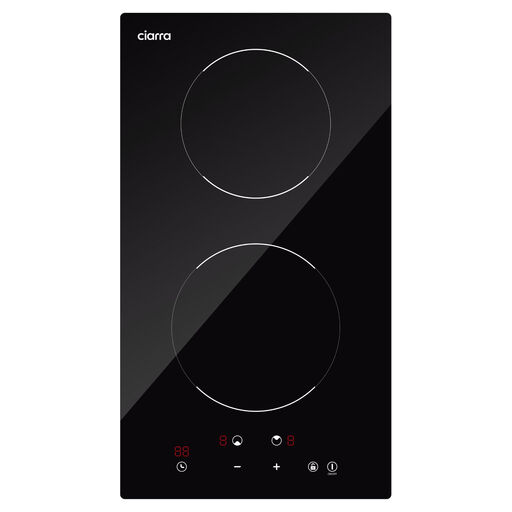
A built-in choice if you want a permanent hob with a second zone available for other cooking.
The product name lists 2900 W, touch controls, nine power levels, a timer and a child safety lock. Check your saucepan against the zone-specific induction pan guidance, and confirm the cut-out, ventilation and electrical connection before fitting.
 No image available
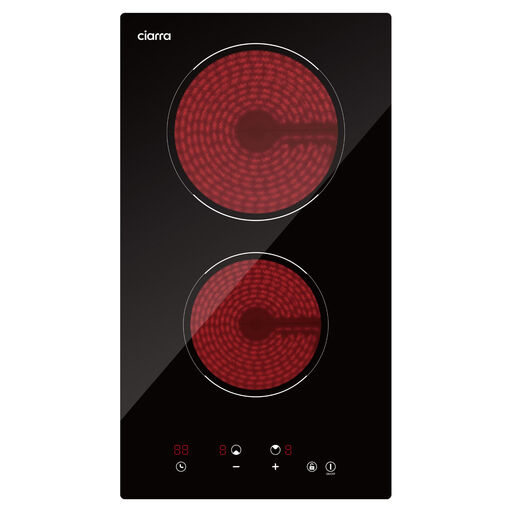
A permanent ceramic alternative if you do not want induction-specific cookware requirements.
The product name lists 2900 W, touch controls, nine power levels, a timer and a child lock. Check the model’s cookware instructions for your saucepan, as well as its cut-out, ventilation and electrical connection requirements.
 No image available
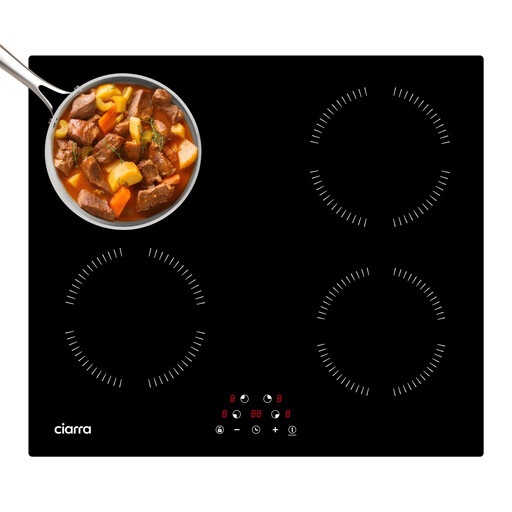
Consider this format if you are replacing a permanent kitchen hob and need capacity beyond the single pan used for creamy leeks.
The product name specifies four zones and modular power control. Check your pan against the zone-specific induction guidance and confirm the kitchen’s electrical supply, worktop cut-out and installation requirements.
 No image available
A built-in option for a wider kitchen replacement rather than a hob bought solely for one-person meals.
The product name identifies this model as hardwired. Check your saucepan’s induction compatibility and the model’s pan-base guidance, worktop cut-out and electrical installation instructions before ordering.
It can be enough when you only need to heat one pan, want to store the hob afterwards and have suitable induction cookware. Check the chosen model’s pan-base limits and controls rather than assuming every small saucepan will work.
Only if the saucepan is induction-compatible and its base meets the chosen hob’s requirements. Check the pan maker’s guidance and the exact hob model’s stated pan-size range before buying.
No; the connection depends on the model. Bosch describes its PUE611BB5B induction hob as Plug & Play, whereas AEG specifies hardwiring for its HK614000CB ceramic hob. Check the installation instructions for the model you actually choose.
Electrical Safety First recommends a registered electrician for electrical installation work. Follow the chosen hob’s installation instructions and obtain professional advice if its connection or your kitchen’s electrical supply is uncertain.
Let the hob cool and follow its cleaning instructions. A ceramic surface can retain heat after switch-off, so heed any residual-heat indicator rather than assuming the glass is cool.