
24/7 Customer Support

Free returns

Same-day & Next-day Delivery

Quality Guaranteed

Unlock Your Welcome Offers: FREE Delivery | Up to 80% OFF | Free 30-day JoyPlus trial
Download the APP
A portable water flosser can make daily interdental cleaning easier, particularly if you travel frequently, wear braces or find traditional floss uncomfortable. However, product listings often focus on pressure, battery capacity or waterproofing without explaining how those features affect everyday use.
Before choosing a cordless water flosser, watch for three common buying traps:
A rechargeable water flosser should fit naturally into your routine. For commuting or holidays, look for USB rechargeable water flosser models that can be charged with a compatible USB adapter or power source.
Consider:
A very large tank may reduce refilling at home but add weight to your wash bag. Conversely, a compact tank may require more frequent filling. The right balance depends on whether you want a water flosser for travel, bathroom use or both.
An IP rating describes protection against water and solids under specified test conditions. IPX7 generally indicates protection during temporary immersion, but it does not mean the charger or USB cable can be submerged.
A hygienic design should also make the water tank and nozzle easy to rinse. Look for:
After every use, empty leftover water, rinse the tank and nozzle, then allow the components to air dry. This routine matters more than a waterproofing label alone.
A water flosser for sensitive gums should offer a gentler starting setting rather than forcing users to begin at high pressure. Pulse or press-and-spray operation can also provide more control than a continuous stream.
For braces, an orthodontic nozzle may help direct water around brackets and wires. A periodontal pocket tip is designed for targeted use, but anyone with gum disease, recent oral surgery or a specific care plan should follow advice from their dentist or dental hygienist.
Do not use hot water, damaged nozzles or an excessive pressure setting. Position the tip in the mouth before switching the device on to reduce splashing.
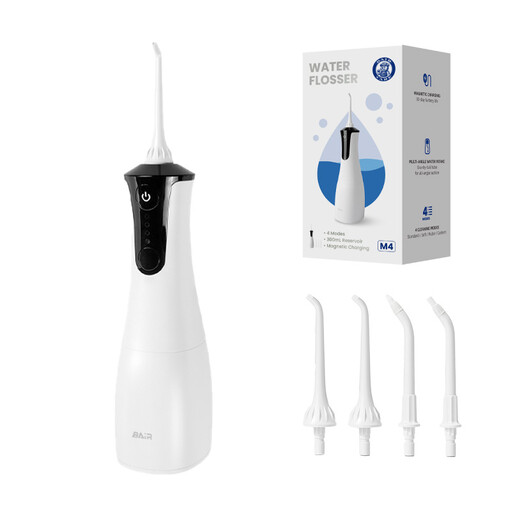
Why This Fits Their Persona: A practical option for adults starting with an electric dental flosser and wanting cordless convenience for everyday care or occasional trips.
The specification lists four cleaning modes, USB charging and IPX7 water resistance, rather than relying on battery capacity alone.
Press-spray operation, four modes, USB rechargeability and a stated battery life of up to 30 days.
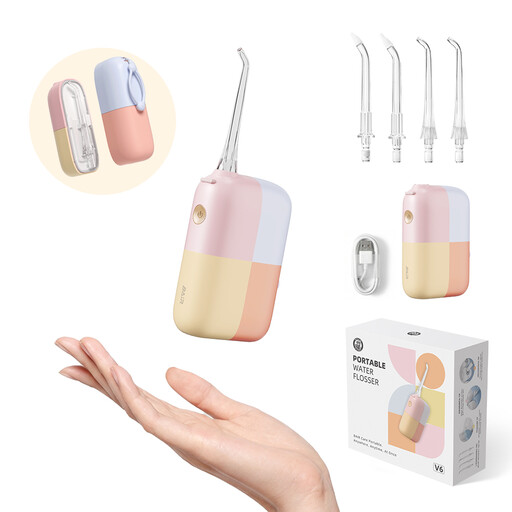
Why This Fits Their Persona: Its compact folding format suits frequent flyers, train commuters and anyone who wants a tidy oral irrigator in a handbag or travel kit.
The detachable magnetic tank is designed for refilling and cleaning, while the charging port requires a secured cover before water exposure.
Folds to approximately 10 cm, weighs approximately 145 g, includes standard, orthodontic and periodontal pocket tips, and lists 75–80 PSI pressure.
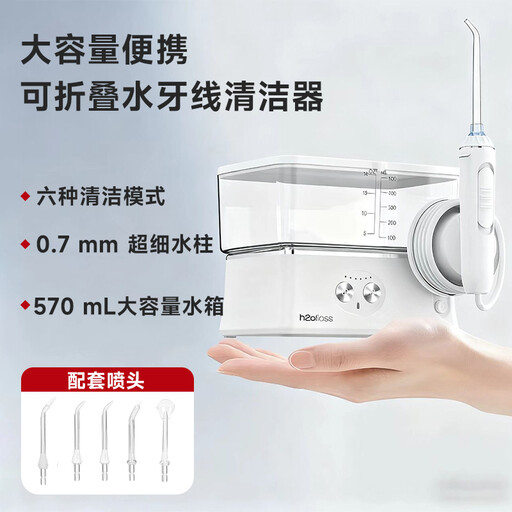
Why This Fits Their Persona: A suitable match for households wanting a larger reservoir and several settings, especially where the device will mainly stay at home.
The product information specifies six modes, five spray heads and a 500–570 ml tank, giving buyers clearer information about capacity and accessories.
Six cleaning modes, five nozzles, a 2,500 mAh battery and IPX7 rating; its approximate 1 kg weight is worth considering before travelling.
We have compiled a complete, real-time list of products that fully satisfy these strict selection criteria and UK safety regulations.
To use a portable oral irrigator safely and neatly:
A water flosser can complement brushing and traditional flossing, but it should not be treated as a replacement for professional dental guidance. People with sensitive gums, braces or periodontal care requirements should begin gently and seek advice if discomfort continues.
Yes, provided the dimensions, weight and charging method suit your luggage. A folding cordless water flosser is easier to pack, while a larger tank may be more convenient in a hotel bathroom. Empty and dry the tank before placing the device in a bag.
Battery life varies with mode, pressure, frequency of use and battery condition. Some listings state up to 30 days of typical use, but this is not a guarantee for every user. Nozzles and seals also need regular inspection, and damaged parts should not be used.
The main ongoing costs are electricity, replacement nozzles and occasional cleaning supplies. USB charging generally makes energy use straightforward, but check whether replacement tips are available and compatible before buying. A model with stored or interchangeable nozzles may also be more practical for shared household use, with each person using their own tip.