
24/7 Customer Support

Free returns

Same-day & Next-day Delivery

Quality Guaranteed

Unlock Your Welcome Offers: FREE Delivery | Up to 80% OFF | Free 30-day JoyPlus trial
Download the APP
A portable water flosser can make interdental cleaning easier at home, work or while travelling. Unlike string floss, an electric water flosser uses a pulsed stream to flush food debris from between teeth and around the gumline. It may also be useful around orthodontic appliances or dental work, provided it is used carefully and according to professional advice.
However, product listings often focus on pressure figures, battery claims and extra nozzles without explaining what those specifications mean in everyday UK use. The right choice depends less on the longest feature list and more on tank design, pressure control, charging convenience and cleaning maintenance.
A higher advertised pressure does not automatically mean a more comfortable or suitable clean. Excessive pressure may be unpleasant for new users or people with sensitive gums. A useful cordless water flosser should offer a genuinely gentle setting as well as stronger options, allowing you to adjust gradually.
Pressure ranges can also be presented differently between manufacturers, so compare the number of settings and the lowest available level rather than looking only at the maximum PSI.
“Up to” battery figures depend on how often and how long the device is used. A long runtime is useful for holidays, but it does not compensate for an awkward charging system or a tank that is difficult to refill.
For regular UK use, check whether the model is USB-C rechargeable, whether the charging port must be completely dry before charging and whether the tank can be removed and rinsed properly.
Additional tips are helpful only when they suit your routine and can be stored hygienically. Orthodontic, gum-care and tongue-cleaning nozzles may be useful for particular needs, but spare tips also need regular cleaning and replacement. Check what is included, how easily tips attach and whether replacements are available before purchasing.
A practical electric water flosser should provide several intensity levels. Beginners and users seeking a water flosser for sensitive gums may prefer a soft or gentle mode, while more experienced users may want standard, strong or pulse settings.
Pulsating flow can help direct water along the gumline and between teeth, but use the lowest comfortable setting initially. Place the nozzle in your mouth before switching on the device, lean over the sink and avoid directing the dental water jet towards your eyes, ears, nose or throat.
Tank size involves a trade-off. A larger reservoir means fewer refills, but it can make a travel water flosser heavier and less compact. Capacities in the 150–300ml range may suit short trips and smaller bathrooms, while tanks of 350ml or more can be convenient for a complete session without interruption.
Look for a detachable, wide-opening tank where possible. It is easier to refill, empty and air-dry than a narrow, permanently attached reservoir. Always empty remaining water after use to reduce stale-water build-up.
An IPX7 or IPX8 waterproof water flosser may be easier to rinse and more suitable for wet bathroom environments. Waterproof ratings do not mean the device should be used while charging. The charging port and cable must be dry before connection.
A travel lock, leak-resistant reservoir, integrated nozzle storage and a compact body can be more valuable than a higher pressure rating for frequent travellers. Also check the product’s weight: a model with a large tank may be portable but less comfortable to pack.
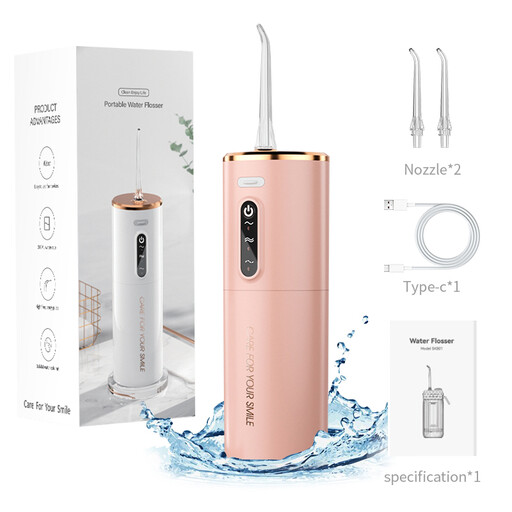
Why This Fits Their Persona: A straightforward rechargeable water flosser for shoppers wanting adjustable everyday cleaning without a large reservoir.
It lists three pressure options, including a gentle setting, rather than relying on one maximum pressure figure.
280ml removable tank, 60–100 PSI range and IPX7 waterproof rating.
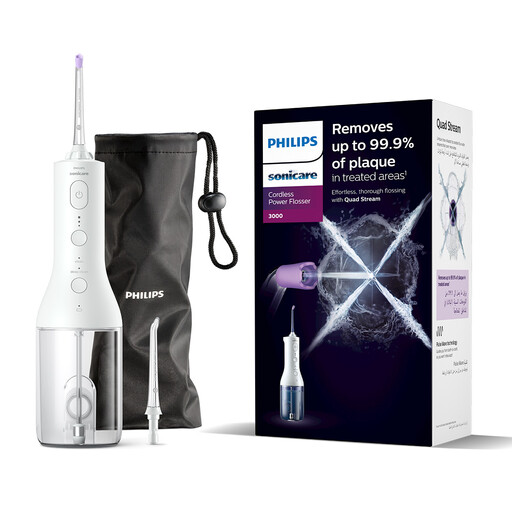
Why This Fits Their Persona: Suitable for users who prioritise a familiar design, guided cleaning features and a manufacturer guarantee.
Its specifications clearly separate two flossing modes from three intensity levels, making adjustment easier to understand.
250ml reservoir, 360-degree rotating nozzle, USB charging and a stated two-year manufacturer’s guarantee.
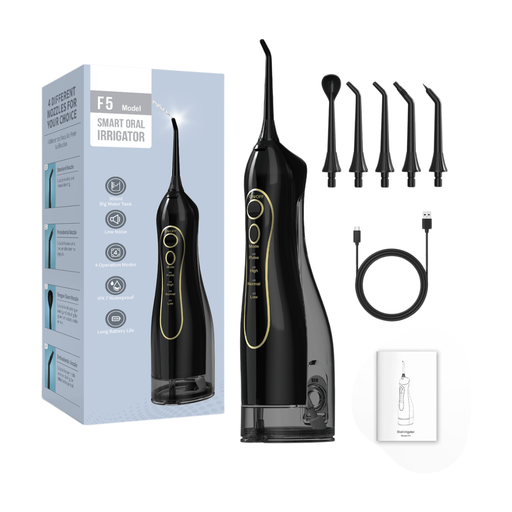
Why This Fits Their Persona: A useful match for users comparing multiple pressure modes and nozzle types for detailed daily cleaning or use around braces.
The five modes include lower-pressure options, while the detachable tank is easier to refill and clean than a narrow fixed reservoir.
40–140 PSI range, 300ml tank, five included nozzle types, 360-degree nozzle rotation and IPX7 rating.
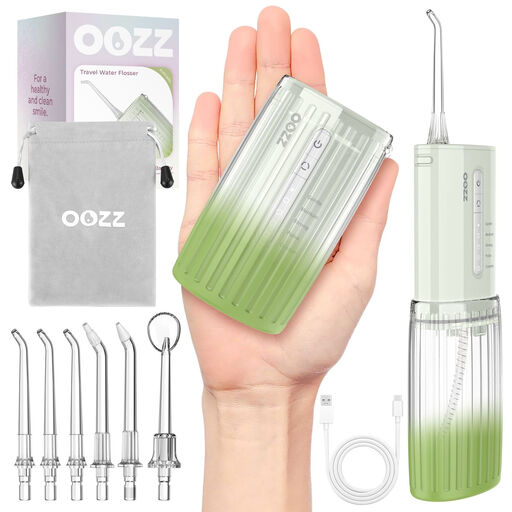
Why This Fits Their Persona: Designed around packing convenience for holidays, work trips, gym bags and daily commuting.
The leak-proof twist-lock tank, travel pouch and built-in tip storage address common packing and hygiene problems.
USB-C charging, five pressure modes, six interchangeable tips, 150ml tank, automatic two-minute shut-off and IPX8 rating.
We have compiled a complete, real-time list of products that fully satisfy these strict selection criteria and UK safety regulations.
A water flosser should complement regular brushing and any dental routine recommended for you. If you have had recent oral surgery, persistent gum bleeding, significant pain, implants or other dental concerns, ask a dental professional before use.
Some models include orthodontic nozzles and may make cleaning around brackets and wires more convenient. Use a gentle setting first and follow any instructions provided by your orthodontist or dentist. No appliance-specific accessory replaces professional guidance.
Lifespan depends on charging habits, water quality, seal condition and cleaning. Emptying the reservoir, drying the device and replacing damaged nozzles can help maintain it. Battery-life figures describe operation between charges, not the total product lifespan.
Running costs are generally limited to electricity for USB charging and replacement nozzles. Models using standard USB-C cables may be convenient if you already have compatible charging equipment, but always follow the supplied charging instructions and keep the port dry.