
24/7 Customer Support

Free returns

Same-day & Next-day Delivery

Quality Guaranteed

Unlock Your Welcome Offers: FREE Delivery | Up to 80% OFF | Free 30-day JoyPlus trial
Download the APP
A portable water flosser can make cleaning between teeth more convenient, particularly for people with braces, bridges, implants, sensitive gums or a busy routine. Unlike traditional string floss, an oral irrigator uses a pulsing stream of water to help dislodge food particles around the gumline and in awkward-to-reach areas.
However, product pages often focus on pressure figures, battery claims and impressive-sounding technology without explaining how those features affect daily use. The right cordless water flosser should be comfortable, simple to clean and suitable for the way you actually travel or use it at home.
A high-pressure water flosser is not necessarily the right choice for every user. Excessive pressure may feel uncomfortable, especially if you are new to water flossing or have sensitive gums. More useful than a single maximum PSI figure is a practical adjustment range with a genuinely gentle starting mode.
Look for clearly stated pressure settings, such as soft, standard, pulse and strong. A model with gradual control is easier to adapt to than one that only offers a powerful jet.
A compact device may fit neatly into a washbag but have a tank that requires frequent refilling. Conversely, a larger reservoir can be more convenient at home but add weight to luggage.
For many users, a tank between 230ml and 360ml offers a sensible balance. A detachable, wide-opening tank is also easier to rinse and dry. Check whether the product description specifies the actual tank capacity rather than relying on phrases such as “large tank”.
Waterproof ratings describe resistance under specific test conditions; they do not mean a rechargeable water flosser should be charged while wet. The charging port must be completely dry before connecting a cable, and the device should be used according to its instructions.
For bathroom use, IPX6, IPX7 or IPX8 ratings indicate increasing levels of water resistance, but these ratings should not replace sensible care. A waterproof water flosser still needs its tank emptied, nozzles rinsed and body dried after use.
Pressure is usually listed in PSI, while pulse frequency may be shown as pulses per minute. These figures are useful for comparison, but they do not alone determine comfort or cleaning suitability.
For a water flosser for sensitive gums, prioritise:
People with braces may also benefit from an orthodontic nozzle, while users with bridges or implants should check the included attachments and seek professional advice if they have specific dental concerns.
A USB-C water flosser can be convenient because the cable may also work with other household devices. Battery-life figures are normally usage-dependent, so treat “up to” claims as an estimate rather than a guarantee.
For frequent travel, check:
A travel water flosser with a smaller 150ml tank may be easier to pack, while a 260ml or 300ml model can reduce refilling during a complete cleaning session.
A standard nozzle may be sufficient for everyday interdental cleaning, but specialist attachments can be useful for braces, gum care or tongue cleaning. More accessories are only worthwhile if they can be stored, cleaned and replaced easily.
After use, empty leftover water, rinse the reservoir and allow parts to air-dry. Do not use hot water unless the manufacturer specifically permits it. Nozzles should be replaced when damaged or according to the product’s care guidance.
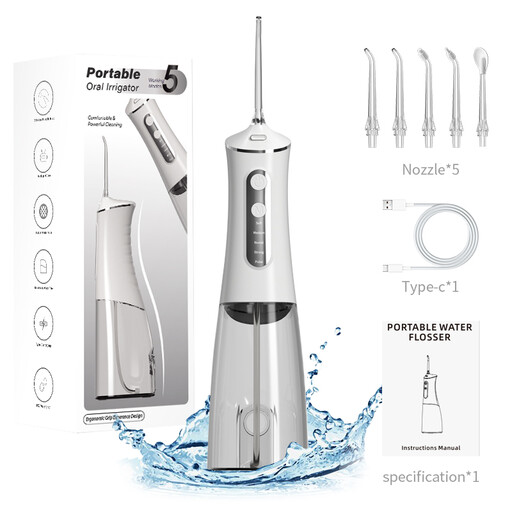
Why This Fits Their Persona: Five pressure modes, a 350ml tank and USB-C charging provide a straightforward setup for first-time users who want everyday flexibility without a complicated accessory system.
The soft setting gives beginners a lower-intensity starting point instead of forcing them to use the maximum output.
Five modes, 350ml water tank, Type-C charging and IPX7 water resistance.
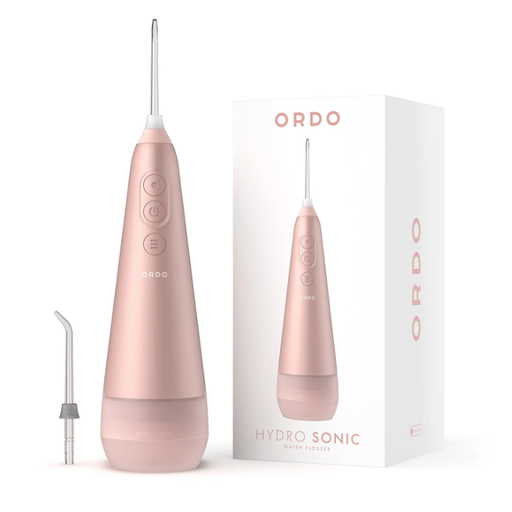
Why This Fits Their Persona: Its travel lock, USB-C charging and ergonomic design suit users who want a refined cordless water flosser for home and regular trips.
The three pressure settings and on-demand mode provide more control than a device focused only on maximum pressure.
80–160 PSI range, 260ml tank, IPX7 rating, USB-C charging and a stated two-year manufacturer warranty.
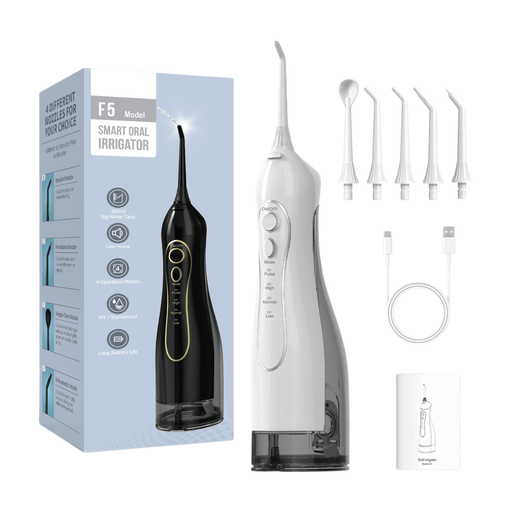
Why This Fits Their Persona: Users with braces or several hard-to-reach areas may value the five modes, 360° nozzle and included orthodontic attachment.
The 40–140 PSI range allows users to select a lower setting rather than relying on a fixed high-pressure stream.
300ml detachable tank, five modes, 360° nozzle rotation, orthodontic nozzle and IPX7 water resistance.
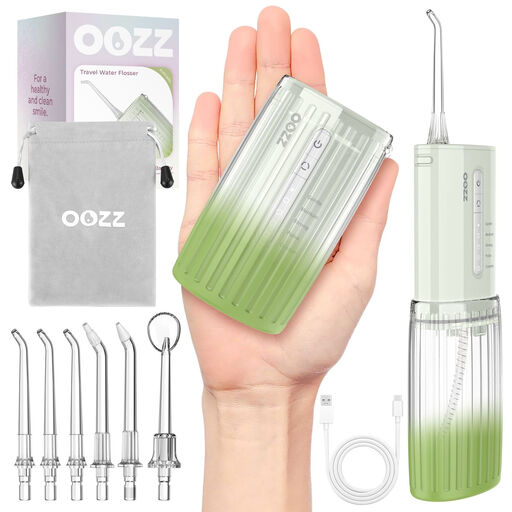
Why This Fits Their Persona: Its pocket-oriented format, travel pouch, built-in tip storage and leak-proof 150ml tank are suited to holidays, work bags and gym kits.
The smaller tank prioritises packability, while the twist-lock design addresses leakage concerns during transport.
Five modes, six interchangeable tips, USB-C charging, IPX8 rating and an automatic two-minute shut-off.
We have compiled a complete, real-time list of products that fully satisfy these strict selection criteria and UK safety regulations.
Fill the tank with clean, lukewarm water and place the nozzle in your mouth before switching the device on. Lean over the sink, keep your lips slightly open and guide the stream along the gumline and between teeth. Begin with the lowest comfortable setting, particularly if you have sensitive gums.
A water flosser should complement regular brushing and any cleaning routine recommended by your dental professional. Stop using it if you experience persistent pain or bleeding, and seek dental advice if you have recent oral surgery, gum disease or concerns about implants.
Many models include orthodontic nozzles and adjustable pressure modes that may make cleaning around braces more manageable. Check the included accessories and follow guidance from your orthodontist or dentist.
Battery life varies by model and usage. Product specifications in this range state figures from approximately 30 days to up to 120 days, but frequent use, pressure level and charging conditions can affect real-world performance.
Electricity use is generally limited because the device is battery-powered and charged periodically. Ongoing costs are more likely to come from replacement nozzles and, where applicable, damaged or worn charging accessories. Emptying and drying the tank after use can also help maintain the device over time.