
24/7 Customer Support

Free returns

Same-day & Next-day Delivery

Quality Guaranteed

Unlock Your Welcome Offers: FREE Delivery | Up to 80% OFF | Free 30-day JoyPlus trial
Download the APP
A portable water flosser can make daily interdental cleaning more convenient, particularly if you have braces, wider gaps between teeth, sensitive gums or a busy routine. However, product pages often focus on pressure figures, battery claims and waterproof ratings without explaining how those specifications affect everyday use.
Before choosing a cordless water flosser, watch for three common buying traps:
A suitable electric water flosser should offer more than one intensity. A soft mode is helpful for first-time users and those with sensitive gums, while medium or standard settings can suit regular daily cleaning. Stronger modes may be useful for deep interdental cleaning, but they should be introduced gradually.
A water flosser with multiple modes gives you more control than a single-output model. Pulse operation, which alternates the water flow, can also make it easier to guide the jet around the gumline and between teeth. If you wear braces, look for an orthodontic nozzle or a setting that allows controlled cleaning around brackets and wires.
Pressure figures should be treated as a comparison point rather than a guarantee of cleaning performance. Technique, nozzle design and how consistently you use the device all affect the result.
Tank size involves a practical compromise. A smaller tank keeps the device lightweight and easier to pack, but it may require refilling during a full-mouth routine. A larger reservoir can be more convenient at home, although it may take up more space in a washbag.
For a travel water flosser, check the folded or packed dimensions, weight, nozzle storage and refill method. Detachable tanks are generally easier to rinse and dry. A 230–350 ml tank can be a useful middle ground for portable daily use, while a 500 ml-plus tank may suit users who prefer fewer refills.
Always empty the reservoir after use and allow the components to air dry. Use lukewarm or room-temperature water according to the manufacturer’s instructions; very hot water can damage seals or cause discomfort.
A USB-C water flosser is convenient if you already carry a compatible cable for other devices. Check the stated charging time and battery estimate, but remember that actual endurance varies with the selected mode and frequency of use.
An IPX7 waterproof water flosser has a tested level of protection against temporary immersion under defined conditions. This can make rinsing easier, but it does not mean the device should be charged while wet. Keep the charging port dry, close any protective cover securely and follow the product’s charging instructions.
Nozzle replacement is another cost to consider. Replace tips according to the supplied guidance or sooner if they become damaged, cracked or difficult to clean. A water flosser complements brushing and other oral-care habits; it does not replace regular dental appointments or professional treatment.
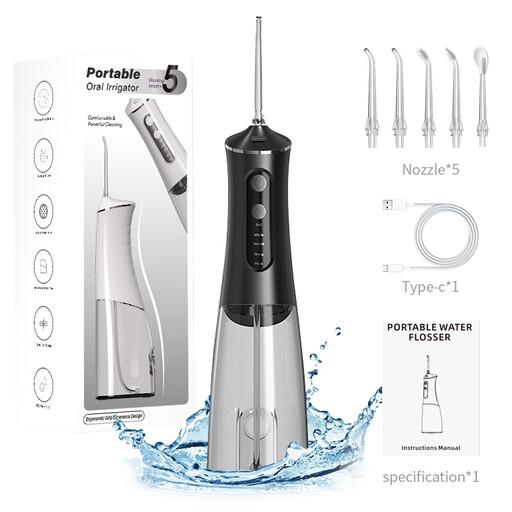
Why This Fits Their Persona: Five pressure modes, a 350 ml tank and Type-C charging provide a broad feature set for a first purchase without focusing on a single specialist use.
The soft setting gives beginners a lower-intensity starting point, while the removable tank and two filling methods address everyday refill and cleaning needs.
Five modes; 350 ml tank; 1500 mAh battery; IPX7 rating and Type-C charging.
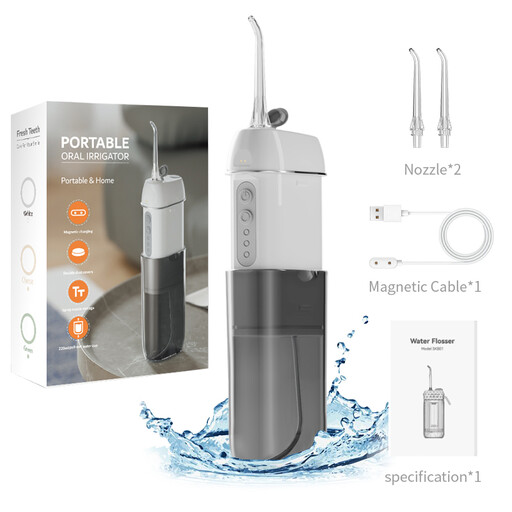
Why This Fits Their Persona: This model suits users who prioritise controlled pressure adjustment and a detachable, washable design for regular home use.
Its three modes include a soft option, and the gradual pulse start helps avoid an abrupt high-pressure stream during use.
60–120 PSI range; 1600 pulses per minute; 230 ml tank; IPX7 water resistance.
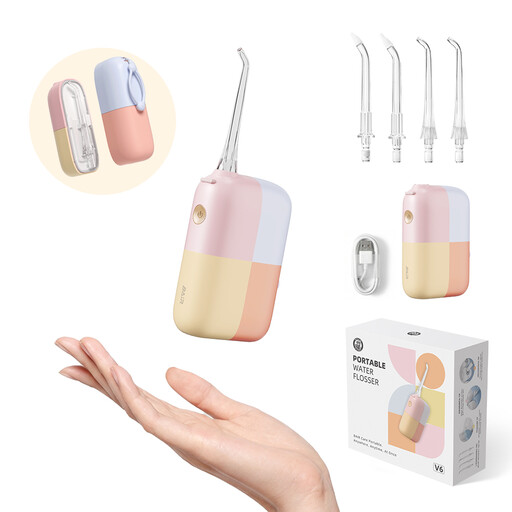
Why This Fits Their Persona: The unit folds to approximately 10 cm, weighs about 145 g and includes integrated nozzle storage, making it practical for a handbag, cabin bag or work kit.
The detachable magnetic tank is designed for easier refilling and drying, while press-and-spray operation offers more control for beginners.
USB-C charging; IPX7 rating; approximately 30-day stated battery life; standard, orthodontic and periodontal pocket tips.
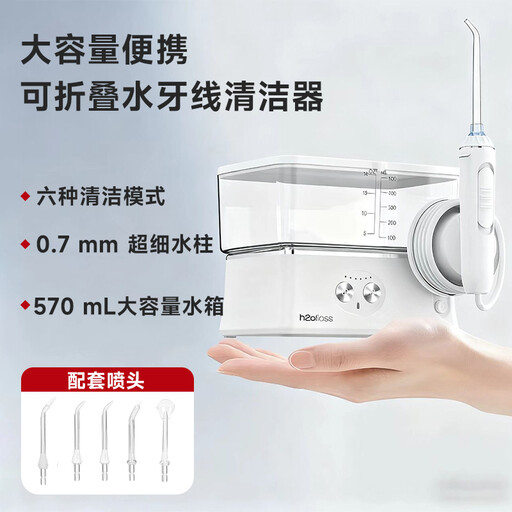
Why This Fits Their Persona: Users who clean braces, larger interdental spaces or several areas in one session may prefer its larger reservoir and broader nozzle selection.
The six modes and five spray heads provide more configuration choices than a basic single-mode device, while the larger tank reduces repeated refilling.
Six modes; five spray heads; 2500 mAh battery; approximately 570 ml tank; IPX7 rating.
We have compiled a complete, real-time list of products that fully satisfy these strict selection criteria and UK safety regulations.
Choose the lowest pressure or soft mode first and guide the nozzle gently along the gumline. Some initial sensitivity can occur, but persistent bleeding or discomfort should not be ignored. Stop using the device and speak with a dentist if symptoms continue, particularly if you have gum disease or recently had oral surgery.
Battery life varies by mode, session length and charging frequency. The models above state battery estimates ranging from approximately 30 days to up to 90 days under specified usage conditions. Treat these as indicative rather than guaranteed results. Do not use a flosser while it is charging.
After the initial purchase, regular costs usually include electricity and replacement nozzles. USB charging generally uses little electricity, but tip replacement remains important for hygiene and performance. Check how many tips are supplied and the recommended replacement interval before buying.