
24/7 Customer Support

Free returns

Same-day & Next-day Delivery

Quality Guaranteed

Unlock Your Welcome Offers: FREE Delivery | Up to 80% OFF | Free 30-day JoyPlus trial
Download the APP
A portable water flosser can make daily cleaning between teeth and along the gumline more convenient, particularly if traditional floss feels awkward or difficult to use. However, compact designs vary considerably. A device that looks suitable online may prove inconvenient if its tank is hard to clean, its battery is unreliable or its water-pressure controls are too aggressive.
Before buying a cordless water flosser, look beyond mode counts and promotional wording. The practical questions are simple: can you refill and clean it easily, will it last through a typical trip, and does it offer a comfortable level of control?
A water flosser with multiple nozzles can be helpful, but only if the attachments match your routine. Standard tips are generally intended for everyday cleaning, while orthodontic and periodontal-pocket tips are designed for more specific cleaning approaches.
Five nearly identical tips may add little value if there is nowhere hygienic to store them. Check whether the nozzles are clearly identified and whether replacement attachments are available before purchasing.
A detachable water tank is not automatically easy to clean. Narrow openings, fixed reservoirs and inaccessible corners can allow moisture to remain inside between uses. This can create unpleasant odours and make regular maintenance more difficult.
For an easy-to-clean design, look for a tank that can be removed, rinsed and dried separately. Emptying leftover water after each use is still important, even with a waterproof oral irrigator.
An IPX7 water flosser is designed to withstand temporary immersion under specified test conditions, while IPX6 generally refers to protection against powerful water jets. These ratings do not mean the charging port can be exposed while connected to power, nor do they guarantee permanent water resistance.
Always check the manufacturer’s instructions. Dry the charging port before recharging, keep the protective cover closed and do not use a damaged cable or housing.
Pressure figures should be considered alongside control design. A device operating around 75–80 PSI, for example, may offer a manageable stream, but beginners and people with sensitive gums may prefer a pulse-on-demand or lower-pressure setting.
A press-and-spray function can help reduce splashing because water is released only when you apply pressure to the control. Start gently and guide the stream along the gumline rather than directing it forcefully into soft tissue. If you have braces, periodontal concerns or recent oral surgery, ask a dental professional how to use an irrigator safely.
A rechargeable water flosser should suit the length of your usual trips. Compare:
A stated battery life is a specification, not a guarantee for every user. Frequent use at higher settings may reduce the interval between charges.
Larger tanks reduce refilling during a session but can make a device heavier and less compact. Smaller tanks support portability but may require a refill, particularly when cleaning braces or several hard-to-reach areas.
Whichever size you choose, use clean, fresh water unless the instructions permit a compatible mouthwash. Empty the tank after use, rinse the tank and nozzle, then allow the parts to air-dry in a ventilated area.
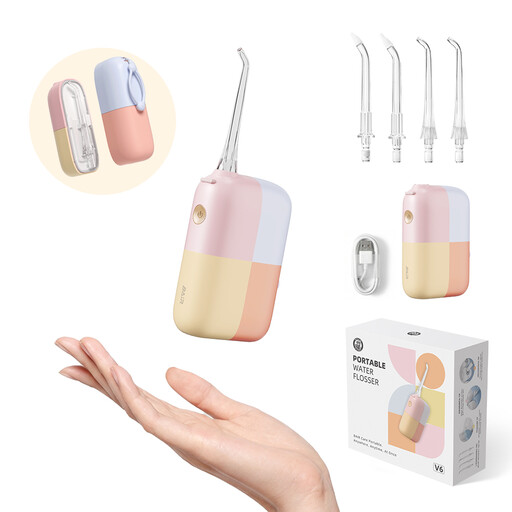
Why This Fits Their Persona: Its compact folded format and press-and-spray control suit first-time users who want a straightforward device for home and occasional travel.
The magnetic detachable tank is intended to make refilling and rinsing simpler, while the tips store inside the tank to reduce loose accessories.
USB-C charging, IPX7 rating, 145 g net weight and three included tips, including orthodontic and periodontal-pocket options.
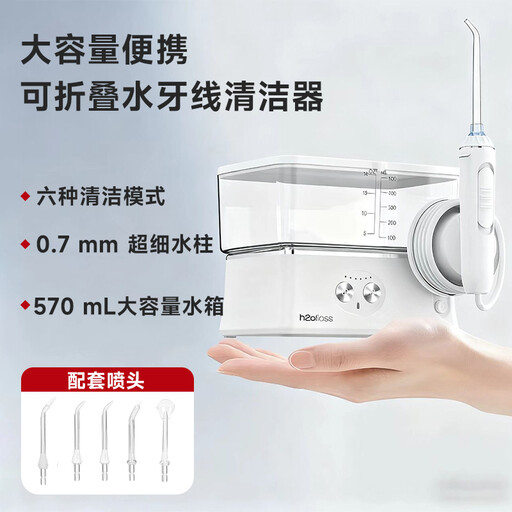
Why This Fits Their Persona: The larger tank and broad selection of settings suit users who prioritise session flexibility over the smallest possible travel footprint.
The specifications identify six cleaning modes and five spray heads, giving clearer functional variety than a nozzle count without descriptions.
A 2,500 mAh battery, 570 ml tank, six modes and IPX7 waterproof construction.
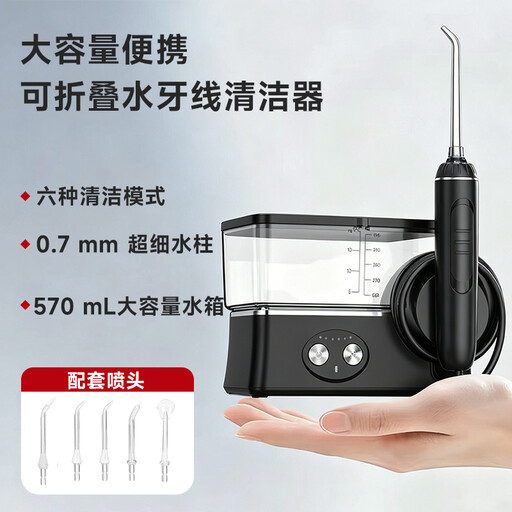
Why This Fits Their Persona: Its tank capacity and five-nozzle format may suit households or users who clean around orthodontic appliances and prefer more frequent, extended sessions.
The larger 570 ml reservoir can reduce interruptions, while the removable nozzles make it easier to rinse attachments separately after use.
Six modes, five spray heads, 2,500 mAh battery and an IPX7 rating.
We have compiled a complete, real-time list of products that fully satisfy these strict selection criteria and UK safety regulations.
A water flosser can support an oral-care routine, but it should not be treated as a replacement for professional dental advice. Stop using it if it causes persistent discomfort, and consult a dentist about bleeding, swelling, braces or periodontal pockets.
Yes, provided its dimensions, battery and charging method suit your itinerary. A compact rechargeable water flosser with USB charging is convenient for hotels and longer trips. Check whether the tank empties fully and protect the device from accidental activation inside luggage.
Battery life depends on session length, pressure setting and frequency of use. Follow the stated charging instructions and avoid leaving the device in excessive heat. The unit may continue to function for years with careful cleaning, but no battery lifespan can be guaranteed indefinitely.