
24/7 Customer Support

Free returns

Same-day & Next-day Delivery

Quality Guaranteed

Unlock Your Welcome Offers: FREE Delivery | Up to 80% OFF | Free 30-day JoyPlus trial
Download the APP
A portable water flosser can make cleaning around braces, bridges and crowded teeth more convenient, particularly if traditional string floss is difficult to handle. However, impressive-looking specifications do not always translate into a practical daily routine.
Many UK shoppers overlook three common traps:
An electric water flosser uses a pulsating stream of water to dislodge food debris from between teeth and around the gumline. Pressure ranges vary considerably. For example, the Sunluxy F5 lists a range of 40–140 PSI, while the Rushi R-B41 lists 60–120 PSI.
A broad range is useful only when the controls allow gradual adjustment. Look for:
People wearing braces should also check whether an orthodontic nozzle is included. Nozzle compatibility matters more than simply choosing the highest available pressure.
A compact tank makes a travel water flosser easier to pack, but it may require refilling during a cleaning session. Larger reservoirs reduce interruptions but can add bulk and weight.
The products listed here range from the 150ml OOZZ tank to the 570ml H2ofloss tank. A tank between approximately 230ml and 360ml may offer a practical balance for many users, although the ideal capacity depends on how long each session lasts.
Also check whether the tank is:
A removable tank is particularly useful in the UK, where a damp bathroom environment can make poorly ventilated reservoirs harder to keep dry.
A cordless water flosser should be convenient to recharge. USB-C is useful if you already carry compatible cables for a phone, tablet or travel accessories. Battery claims should be treated as estimates rather than guarantees: the selected mode and frequency of use affect actual runtime.
Water-resistance ratings should also be read carefully:
Even with a waterproof water flosser, always dry the charging port before connecting a cable and never use the device while charging. A UV sanitising water flosser may include a UV cycle for nozzle or tank-area hygiene; follow the manufacturer’s instructions, keep the cover closed where applicable and never look directly at the UV light.
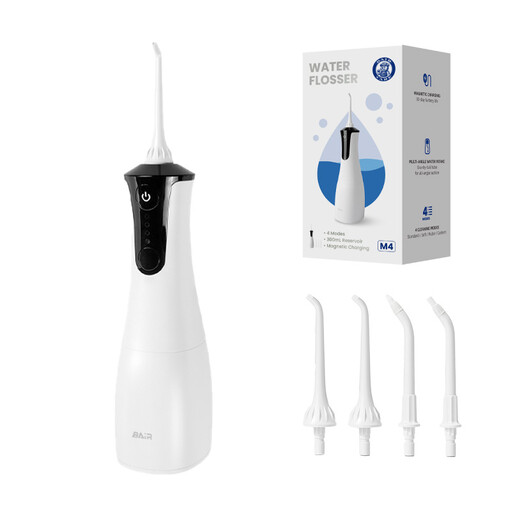
Why This Fits Their Persona: Its compact cordless format and four cleaning modes suit shoppers starting a daily oral-irrigation routine without choosing a larger countertop appliance.
Multiple modes help avoid relying on an unnecessarily strong fixed pressure. Check the included instructions and keep the device and nozzle clean after use.
Four cleaning modes; IPX7 waterproof rating; USB-rechargeable design.
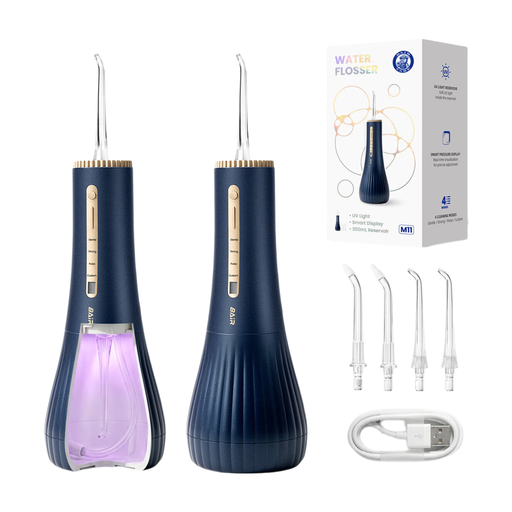
Why This Fits Their Persona: The M11 combines a 360ml tank, four modes, USB-C charging and nozzle storage for users prioritising convenience at home and on longer trips.
The storage compartment and larger tank address common organisation and refill issues. UV claims should be understood as a product feature, not a replacement for rinsing, drying or regular nozzle care.
360ml tank; four modes; USB-C charging; IPX8 rating; UV sanitising cycle listed by the manufacturer.
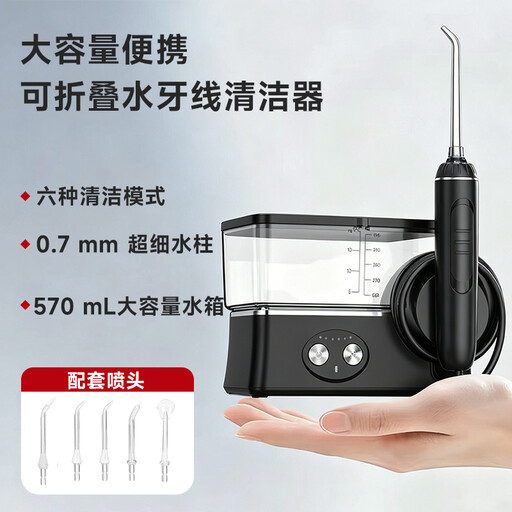
Why This Fits Their Persona: Users with braces, multiple cleaning preferences or a household routine may value six modes, five spray heads and a 570ml tank.
The larger reservoir reduces frequent refilling, while different spray heads let you select an accessory suited to your routine instead of increasing pressure unnecessarily.
Six modes; five spray heads; 570ml tank; IPX7 waterproof rating; 2500mAh battery.
We have compiled a complete, real-time list of products that fully satisfy these strict selection criteria and UK safety regulations.
Fill the reservoir with clean, lukewarm water and start on the lowest setting. Lean over the sink, place the nozzle in your mouth before switching the device on and guide it along the gumline. Do not aim the stream at the eyes, ears, nose or throat.
A water flosser should complement brushing and other recommended oral-care habits. If you have recently had oral surgery, have ongoing gum problems, dental implants or persistent bleeding, seek advice from a dentist before continuing. Empty and rinse the tank after each use, clean the nozzle regularly and let detachable parts air-dry.
Many models include an orthodontic nozzle and adjustable pressure modes that can make cleaning around brackets and wires more manageable. Follow your orthodontist’s guidance, begin gently and avoid directing a powerful stream at irritated areas.
The main running costs are electricity for USB charging and replacement nozzles. Charging requirements are generally modest, but nozzle replacement intervals vary by product and condition. Check the manual and replace any nozzle that becomes cracked, damaged or difficult to clean.
A travel water flosser is convenient for holidays when it has a secure tank, travel lock or pouch, compact dimensions and USB-C charging. Keep the device dry before charging, protect the nozzle from contamination and check airline guidance for products containing lithium batteries.