
24/7 Customer Support

Free returns

Same-day & Next-day Delivery

Quality Guaranteed

Unlock Your Welcome Offers: FREE Delivery | Up to 80% OFF | Free 30-day JoyPlus trial
Download the APP
A portable water flosser can make interdental cleaning easier at home, at work or while travelling around the UK. However, comparing models by pressure figures or battery claims alone can lead to an unsuitable purchase. The practical choice depends on how the device fits your routine, oral-care needs and storage space.
By Joybuy Product Recommendation Officer
A high PSI figure may look impressive, but maximum pressure is not automatically more comfortable or more useful. People new to water flossing, or those with sensitive gums, may find a strong setting unpleasant. A model with adjustable modes is generally more adaptable than one offering only a powerful stream.
Check whether the product provides a genuine soft setting and whether the nozzle can be directed precisely along the gumline. Start at the lowest setting and increase it only if comfortable.
Compact tanks help a travel water flosser fit inside a wash bag, but they may require refilling during a cleaning session. Larger reservoirs are more convenient for regular use, although they add weight and take up more bathroom or luggage space.
Tank capacity should therefore match your routine. A 150 ml tank prioritises portability, while tanks of around 260–360 ml may be more practical for a full session without interruption. Some larger models are also heavier, which matters if you carry the device daily.
IP ratings describe resistance to dust or water under defined testing conditions; they are not a general guarantee that a device can be used carelessly in every wet environment. IPX7 generally indicates temporary immersion protection under specified conditions, while IPX8 refers to protection during continuous immersion under manufacturer-defined conditions.
Even with a waterproof water flosser, keep the charging port dry, do not charge the device when wet and follow the supplied instructions. A device advertised as washable may still require careful drying after use.
Look for a water flosser with multiple modes, particularly if several people in the household may use it or if your needs vary. Common settings include soft, standard, strong and pulse. Pulse operation alternates the water flow and may feel more manageable for beginners.
Pressure ranges differ between models. For example, the Rushi R-B41 lists a 60–120 PSI range and three modes, while the Sunluxy F5 lists 40–140 PSI and five modes. These figures are useful for comparison, but they do not predict personal comfort. Nozzle design, water flow and handling also affect the experience.
A water flosser with a large water tank can reduce interruptions during daily use. The H2ofloss portable model lists a 570 ml tank and weighs approximately 1 kg, making it more suitable for a fixed bathroom position than lightweight travel.
At the other end, the OOZZ OZ-7213 has a listed 150 ml detachable tank. Its smaller format is easier to pack, but frequent travellers should consider whether a refill is acceptable. Compact folding designs, such as the BAIR CARE V6, reduce storage demands without requiring a full-size countertop unit.
USB-C is useful if you already carry compatible cables, but check whether the cable is included and ensure the port is fully dry before charging. Battery-life figures such as “up to 30 days” or “up to 50 days” depend on frequency, mode and session length.
After each use, empty residual water, rinse the tank and nozzle, and let components air-dry. Replace damaged nozzles and follow the manufacturer’s replacement guidance. A water flosser complements brushing; it should not be treated as a replacement for your normal oral hygiene routine.
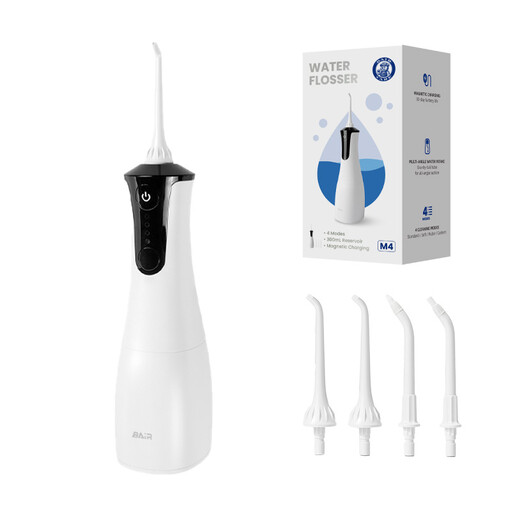
Why This Fits Their Persona: A straightforward cordless water flosser for adults beginning to add powered interdental cleaning to a daily routine, with a compact design suited to smaller bathrooms or occasional travel.
It avoids paying for unnecessary countertop features when a portable oral irrigator is the main requirement. Check the included instructions for its available modes and charging routine before purchase.
Portable format, USB rechargeable operation and IPX7 water resistance listed by the manufacturer.
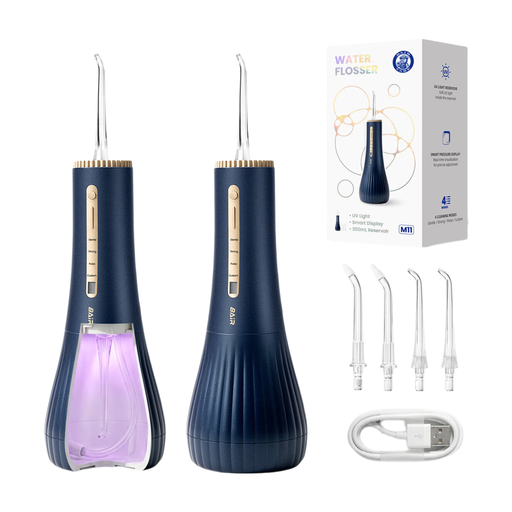
Why This Fits Their Persona: Suitable for buyers wanting a fuller feature set for home use, while retaining USB-C charging and a cordless design for trips.
Its 360 ml tank addresses the small-reservoir problem, while four modes provide more adjustment than a single-pressure device. UV sanitisation should be used only as directed, with the cover closed and eyes protected.
360 ml tank, four cleaning modes, nozzle storage, USB-C charging and an IPX8 rating listed in the specifications.
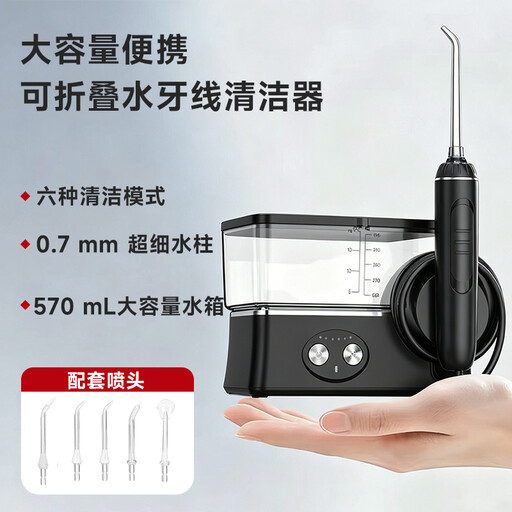
Why This Fits Their Persona: The larger listed tank and six modes may suit frequent daily use, households sharing a device or users who prefer fewer refills.
The 570 ml tank reduces the need for repeated filling, but its approximately 1 kg weight means it is less pocket-friendly. Confirm the included spray heads are appropriate for your dental appliances.
Six cleaning modes, five spray heads, a 2,500 mAh battery and IPX7 waterproofing are listed specifications.
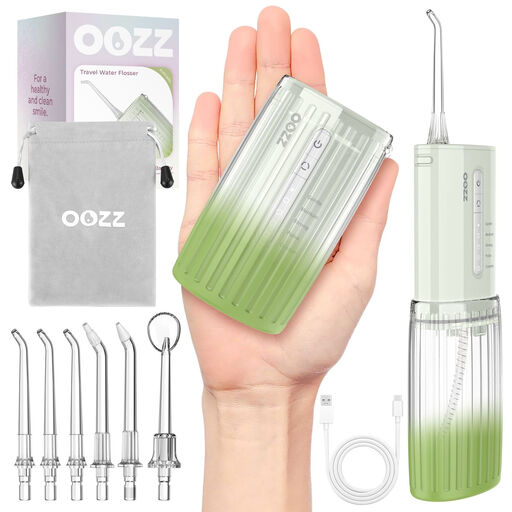
Why This Fits Their Persona: A compact choice for holidays, commuting, gym bags or office storage, particularly where low bulk matters more than tank capacity.
The 150 ml leak-proof detachable tank keeps the design compact, but users should plan for refilling. A travel pouch and built-in tip storage help prevent loose accessories in luggage.
USB-C charging, five modes, six interchangeable tips, automatic two-minute shut-off and IPX8 construction are listed features.
We have compiled a complete, real-time list of products that fully satisfy these strict selection criteria and UK safety regulations.
Many models include orthodontic tips or list compatibility with braces, but the correct attachment and pressure depend on the appliance and your personal circumstances. Use a gentle setting initially and ask your dentist or orthodontist for advice if you have recently had treatment, oral surgery or persistent discomfort.
Published figures vary from around 30 days to 90 or 120 days, depending on the model and stated usage conditions. Treat “up to” figures as an estimate rather than a guaranteed runtime. Charging frequency, pressure mode and session length all affect battery life.
Electricity use is generally limited because the device is battery-powered and charged periodically. Ongoing costs are more likely to come from replacement nozzles, damaged charging cables or compatible accessories. Emptying the tank and cleaning the nozzle after each use can also help maintain the device over time.