
24/7 Customer Support

Free returns

Same-day & Next-day Delivery

Quality Guaranteed

Unlock Your Welcome Offers: FREE Delivery | Up to 80% OFF | Free 30-day JoyPlus trial
Download the APP
A portable car fridge can make long drives, campsite meals and outdoor days more convenient. However, not every electric cool box works like a household refrigerator. Some units only cool below the surrounding temperature, while others use a compressor to refrigerate or freeze food independently of ambient conditions.
The right choice depends on capacity, power supply, cooling method and how you plan to use it. Before buying, watch for these common pitfalls.
Many compact car cooler and warmer units use thermoelectric technology. They can cool contents relative to the surrounding air and may also provide a warming function, but they are not necessarily designed to freeze food.
A compressor cooler box works more like a conventional fridge. It can normally maintain a selected temperature and, depending on the model, operate as a freezer. If you need frozen bait, ice cream or long-term chilled food storage, look specifically for a compressor cooler or car fridge freezer.
Manufacturers may quote how many cans or bottles fit inside, but real capacity is affected by shelves, compartments, bottle shape and the space needed around food. A 5L or 6L mini car fridge suits personal drinks and snacks, while an 18L portable refrigerator is more practical for a couple travelling for several days.
For motorhomes, boats and larger groups, a dual-zone or high-capacity portable fridge freezer may be more suitable. Always compare the internal layout, not just the headline litre figure.
A 12V car fridge is convenient for cars and SUVs, but some larger models also support 24V DC for lorries, buses and certain leisure vehicles. If you want to use the unit indoors, check whether a 220–240V or 100–240V AC adaptor is included or sold separately.
Battery protection is also important. A fridge connected to a vehicle socket may continue drawing power when the engine is off, depending on the vehicle. Models with adjustable low, medium and high battery protection can help reduce the risk of excessive battery drain, but the correct setting still depends on your vehicle and battery condition.
Leave the manufacturer’s recommended clearance around the ventilation area. Restricted airflow can increase running time, noise and energy use.
Thermoelectric cooling is generally compact and can offer both cooling and warming in a small package. It is useful for drinks, packed lunches, skincare products and short journeys. Its cooling performance depends on ambient temperature, so do not assume it will reach the same temperature as a compressor refrigerator.
A compressor cooler box is the more appropriate option for freezing and for maintaining a chosen temperature across changing outdoor conditions. For example, a stated range of -20°C to +20°C offers considerably more flexibility than a simple cool-and-warm switch.
Consider where the unit will travel and where it will operate:
Measure the available space in your boot, footwell or campervan before ordering. Also check handle placement, lid clearance and whether the unit can be secured with a seat-belt slot, straps or bungee cords.
Check the stated operating noise if the fridge will be used beside a bed or inside a tent. Product descriptions commonly quote noise levels around 40–42dB, although perceived sound can vary with the surface and surroundings.
Look for a sealed lid or magnetic gasket, stable feet and an easy-to-clean interior. For vehicle use, secure the cooler so it cannot slide during braking or sharp turns. Electrical products should be used according to their instructions, with clear ventilation and an appropriate power connection. Check for the relevant UKCA or CE marking where applicable, supplied safety information and the correct UK mains arrangement before indoor use.
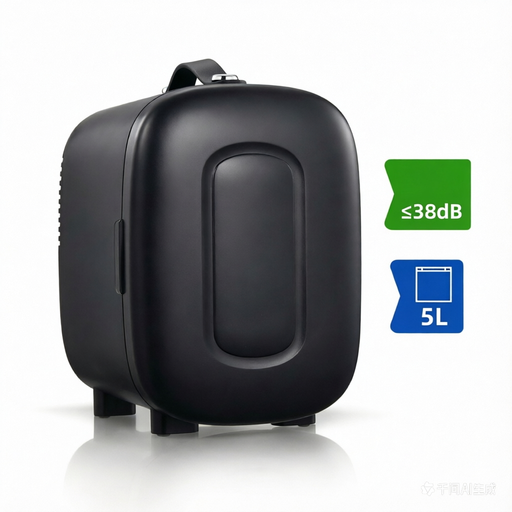
Why This Fits Their Persona: Its small footprint suits occasional users who want a personal cooler for a car, office, bedroom or short trip without dedicating space to a larger camping fridge.
The description clearly states that cooling is relative to ambient temperature and that hot mode maintains existing warmth, helping set realistic expectations.
5L capacity, 12V DC and AC power options, removable shelf, door basket and cooling-and-warming modes.
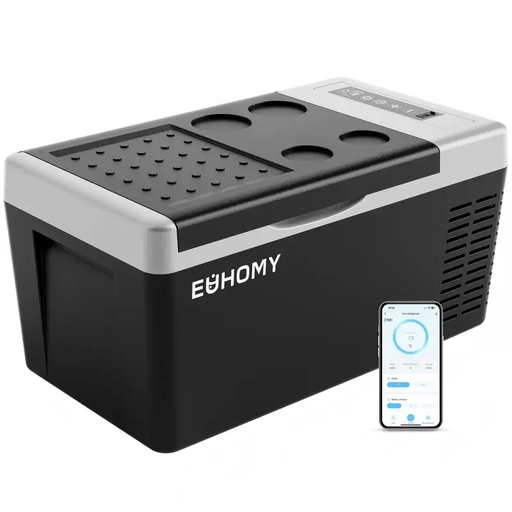
Why This Fits Their Persona: A practical middle ground for campers, anglers, boaters and van owners who need genuine refrigerator or freezer capability without moving to a very large unit.
Its stated -20°C to +20°C range distinguishes it from a basic thermoelectric car cooler, while three-stage battery protection addresses vehicle power concerns.
18L capacity, 12/24V DC and 100–240V AC compatibility, app control, compressor cooling and anti-shock design.
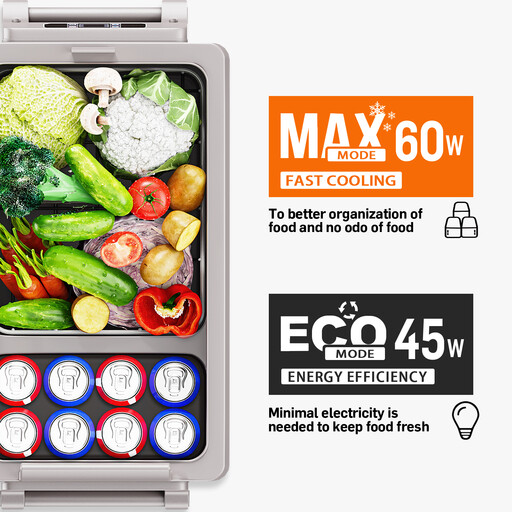
Why This Fits Their Persona: Its larger capacity suits families, motorhome users, lorry drivers, boat owners and extended camping trips where separate food and drink storage is useful.
Dual storage areas reduce the need to overpack one compartment, while the specification identifies clearance and tie-down requirements for vehicle installation.
49.4L capacity, two zones, 12/24V DC and 240V AC operation, LCD controls, Bluetooth connection and battery protection.
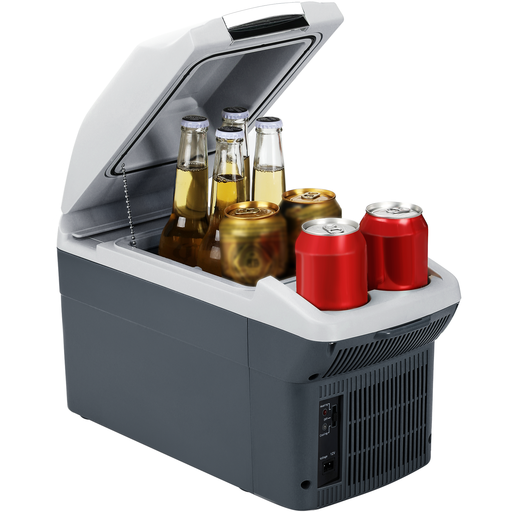
Why This Fits Their Persona: This compact 12V car fridge is designed for passenger-seat use, road trips, picnics and travel where drinks and packed food need to stay cool or warm.
The listing states the approximate 40dB operating noise, 12V supply and optional 220–240V adaptor, making the intended setup clearer.
9L capacity, cooling and warming modes, dual cup holders, sealed gasket and adjustable shoulder strap.
We have compiled a complete, real-time list of products that fully satisfy these strict selection criteria and UK safety regulations.
Only if the vehicle power system and fridge setup are suitable. A 12V car fridge may continue operating through an always-on accessory socket, which can reduce the vehicle battery charge. Use the fridge’s battery protection settings where available, monitor the battery and follow the vehicle and product instructions. A separate leisure battery or campsite supply may be more appropriate for overnight use.
Power consumption depends on cooling technology, ambient temperature, insulation, thermostat settings and ventilation. A compressor model may quote an average consumption figure, but its actual duty cycle changes as conditions change. Keeping the lid closed, pre-chilling food and leaving ventilation clearance can help reduce unnecessary operation.
There is no universal lifespan. A unit’s service life depends on usage, transport conditions, cleaning, moisture control and power quality. Protect it from rain unless it is specifically rated for outdoor exposure, keep vents clear, avoid overloading and secure it during travel. Check the warranty and technical support terms before purchasing, particularly for a compressor cooler box intended for frequent camping or boating.