Choose a portable charger around the devices you need to keep running and how long you will be away from a plug: a small bank can cover an emergency phone top-up, while a 10,000mAh-class bank offers more reserve for a day out. Consider higher capacity or multiple ports if you will charge several devices or a compatible laptop. Rated capacity alone cannot tell you how many usable charges you will get; weight, connectors, output and the time needed to recharge the bank also matter.
Who needs which charger?
Light-carry commuters
If your main concern is keeping one phone available through a commute or short outing, a small bank is easier to carry in a pocket or small bag. Expect less reserve than a larger model: Which? describes its small tested banks as generally providing about one full smartphone charge.
All-day phone and tablet users
Navigation, tickets, photos and entertainment can all make a single emergency top-up feel limiting. For a travel or event day, compare the usable charge reserve of medium- and higher-capacity banks, then decide what weight you are willing to carry.
Multi-device or laptop travellers
If you need to charge several devices or a compatible laptop away from mains power, check USB-C output and how power is shared between ports rather than choosing by capacity alone. For a flight, the operating airline’s battery rules are part of the decision.
What matters when choosing?
Start with the device that must stay charged, then consider how much reserve and how many simultaneous connections the day requires. A multi-port bank can also be small or high-capacity, so port count is a separate choice from size.
| Concern |
What to check |
Who this matters to |
| Easy to carry |
Check weight, dimensions and whether the bank fits your usual pocket or bag. |
If I only need an emergency phone top-up, I want a charger I will actually carry on my commute. About 31% of consumers put minimal carrying weight first. |
| All-day reserve |
Compare rated capacity with usable-charge testing where available, and check how the bank itself recharges. |
On a long day of navigation or event tickets, I need power beyond a brief rescue charge. Consumers whose main concern is all-day reserve account for about 25%. |
| Charging and device fit |
Check the connector, your device’s charging requirements, output per port and the bank’s input rating. |
If I use the bank regularly, it needs to connect to my device and recharge in time for the next outing. About 25% of consumers prioritise charging speed and compatibility. |
| Several devices |
Check the number and type of connections, plus output when they are used together. |
When my phone and another device both need power, one connection may not be enough. For about 19% of consumers, charging several devices is the primary need. |
Buying pitfalls
-
Assuming the mAh rating equals a set number of phone charges
Rated battery capacity is not the same as the energy delivered to your device. Which? reports that some banks it tested could not provide even one full device charge.
Use capacity to narrow the choice, then look for usable-charge results where available and leave some reserve for your own pattern of use.
-
Choosing by maximum wattage alone
A headline output does not establish what each port supplies when several devices are connected. A built-in cable is useful only when its connector works with your device.
Check the exact model’s connectors, per-port output, shared-output conditions and cable arrangement against the devices you plan to carry.
-
Putting a power bank in checked luggage
The UK Civil Aviation Authority says power banks belong in the cabin, not checked baggage. The operating airline may have additional conditions affecting how many you can carry and whether you can use one during the flight.
Before travelling, check that airline’s current battery rules and keep the bank protected in cabin baggage. Do not travel with a damaged, swollen or overheating unit.
A bank that does not meet the carrier’s conditions can cause disruption when baggage is checked.
Brands to consider
Anker
Anker offers compact and medium-capacity USB-C options, including models with built-in cables.
- Anker specifies its A1259 Nano at 10,000mAh, up to 30W USB-C output and 215g, with a built-in USB-C cable.
- Those specifications apply to the A1259; check the ports, cable and output of any other Anker model separately.
UGREEN
UGREEN has USB-C models aimed at higher-capacity and multi-device charging.
- UGREEN specifies its Nexode 20,000mAh model for up to three devices and up to 130W total output, with an integrated USB-C cable.
- Total output does not establish the rate available to each connected device; check the exact model’s port allocation and device compatibility.
Belkin
Belkin offers USB-C power banks with integrated-cable, multi-port and wireless options across its range.
- Belkin specifies its cited UltraCharge 10K model with an integrated USB-C cable, USB-C and USB-A ports, and up to 45W maximum output.
- Confirm that the built-in connector and the individual port outputs suit the devices you intend to charge.
Joybuy portable chargers
These selections cover 10,000mAh banks for routine outings and multi-device charging, plus higher-capacity banks for longer days when carrying more reserve makes sense. Check each model’s connectors and output against your devices before choosing.
 No image available
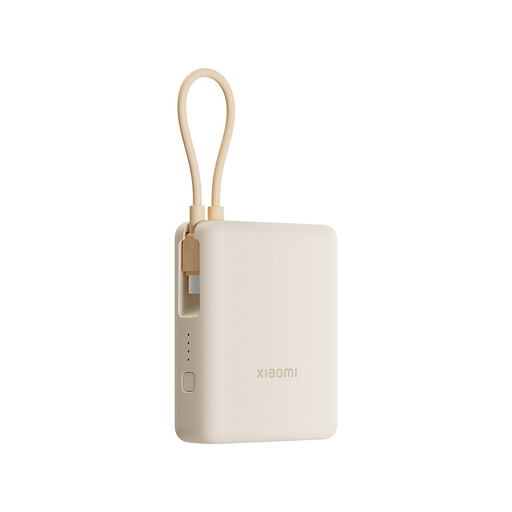
Xiaomi 33W Power Bank 10,000mAh, Integrated Cable, Tan
Consider this for a day out when you want a built-in USB-C cable and connections for several devices. The listing specifies up to 33W output, USB-C and USB-A outputs, charging for up to three devices, and 30W input for recharging the bank. Check how output is divided between connections if you will use them together; confirm the weight and watt-hour marking if carrying comfort or flying matters.
Joybuy
 No image available
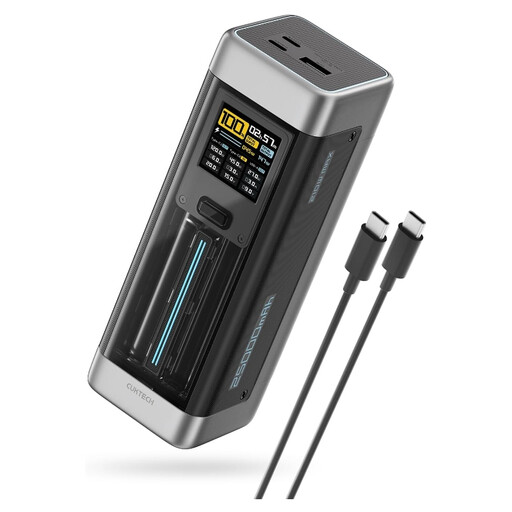
CUKTECH NO.20 P23 25,000mAh 140W Power Bank, Grey
This is a higher-capacity option to assess for long days or a compatible laptop. The listing specifies up to 140W USB-C output and three ports: two USB-C and one USB-A. Confirm your laptop’s charging requirements and the output available when ports are used together; check weight and watt-hour marking before relying on it for travel.
Joybuy
 No image available
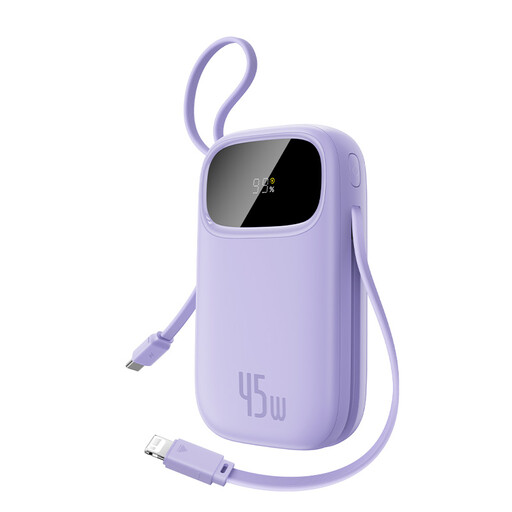
Baseus EnerFill FC31 Qpow 3 10,000mAh, Nebula Purple
Consider this when different devices need different connections on the same outing. It has built-in USB-C and Lightning cables, USB-C and USB-A ports, and a digital display. The stated 45W maximum applies to one device using the USB-C port or cable; the listing gives 15W total output during simultaneous charging. Check its dimensions and weight if it needs to fit a small bag.
Joybuy
 No image available
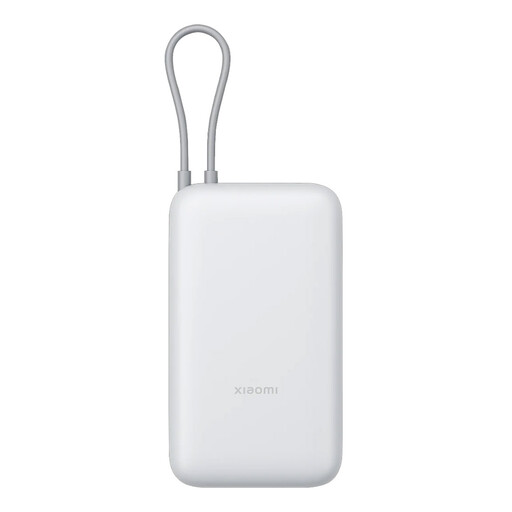
Xiaomi Power Bank 20,000mAh, Integrated Cable, Light Grey
Consider the larger stated reserve for a longer outing when a built-in USB-C cable suits your device. The listing specifies up to 22.5W output and describes USB-C compatibility for Android devices and the iPhone 15 and 16 series. Check compatibility for other devices, along with the weight, watt-hour marking and any additional output connections you need.
Joybuy
 No image available
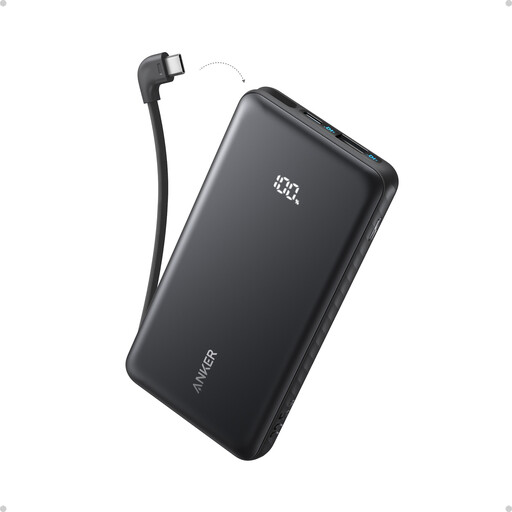
Anker Zolo 10,000mAh 22.5W Power Bank with USB-C Cable
This is a 10,000mAh option for a routine outing with a USB-C device, without having to pack a separate USB-C cable. The listing specifies up to 22.5W output and also identifies a USB-A port. If you need to charge two devices together, check the shared output; confirm its weight and watt-hour marking if those affect your plans.
Joybuy
Frequently asked questions
Can I put a power bank in checked baggage on a flight?
No. The UK Civil Aviation Authority says to keep power banks with you in the cabin, not in checked luggage. Check the operating airline’s current limits and any conditions on using or recharging a bank during your flight.
What should I check with my airline before flying?
Check its current rules on the number and battery size of power banks, where they must be carried, and whether use or recharging is permitted on board. For example, easyJet states a limit of two power banks per person in cabin baggage; British Airways also says power banks must be carried in hand baggage rather than checked baggage.
Will a 10,000mAh bank give my phone two full charges?
Not necessarily: rated capacity does not equal the energy delivered to a particular phone. Which? tests portable chargers with real devices and records usable charges, so those results are more useful than dividing the bank’s mAh rating by your phone battery’s rating.
How many ports and how much output do I need?
Match the connections to the devices you will charge at the same time, then check their charging requirements against the bank’s per-port and shared-output specifications. A stated total wattage does not mean every connected device can receive that wattage simultaneously.


