
24/7 Customer Support

Free returns

Same-day & Next-day Delivery

Quality Guaranteed

Unlock Your Welcome Offers: FREE Delivery | Up to 80% OFF | Free 30-day JoyPlus trial
Download the APP
A portable handheld fan can be useful on a crowded commute, at a summer festival, beside your desk or inside a parked car. However, compact fans vary considerably in battery design, airflow control and charging convenience. A low-priced model may appear attractive until it becomes difficult to recharge, uncomfortable to hold or unsuitable for the way you intend to use it.
This guide explains the specifications worth checking before buying and matches different fan designs to practical UK lifestyles.
RPM figures and phrases such as “powerful wind” do not tell the whole story. A fan’s perceived airflow also depends on its blade design, motor, grille and distance from your face. A compact fan with several speed settings may be more useful than one with a high quoted motor speed but limited adjustment.
Look for practical features such as three or more speed settings, an adjustable head or a stable stand. These allow you to change the airflow rather than relying on one fixed setting.
A battery-operated handheld fan using AA batteries can be convenient for immediate use, but replacement batteries add an ongoing cost. A rechargeable handheld fan is generally more convenient for regular commuting or office use, provided the charging connection suits your existing cables.
USB charging is useful with laptops, power banks and car adapters. A USB-C fan can be particularly convenient if your phone and other devices already use USB-C cables. Always check whether a charging cable and mains adapter are included, as many portable models are supplied with a cable only.
A quiet handheld fan may be preferable in a library, bedroom or shared office, but noise can change with the selected speed. Product descriptions may state low-noise operation without providing a decibel figure. If noise matters, prioritise models with a published noise level or choose a fan with a low-speed setting designed for close-range use.
Battery capacity is normally shown in mAh, but a larger number does not automatically mean longer use. Runtime varies according to speed, motor power and whether the fan is used while charging.
For short journeys, a compact mini portable fan with a smaller battery may be sufficient. For festivals, camping or long shifts, look for a larger capacity and a stated runtime range across different speeds. For example, one model in the range lists a 5,000mAh battery and an operating time of approximately 3.5 to 19 hours, depending on the setting.
A USB rechargeable fan can draw power from a laptop, power bank or suitable adapter. Check whether it uses USB-C or another USB connection, and confirm the input rating before using a third-party charger. A full recharge time of around three hours is common among several compact models, although actual charging time depends on the power source.
For air circulation in a vehicle, a USB car fan can connect to a car charger or USB port. A 12V/24V cigarette-lighter model is a different category and should only be used with a compatible vehicle socket.
A fan intended for travel should be light enough to carry without making your bag uncomfortable. A wrist strap or lanyard can reduce the risk of dropping it, while a foldable body can save space.
If you need a portable desk fan for an office or bedroom, check whether the base is included and whether it sits securely on a flat surface. A tilting or 360-degree adjustable head can direct airflow more effectively than a fixed design. For use in a car, inspect the mounting method and make sure it does not obstruct visibility, controls or safety equipment.
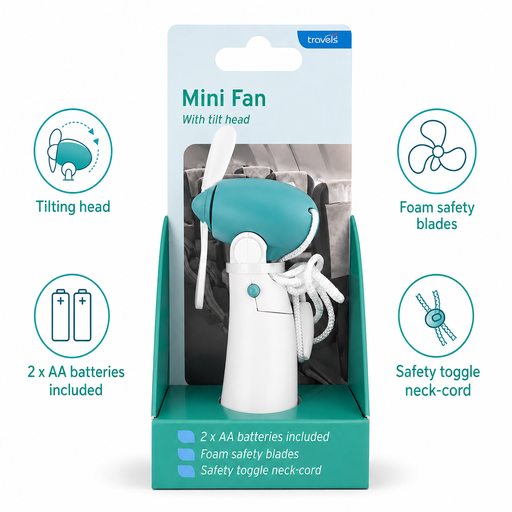
Why This Fits Their Persona: This battery-operated handheld fan is straightforward for occasional use at festivals, sporting events, holidays or during a warm commute. It uses two included AA batteries, so there is no initial charging setup.
The tilting head provides directional adjustment, while soft foam safety blades and a neck cord address everyday carrying and handling concerns.
Two AA batteries are included; compact design, tilting head and safety toggle neck cord.
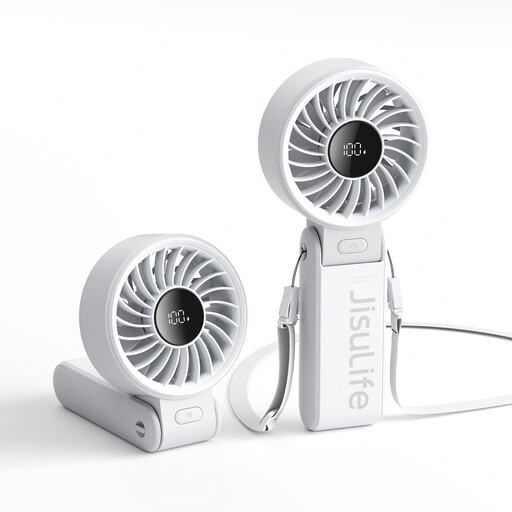
Why This Fits Their Persona: With handheld, desktop and neck-worn use, this model suits commuters, travellers and outdoor users who want several ways to use one personal cooling fan.
The battery display shows remaining power, helping you identify when charging is needed instead of relying on guesswork.
5 speed settings, 5,000mAh battery, USB-C charging and a stated operating range of approximately 3.5–19 hours.
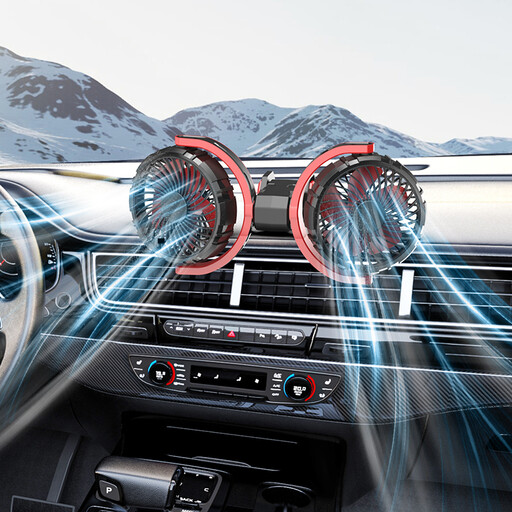
Why This Fits Their Persona: This car cooling fan is designed for drivers and passengers in cars, SUVs, vans and trucks, making it suitable for regular journeys and longer road trips.
Its foldable structure helps with storage, while the 12V/24V input avoids relying on a separate battery during vehicle use.
Dual fan heads, 3 speed settings, 360-degree adjustment and two built-in USB charging ports.
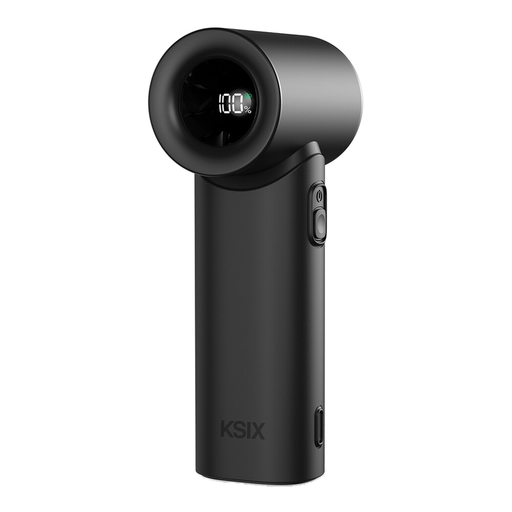
Why This Fits Their Persona: Its compact 128g body and handheld or desktop format suit office workers, students and travellers who need flexible cooling without carrying a larger fan.
The USB-C connection and approximately three-hour charging time provide clearer charging expectations than a model with an unspecified power system.
5 speed settings, 3,000mAh battery, USB-C input and a stated maximum air speed of 9.0m/s.
We have compiled a complete, real-time list of products that fully satisfy these strict selection criteria and UK safety regulations.
It can be more economical for frequent use because it avoids repeated purchases of AA batteries. However, running cost depends on charging frequency, electricity tariffs and battery lifespan. Occasional users may prefer AA batteries for their convenience, particularly when travelling without access to a USB charger.
Some USB rechargeable fan designs support operation while connected, but this should not be assumed. Check the product instructions before use. Avoid covering the fan or placing it on an unstable surface during charging, and disconnect it if the unit becomes unusually warm.
The usable lifespan depends on battery care, motor quality, dust exposure and frequency of use. Keep the grille clear, avoid moisture and store the fan in a cool, dry place. Rechargeable batteries gradually lose capacity over time, so a model with a replaceable battery or clear charging information may be more practical for regular users.