What matters when choosing?
Decide whether your existing pan can use induction, how many pans you need at once and where the hob can be connected. A published setting range helps you compare controls, but it does not establish the temperature inside a particular pan of chutney.
Single-zone induction
Choose when: One compatible pan is enough and you need an appliance you can clear from the worktop.
Trade-off: It cannot heat a second pan at the same time, and your pan must work with induction.
Two-zone electric hob
Choose when: A second active pan is a regular part of your cooking and there is space for a wider unit.
Trade-off: Check its total electrical rating and the socket arrangement rather than assuming two zones can share an extension lead with other appliances.
Ceramic hotplate
Choose when: Keeping a non-induction chutney pan is the deciding factor.
Trade-off: Check the exact model's controls, pan-size guidance and cleaning instructions; the two-plate Russell Hobbs Mini Hob should not be assumed to have the same controls as an induction model.
| Concern |
What to check |
Who this matters to |
| Simmer controls |
Compare adjustable power or temperature settings, then check the instructions for the exact hob. Settings do not guarantee an in-pan temperature. |
I need to heat a pan of chutney and then manage a sustained simmer, rather than rely on an on/off control. Around 29% of consumers may put simmer control first. |
| Shared-socket safety |
Check the hob's rated load against the socket or lead rating and other appliances connected to it; do not daisy-chain leads. |
When other people use the kitchen appliances, I need to know whether my hob can be connected without overloading the setup. Roughly 29% of consumers may make shared-power safety their primary concern. |
| Pan compatibility |
Confirm an induction-compatible, flat pan base and the hob's cookware-size guidance; otherwise compare a ceramic hotplate. |
I want to keep using my chutney pan and need to know it will work before choosing a hob. Around 24% of consumers may prioritise their existing cookware. |
| Storage and cleaning |
Compare the hob's footprint with its storage space and check how its cooking surface should be cleaned. |
I have to clear a shared worktop after cooking, including any sticky splashes, so storage and cleanup shape my choice. Approximately 18% of consumers may put these needs first. |
Single-zone induction hobs on Joybuy
These portable single-zone induction hobs are relevant if you plan to cook chutney in one compatible pan. Compare their stated controls and pan requirements, then check the electrical connection for your shared kitchen.
 No image available
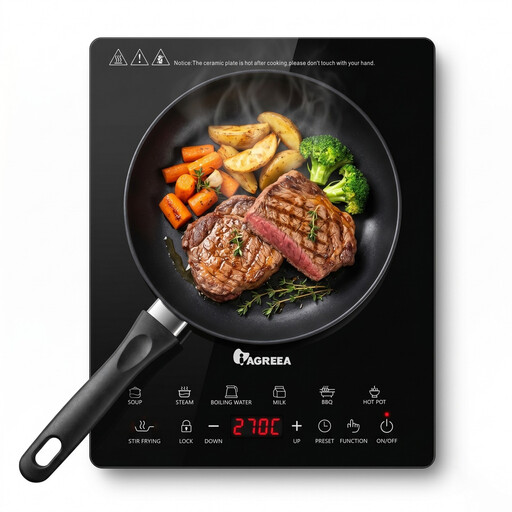
IAGREEA DF200-14V10 2,000W induction hob
Consider this single-zone model if you use one compatible chutney pan and want adjustable controls. Its title lists eight power levels, 60°C–270°C temperature control, a three-hour timer and cookware guidance of 12–26cm; those settings do not guarantee a particular in-pan simmer temperature.
Check that your pan has a flat, magnetic base within the stated size range. Confirm the plug and connection suit your kitchen, and account for the hob's rated load alongside other connected appliances.
View on Joybuy
 No image available
ochama 2,000W portable induction hob
This single-zone model is relevant if you have an induction-compatible chutney pan and want a portable hob you can clear from the worktop. Its title lists ten power settings, six functions and a glass panel; check how its controls suit the way you manage a simmer rather than assuming a particular in-pan temperature.
Confirm the guidance for your pan's base diameter, plus the plug and electrical connection for your shared kitchen. Include the hob's 2,000W rating when checking the connected load.
View on Joybuy
Common questions
Is one portable induction zone enough for tomato chutney?
One zone is enough for cooking the chutney in a single induction-compatible pan if you do not need another pan heating at the same time. Compare adjustable controls for the exact hob, and consider two electric zones if parallel cooking is a regular part of your routine.
Will my existing saucepan work on an induction hob?
It will work only if its base is induction-compatible and meets the hob's cookware-size guidance. Check the pan's induction symbol or manufacturer instructions; if you want to keep an incompatible pan, compare a ceramic hotplate instead.
Can I use a 2,000W hob with a shared extension lead?
Only use an extension arrangement after checking its marked rating and the combined load of appliances connected to it. Electrical Safety First describes a single socket's maximum load as 13A, or about 3,000W, and advises against overloading or daisy-chaining extension leads.
Can the Campingaz Bistro 300 be used in an indoor shared kitchen?
No: the Campingaz Bistro 300 manual specifies outdoor use and warns that combustion can produce dangerous gases, including carbon monoxide. For this indoor task, choose an electric hob rather than treating that camping stove as an interchangeable substitute.
What if I plan to sell chutney made in a shared kitchen?
If making and selling it amounts to operating a food business in the UK, the Food Standards Agency says to register with the local authority at least 28 days before trading or food operations start. Also check the rules for your particular shared property and the food-safety requirements that apply to your activity before selling.


