Teachers carrying a tablet or laptop
A keyboard needs to pack away readily, fit on a café table and work with the device used for lesson-plan documents.


For lesson planning across a laptop and tablet, consider a compact Bluetooth keyboard that supports both devices and has a layout you find comfortable. If you work mainly on a compatible iPad Air and want a keyboard, trackpad and adjustable screen position together, a model-specific keyboard case is another route; check the exact device requirements and accept that it will be less useful with other devices.
A keyboard needs to pack away readily, fit on a café table and work with the device used for lesson-plan documents.
Key noise and typing comfort matter when drafting and editing plans in a shared space. Logitech describes its Pebble Keys 2 as having quiet, low-profile keys, though a compact layout will not suit every typing preference.
An integrated keyboard case may suit someone who wants an adjustable viewing position and trackpad without carrying separate accessories. The case still needs to match the exact iPad model.
Check device fit before deciding how much bag and table space you can give to the keyboard. Then consider whether its layout and key feel will suit a longer planning session.
| Concern | What to check | Who this matters to |
|---|---|---|
| Carrying and setup | Check the dimensions and weight, and whether your tablet needs a separate stand. | If I pack up between school, home and a café, I want a keyboard that fits my bag and leaves room on the table. Around 42% of consumers put carrying and setup first. |
| Device compatibility | Match the operating system and connection requirements; for a keyboard case, check the exact iPad model. | Switching between a school laptop and a personal tablet makes device fit my priority: a keyboard is little use if it cannot work with both. Compatibility comes first for around 33% of consumers. |
| Quiet, comfortable typing | Consider key-noise descriptions, your preferred layout and whether the key spacing suits sustained editing. | When I spend a longer session editing plans beside other customers, I care most about typing without unnecessary disturbance or an awkward layout. Roughly 25% of consumers prioritise quiet, comfortable writing. |
A Bluetooth keyboard and an iPad keyboard case have different fit requirements. Apple’s iPad Air Magic Keyboard, for instance, is limited to specified iPad Air models and requires iPadOS 18.3 or later.
Check your device model, operating system, connection requirements and preferred keyboard layout before choosing a format.
A standalone keyboard does not itself give a tablet an adjustable viewing position or add a trackpad.
Decide where the screen will sit on a café table before comparing a separate keyboard with an integrated case.
Depending on your device and how you edit documents, you may also need to carry a tablet stand or pointing device.
A compact design alone does not establish how quiet or comfortable a keyboard will feel when writing and revising lesson plans.
Look for a layout you already use, assess key feel where possible and check quiet-key descriptions if you will work close to other customers.
Rechargeable and replaceable-battery models need different routines. Apple describes its USB-C Magic Keyboard as rechargeable; Microsoft says its Designer Compact Keyboard uses four CR2032 coin-cell batteries.
Check how the model is powered and how you will manage charging or battery replacement. GOV.UK advises against putting unwanted electrical products and batteries in household rubbish.
A keyboard using replaceable cells means keeping suitable spare batteries available.
Its standalone Bluetooth keyboards are relevant if lesson plans move between a laptop, tablet and phone.
Its British English Magic Keyboard options cover a standalone rechargeable keyboard and an integrated case for specified iPad Air models.
The Designer Compact Keyboard is a compact Bluetooth option to consider for a Windows lesson-planning device.
These options include standalone wireless keyboards and an iPad keyboard case. Compare their layouts, carrying footprint and device fit: a full-size keyboard serves a different packing preference from a compact model.
 No image available
Consider this if you prefer a full-size keyboard for lesson-plan editing and can accommodate it in your bag and on a café table.
The product name specifies a wireless keyboard with a UK layout. Check its dimensions and how it is powered before deciding whether it suits regular carrying.
 No image available
Its 75% layout may appeal if you want to keep more café table space free, provided its US key layout suits your writing and shortcuts.
The product name lists wired, Bluetooth and 2.4G connection modes and PBT keycaps. Confirm compatibility with your lesson-planning device, as well as its dimensions, weight and key noise.
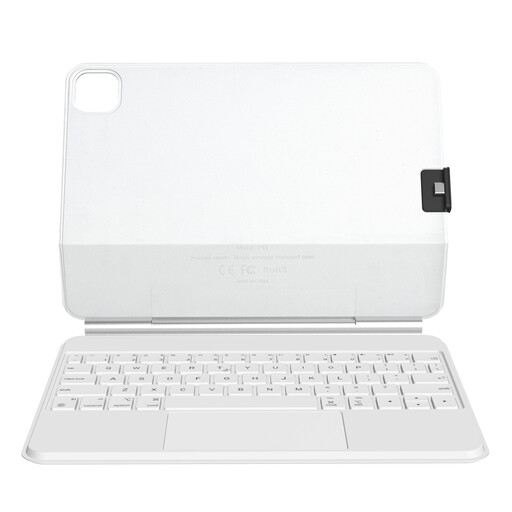 No image available
Consider an integrated case if you prepare plans on an iPad and want a keyboard and trackpad in one accessory rather than a separate keyboard setup.
The product name lists a detachable protective cover and refers to iPad Pro 11-inch and iPad Air 10.9-inch or 11-inch models. Match the precise iPad generation before buying, and check the key layout and noise if they matter to you.
 No image available
This is a standalone option for someone who wants a UK-layout keyboard for lesson planning and has room to carry a larger keyboard.
The product name specifies Bluetooth wireless use. Check its footprint against your bag and café table, and assess key noise if you regularly type near others.
 No image available
Consider this model if you want its UK layout and are willing to check whether its carrying weight suits trips to a café.
The product name identifies a wireless keyboard. Confirm the switch option supplied with this variant and assess its key noise before using it near other customers.
Match the exact device and operating system to the keyboard’s connection requirements. Logitech lists Keys-To-Go 2 support across several desktop and mobile operating systems, while Microsoft Support specifies Windows 10 or Windows 11 and Bluetooth 4.0 or later for the Designer Compact Keyboard. For an iPad case, check the iPad model as well as its software version.
A separate keyboard makes more sense if you plan to use it with several compatible devices; an integrated case is worth considering if most of your work stays on a matching iPad. Apple says its iPad Air Magic Keyboard adds a trackpad and adjustable viewing angle, but it requires a specified iPad Air model and iPadOS 18.3 or later.
Choose the power routine you are more likely to keep up with rather than assuming one suits everyone. Apple describes its USB-C Magic Keyboard as rechargeable, whereas Microsoft says the Designer Compact Keyboard uses four CR2032 coin-cell batteries; check the arrangement for the exact model you intend to carry.
Use an appropriate electrical-waste or battery collection route rather than household rubbish. GOV.UK advises keeping unwanted electrical products and batteries out of household rubbish; check which items your local collection point accepts.