Post-gym treat shoppers
If ginger and chocolate are what you fancy after training, the stated serving helps you choose between a thin biscuit and a larger coated one. The biscuit need not serve another purpose to be a treat.


Choose a chocolate-coated ginger biscuit if you want ginger and chocolate as a treat after the gym; compare the stated portion before deciding how many to have. An uncoated ginger nut suits someone who wants the traditional biscuit without chocolate. If the snack needs to tide you over until a later meal, check its protein as well as its portion size rather than treating the chocolate coating as a reason to choose it.
If ginger and chocolate are what you fancy after training, the stated serving helps you choose between a thin biscuit and a larger coated one. The biscuit need not serve another purpose to be a treat.
If your next meal is some way off, look beyond the flavour. The coated Waitrose biscuits listed here contain 0.6 g or 1.3 g protein per biscuit, depending on the product, so check whether the portion meets what you want from a snack.
Check the exact pack if you need to avoid an ingredient or cross-contact. The coated products described by Asda and M&S carry different allergen information; a gluten-free label does not settle other allergy questions.
Start with whether you want a chocolate-and-ginger treat, the traditional ginger-nut bite or a snack intended to last until your next meal. Then compare portions and ingredients on the products you are considering.
| Priority | What to check | Your needs |
|---|---|---|
| Purpose of the snack | Check protein for the stated serving if it matters to your choice. Waitrose lists 0.6 g per Dark Chocolate & Ginger Thin and 1.3 g per larger Dark Chocolate Ginger Biscuit. | I might want a sweet biscuit after training, or I might need something to last until my next meal. Those are different reasons to choose a snack. |
| Portion and nutrition | Compare figures on the same basis: per biscuit with per biscuit, or per 100 g with per 100 g. Waitrose lists 51 kcal, 4.6 g sugars and 1.3 g saturates per thin, versus 120 kcal, 9.9 g sugars and 3.9 g saturates per larger biscuit. | How many biscuits would I actually eat? A thin and a larger coated biscuit are not interchangeable portions. |
| Coating and texture | Read the biscuit description as well as the coating. Waitrose describes a coated shortcake and a thinner all-butter biscuit; McVitie's Ginger Nuts are uncoated. | For the familiar ginger-nut bite, I would choose an uncoated biscuit. If I want ginger with chocolate, I would check which coated biscuit format appeals to me. |
| Ingredients and allergens | Read the current ingredients and precautionary statements on the exact pack. Asda's Extra Special Free From chocolate ginger cookie is labelled gluten free but lists oats, milk and soya and may contain nuts. | A gluten-free claim alone would not answer my questions about other ingredients or allergens. |
The two coated Waitrose biscuits list 0.6 g and 1.3 g protein per biscuit. Choosing one for its chocolate coating does not answer a separate question about protein.
Decide whether you want a treat or a snack to bridge a long gap until a meal, then read the protein figure for the portion you expect to eat.
Waitrose lists 51 kcal per Dark Chocolate & Ginger Thin and 120 kcal per larger Dark Chocolate Ginger Biscuit. Their per-biscuit sugar and saturates figures differ too.
Use per-100 g figures for a like-for-like product comparison, and per-biscuit figures to work out your intended portion.
Asda's checked gluten-free cookie also lists milk, soya and oats and may contain nuts. M&S warns that its checked dark-chocolate ginger biscuit is unsuitable for people with nut or peanut allergy.
Check the current pack for the exact biscuit rather than assuming that gluten-free or dark chocolate describes its full ingredient and allergen profile.
These examples show how the stated biscuit formats and label details differ; a brand name alone cannot tell you the serving size or allergen information for another product in its range.
Its coated ginger biscuits include an eight-biscuit shortcake pack and a pack of ten thinner biscuits.
Its Extra Special Free From range includes a gluten-free, dark-chocolate-coated ginger cookie.
Its dark-chocolate ginger biscuit has an oat base and stem ginger.
Its Taste the Difference range includes an all-butter stem-ginger cookie coated in dark chocolate.
Its traditional Ginger Nuts are an uncoated point of comparison.
Its chocolate-and-ginger biscuits include a six-bar dark-chocolate format.
These Joybuy options pair ginger or gingerbread flavour with chocolate. They are biscuit choices for the treat side of the post-gym decision, rather than alternatives to a meal.
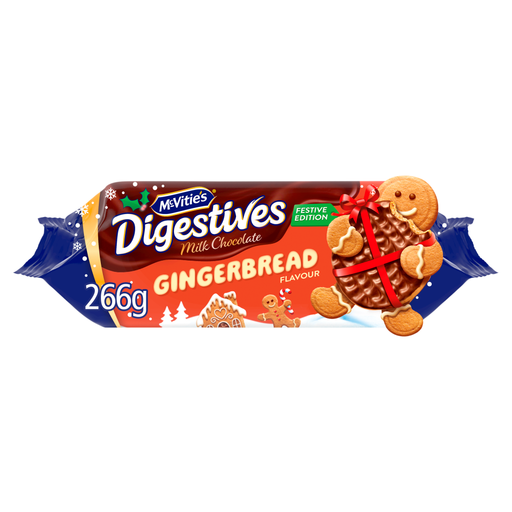 No image available
A gingerbread-and-chocolate option if you want a biscuit as a post-gym treat. These are chocolate digestives rather than traditional uncoated Ginger Nuts; check the pack for the serving and ingredients that matter to you.
 No image available
A dark-chocolate ginger biscuit option for a post-gym treat. Check its stated serving on the pack before comparing it with a thinner biscuit or a single bar; figures for a different Border product do not describe this 150 g pack.
 No image available
An oat-and-ginger biscuit covered in dark chocolate for shoppers considering a different coated format. Joybuy describes this product as made with no added sugar and with a sweetener; check the full ingredients and nutrition for your intended serving rather than treating that description as a judgement about the biscuit overall.
It can be a treat, but whether it does the job of a between-meal snack depends on what you want from that snack and when you next eat. Waitrose lists 0.6 g or 1.3 g protein per biscuit for its two coated ginger formats; check the serving rather than assuming the coating changes what the biscuit provides.
Read the ingredients and precautionary statements on the current pack of the exact product. Asda's checked gluten-free chocolate ginger cookie lists milk, soya and oats and may contain nuts, while M&S says its checked ginger biscuit is unsuitable for people with nut or peanut allergy.
The Department of Health and Social Care's England guidance concerns promotions and placement of specified products by businesses covered by those rules; it is not a general ban on an individual buying biscuits. School food is a separate question. England's Requirements for School Food Regulations 2014 define products wholly or partly coated with chocolate as confectionery, but a school must check the rules applicable to its setting and the food it serves. The Department for Education says updated school standards proposed for September 2027 remain subject to Parliamentary approval; neither those proposals nor a general HFSS label establishes the position for every biscuit or every UK school meal.