Who is each type for?
The useful distinction is whether you want cocoa intensity, straightforward preparation or a drink to accompany food after training.
Gym-goers who want a strong cocoa taste
If a dark cocoa profile matters most, compare the cocoa description and sugars on the label rather than assuming that adding more powder will give you the flavour you want. M&S Collection 72% Dark is one milk-prepared example; its chocolate contains at least 72% cocoa solids, according to Marks & Spencer.
Gym-goers who want a quick drink
A water-prepared instant drink avoids the need to heat milk. Check the stated serving before deciding what else to eat: Tesco lists 1g protein for an Options Belgian Choc serving made with water, while ASDA lists 1.3g for the cited Galaxy instant sachet made with water.
People training again soon
If quick recovery is needed after exercise, the British Dietetic Association advises starting with carbohydrate-rich food and fluids promptly. Choose the wider snack or meal with that need in mind, rather than relying on a mug of hot chocolate alone.
What should you check before choosing?
Start with the flavour and preparation you want, then compare nutrition figures for the drink as you will actually make it.
| Priority |
What to check |
Your needs |
| Cocoa flavour |
Check what a cocoa percentage describes and read sugars per 100g on the same basis. Marks & Spencer lists at least 72% cocoa solids in the chocolate used for M&S Collection 72% Dark, and 26.2g sugars per 100g of product. |
I want a pronounced cocoa taste, so I would choose by the product’s flavour description and composition, not by the amount of powder I could add. |
| Finished serving |
Check the powder quantity, liquid and nutrition basis together. Tesco’s Cadbury figures of 7.9g protein and 23g sugars apply to 18g powder plus 200ml semi-skimmed milk; its Options figures of 1g protein and 5.7g sugars apply to 11g powder in 200ml water. |
If I make mine with milk, I need figures for a milk-prepared mug before comparing it with an instant drink made with water. |
| Food after training |
Consider when you will next eat and whether quick recovery is required. The British Dietetic Association advises carbohydrate-rich food and fluids promptly when quick recovery is needed after exercise. |
I am training again soon, so the drink needs to fit alongside food and fluids rather than stand in for the whole snack. |
| Preparation and ingredients |
Check whether the instructions call for milk or water, then read the current ingredients and allergen declaration. ASDA lists milk and soya for the cited Galaxy 25g instant sachet; the cited Options product contains milk ingredients and sweeteners. |
A drink I can make with water suits me, but I still need to check its ingredients against my requirements. |
Brand and retailer references
These examples illustrate different preparation methods and label details; a brand name alone does not tell you how a particular mug is made.
Cadbury
The cited Cadbury drinking chocolate is prepared with hot milk.
- Tesco gives nutrition for a defined serving: 18g powder plus 200ml semi-skimmed milk.
- Its listed 7.9g protein and 23g sugars describe that prepared serving, not the powder alone.
Galaxy
The cited Galaxy 25g instant sachet is prepared with 200ml hot water.
- ASDA lists 99kcal, 16g sugars and 1.3g protein for that prepared sachet.
- The cited sachet contains milk and soya; its figures should not be applied to other Galaxy variants.
Options
The cited Options Belgian Choc products provide a water-prepared instant option.
- Tesco lists 40kcal, 5.7g sugars and 1g protein for 11g powder made with 200ml water.
- The cited product contains milk ingredients and sweeteners; check the label of the format you buy.
M&S Collection
Marks & Spencer describes its 72% Dark Drinking Chocolate as having a bold cocoa flavour.
- Its chocolate contains at least 72% cocoa solids, according to Marks & Spencer.
- Marks & Spencer lists 43.3g fat and 26.9g saturates per 100g of product; check the amount used in your mug.
Tesco
Tesco’s cited product pages give preparation and serving details for Cadbury and Options.
- Those details let you distinguish a milk-prepared serving from one made with water.
- Compare the specified serving bases before drawing conclusions from the nutrition figures.
Sainsbury's
The cited Sainsbury’s listing covers Cadbury Original Drinking Hot Chocolate rather than a Sainsbury’s own-label drink.
- Its listing describes preparation with milk.
- Check the current pack’s serving instructions when comparing it with a water-prepared product.
Hot chocolate options on Joybuy
These options cover a chocolate drink to check for milk preparation and a water-prepared instant drink. If strong cocoa flavour is essential, check the finished drink’s flavour description rather than assuming either product has an extra-bold profile.
 No image available
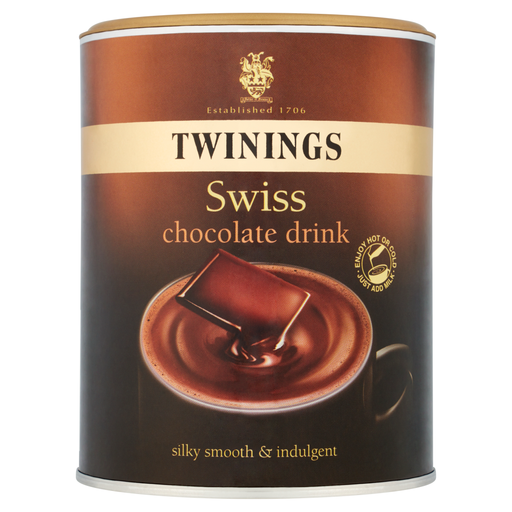
Twinings Swiss Chocolate Drink 350g
If you want a chocolate drink made with milk, check the pack’s preparation directions before choosing your portion. A cocoa-solids figure for a chocolate ingredient does not describe the cocoa percentage of the whole drink mix; compare nutrition using the powder quantity and milk you will put in the mug.
View on Joybuy
 No image available
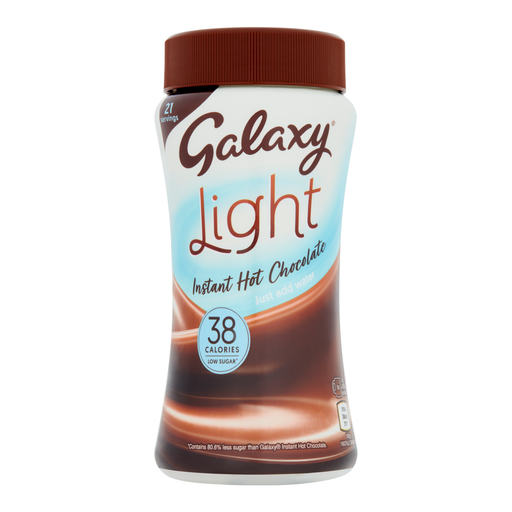
Galaxy Light Instant Hot Chocolate 210g
For a water-prepared drink, check the instructed powder quantity and calculate the mug from the label’s nutrition basis before comparing it with a milk-prepared option. The listing flags gluten (barley), milk and soya; check the current pack if these ingredients matter to you. The Galaxy 25g sachet figures discussed elsewhere here are not figures for this 210g product.
View on Joybuy
Questions about hot chocolate after exercise
Can hot chocolate replace my whole post-gym snack?
Do not assume a mug covers everything you need after demanding or repeated exercise. The British Dietetic Association advises carbohydrate-rich food and fluids promptly when quick recovery is required; the cited water-prepared Options and Galaxy servings list only 1g and 1.3g protein respectively. Consider the drink alongside the food you plan to eat.
Does making hot chocolate with milk change its protein figure?
Yes: the liquid is part of the stated prepared serving. Tesco lists 7.9g protein for Cadbury made with 18g powder and 200ml semi-skimmed milk, compared with 1g for Options made with 11g powder and 200ml water. If you use a different liquid or quantity, those prepared-serving figures no longer describe your mug.
Does strong hot chocolate necessarily contain less sugar?
No. Cocoa intensity and sugar content are separate things to check. Marks & Spencer lists at least 72% cocoa solids for the chocolate in its 72% Dark Drinking Chocolate and 26.2g sugars per 100g of product; the amount in your mug also depends on the portion and milk used.
Which allergens should I check?
Read the current pack for the exact product and variant. ASDA lists milk and soya for the cited Galaxy 25g sachet, while the Joybuy listing for Galaxy Light 210g flags gluten (barley), milk and soya. Options contains milk ingredients, so preparation with water does not make the cited product milk-free.
Is all hot chocolate prohibited in school meals because it is HFSS?
That blanket UK-wide conclusion does not follow from the cited rules. England’s Requirements for School Food Regulations 2014 exclude hot chocolate from their definition of confectionery, but that does not settle every requirement for a particular school drink. The Department for Education says proposed updated standards for September 2027 are subject to Parliamentary approval; school catering decisions need the rules applicable to the relevant nation and product.


