Gym-goers looking for a quick fruit-based snack
A smoothie is easy to take with you, but check its protein content if it will be your only food after training. A separate protein-containing food or drink may better fit that plan.


A fruit smoothie can be a convenient fruit-based snack after exercise, but check its protein content before relying on it as your only recovery food; the reviewed Sainsbury's-listed examples contain less than 0.5g to 2.2g protein per 150ml. 'No added sugar' does not mean sugar-free, and the NHS Eatwell Guide advises limiting fruit juice and smoothies to a combined 150ml a day. If you only want a drink for hydration, or need zero sugar, choose water or a drink whose label meets that requirement.
A smoothie is easy to take with you, but check its protein content if it will be your only food after training. A separate protein-containing food or drink may better fit that plan.
Compare the sugars figure for the amount you intend to drink. A 'no added sugar' claim does not mean zero sugar, and NHS guidance covers fruit juice and smoothies together.
Check the ingredients against your preferences, then consider a suitable soya food or drink alongside a smoothie if you also want protein after training.
Start with the drink's purpose: a fruit-based snack, food after a demanding session, or simply hydration. Then compare portions and nutrition on the same basis.
| Priority | What to check | Your needs |
|---|---|---|
| Sugar and portion | Read the sugars figure per serving and check how many servings the bottle contains. 'No added sugar' is not the same as zero sugar; the NHS advises no more than 150ml of fruit juice and smoothies combined a day. | I want to know how much I would actually drink, rather than treating a whole bottle as one portion. |
| Protein | Compare protein per 150ml where the label allows it. Sainsbury's listings give less than 0.5g for its Cucumber, Kiwi & Lime smoothie and 2.2g for Innocent Berry Energise. | If this is my only post-gym snack, I want to check whether to add a protein-containing food or drink. |
| Refuelling or hydration | Consider what you need after the session. The British Dietetic Association advises prompt carbohydrate refuelling when quick recovery is required; Association for Nutrition guidance says water can replace relatively small fluid losses. | After a hard session or another session soon, I may want food or drink containing carbohydrate. If I mainly want a drink, water may do. |
| Ingredients and fibre | Read the ingredient list and compare fibre per stated serving where declared. Sainsbury's listings give 1.9g fibre per 150ml for Cucumber, Kiwi & Lime and 3g for Mockingbird Raw Greens. | I want a blend that fits my ingredient preferences without assuming its fruit or vegetable content also supplies the protein I want. |
UK public-health guidance counts sugars naturally present in smoothies as free sugars. Sainsbury's listings for two no-added-sugar examples show 12g and 15g sugars per 150ml.
Compare the sugars line for your intended serving. If zero sugar is essential, choose a drink labelled accordingly rather than relying on a no-added-sugar claim.
The reviewed Sainsbury's-listed smoothies contain less than 0.5g to 2.2g protein per 150ml. Their fruit content alone does not tell you how much protein the snack provides.
If you want protein with your post-gym snack, consider pairing the smoothie with a suitable food or drink, such as yoghurt, milk, soya or eggs.
A 750ml bottle holds five 150ml portions. The NHS Eatwell Guide advises limiting fruit juice and smoothies together to no more than 150ml a day.
Measure the amount you intend to drink, and follow the pack's storage directions after opening.
Added vitamins, fibre claims or an 'energise' product name do not establish how much protein or sugar a serving contains.
Check the serving size, nutrition panel and ingredients, including any botanicals relevant to your preferences.
Its chilled range includes fruit smoothies and blends with vegetables or added ingredients. Compare individual variants rather than applying one nutrition figure to the range.
Its own-label fruit-and-vegetable smoothies provide product-specific nutrition panels for comparing servings.
Raw Greens combines fruit and vegetables; its listed nutrition applies to that variant, not every smoothie from the brand.
M&S Food lists ready-made smoothies in 350ml and 750ml formats, including blends with yoghurt, dates or oats.
The Waitrose smoothie listing includes own-label and branded drinks in smaller and larger formats.
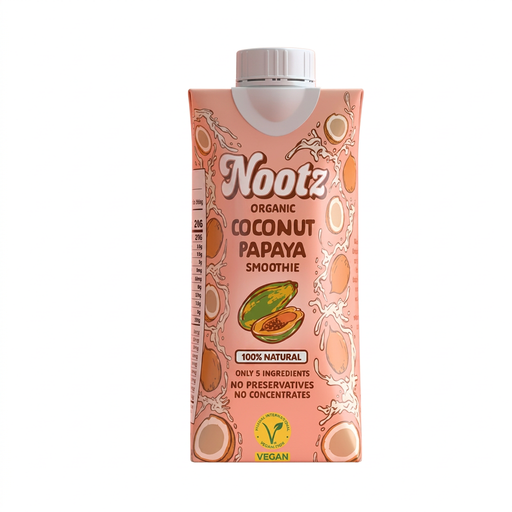
This papaya and coconut milk smoothie is a fruit-based option to consider for a quick post-gym snack. Check the portion and nutrition label against your sugar and protein priorities.
 No image available
A papaya smoothie to consider when you want a ready-to-drink fruit-based snack after the gym. The bottle is 180ml; the NHS advises limiting fruit juice and smoothies together to 150ml a day, so decide how much to serve. Check the current pack's sugars, ingredients and protein if those affect your choice.
No. A no-added-sugar claim concerns added ingredients, not the smoothie's total sugars. Public Health England's sugar-reduction guidance includes sugars naturally present in smoothies within free sugars, so read the pack's sugars figure for the serving you plan to drink.
The NHS Eatwell Guide advises no more than 150ml of fruit juice and smoothies combined a day. That is dietary guidance, not a statement that a bottle is one serving: a 750ml bottle contains five 150ml portions.
Check what else you need from the snack. The reviewed Sainsbury's-listed smoothies contain less than 0.5g to 2.2g protein per 150ml; if you want protein after training, pair your smoothie with a suitable protein-containing food or drink rather than judging it by its fruit content.
If your main aim is hydration and fluid losses were relatively small, Association for Nutrition guidance says water can replace that lost fluid. A smoothie is more relevant when you also want a fruit-based snack or carbohydrate-containing food or drink after a demanding session; the British Dietetic Association highlights prompt carbohydrate refuelling when quick recovery is required.