Gym-goers moderating fat intake
If you want a portable snack after exercise, compare fat and saturates per bar without overlooking protein, carbohydrate, sugars and energy.


Choose a post-gym snack bar by comparing the nutrition for the bar you will eat, rather than relying on a reduced-fat claim alone. Check fat and saturates alongside protein, carbohydrate, sugars and energy; the session, your wider diet and any allergens also affect which bar fits.
The same bar can answer different shopping needs, so start with the information that matters to you.
If you want a portable snack after exercise, compare fat and saturates per bar without overlooking protein, carbohydrate, sugars and energy.
Compare the exact variant’s ingredients and per-bar nutrition. A flapjack and a fruit-and-nut bar can differ in protein, fat and sugars even when both are sold as post-gym snacks.
Ingredients and precautionary allergen statements may decide whether a bar is suitable. Check the current pack for peanuts, other nuts, soya or milk rather than relying on the product-range name.
Start with the portion you would actually eat, then use the per-100g figures when pack sizes differ.
| Priority | What to check | Your needs |
|---|---|---|
| Fat and portion size | Compare total fat and saturates per bar. Use the per-100g column to distinguish a different recipe from a smaller serving; read traffic-light labels where present. | I want to moderate fat intake without mistaking a small bar for a lower-fat formulation. GOV.UK explains that traffic-light labels indicate whether fat and saturates are high, medium or low. |
| Protein and carbohydrate | Read both amounts per bar and consider them in the context of your exercise session and other food. A protein-led product name does not describe its full nutrition. | After training, I want a snack that fits what else I plan to eat. University College London Hospitals NHS Foundation Trust discusses carbohydrate-and-protein snacks in relation to exercise fuel and muscle repair. |
| Sugars and energy | Check total sugars and energy per bar alongside fat. Treat a no-added-sugar statement as distinct from the total-sugars figure. | If I am comparing two bars, I want to see more than one front-of-pack claim before choosing a portion. |
| Ingredients and allergens | Read the exact variant’s ingredients and any “may contain” statement on the current pack. Do not assume a vegan or gluten-free description addresses other allergens. | Where I need to avoid an ingredient, the pack’s allergen information matters more than whether the bar is described as a gym snack. |
Protein content alone cannot establish how much fat a bar contains or whether it fits a fat-moderation goal.
Compare protein, total fat, saturates, sugars and energy for the same serving before choosing.
A no-added-sugar statement and the amount of total sugars describe different things. Fruit-and-nut ingredients, for example, can contribute sugars.
Read the total-sugars figure on the nutrition panel for the portion you intend to eat.
Vegan and gluten-free descriptions do not establish whether a bar contains peanuts, soya or other ingredients you need to avoid.
Check the current pack’s ingredient list and precautionary allergen statement for the exact flavour.
What you want from a snack can change with the exercise session and the rest of your meals.
Consider the bar as one part of your food choices rather than using its post-gym positioning as a complete nutrition plan.
Brand descriptions can help narrow a search, but compare the nutrition and ingredients of the exact bar before buying.
Its Protein Peanut & Chocolate bar is an example of a protein-positioned snack bar, not a reason to assume reduced fat.
Its Protein Flapjacks offer an oat-based format for shoppers comparing plant-protein snack bars.
Its Cherry Protein Bar provides a fruit-and-nut option to compare with oat flapjacks and other protein bars.
Its oat flapjacks are another snack format to assess by portion and nutrition label.
Its protein cereal-bar range includes fruit-and-nut products.
Assess any Alpen snack bar using its current product details and pack, rather than older range descriptions.
These listings cover flapjacks and protein bars you can compare for a post-gym snack. Pack formats come from the listed product names; check each current nutrition panel and ingredient list to judge fat, protein and allergens.
 No image available
For a post-gym flapjack, compare protein, fat and sugars for one 50g bar. Check the pack’s ingredients and allergen statement if you have dietary exclusions.
 No image available
If protein per bar is a priority, Nature Valley describes this 40g variant as providing around 10g. Compare its fat and other nutrition on the current pack; Joybuy lists peanuts, soya and milk as allergens.
 No image available
This Salted Caramel Nut variant comes as four 40g bars. Compare its own per-bar protein and fat figures with the Peanut & Chocolate variant; do not transfer one flavour’s nutrition or allergen details to the other.
 No image available
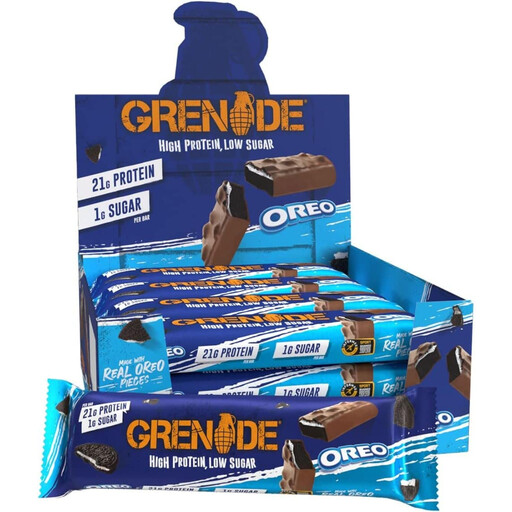
For this 60g-bar format, check the current nutrition panel for both protein and total fat. The Low Sugar name is not a substitute for comparing sugars, energy and ingredients with other bars.
 No image available
If an oat flapjack appeals after the gym, compare this Cocoa Oat variant’s per-bar protein, fat and sugars with the Salted Caramel pack. Read its own ingredient and allergen information before choosing.
No. Fat is only one part of the comparison: read protein, carbohydrate, sugars and energy per bar, then consider the session and what else you eat. The British Nutrition Foundation identifies carbohydrate as an exercise fuel, while University College London Hospitals NHS Foundation Trust discusses carbohydrate-and-protein snacks in its exercise guidance.
Check fat and saturates for the whole bar you would eat, then compare the per-100g figures to see how the products differ at the same weight. GOV.UK explains that traffic-light labels, where present, indicate whether amounts of fat and saturates are high, medium or low.
No. A protein description tells you nothing definite about reduced-fat status. Read the current pack’s fat and saturates figures alongside protein; for example, Nature Valley describes its Peanut & Chocolate bar as providing around 10g protein per 40g bar, but that figure alone cannot answer the fat question.
No. Those descriptions do not address every ingredient you might need to avoid. Read the exact variant’s current ingredient list and any “may contain” statement; Joybuy lists peanuts, soya and milk as allergens for Nature Valley Protein Peanut & Chocolate.
Use per-bar figures to understand the portion you plan to eat and per-100g figures to compare products of different sizes on the same weight basis. Keep both in view when assessing fat, protein, sugars and energy.