What should you check?
Start with the purpose of the purchase, then compare the portion you would eat with the nutrition and ingredient information on that product’s pack.
| Priority |
What to check |
Your needs |
| Purpose |
Decide whether this is a sweet treat, a gift or a snack chosen for carbohydrate and protein. University College London Hospitals NHS Foundation Trust describes carbohydrate-and-protein snacks as providing exercise fuel and protein for muscle repair. |
If I am choosing food for after exercise rather than simply having a sweet, I want to consider the carbohydrate-and-protein guidance, not treat confectionery as a complete answer. |
| Portion and nutrition |
Compare sugars and protein for the amount you intend to eat, not just per 100g. Tesco lists 18.0g sugars and 1.1g protein per 25g serving of its 50g marshmallows, and 26.1g sugars and 1.4g protein per 36g portion of its 360g marshmallow pieces. |
A smaller bag helps me define how much I plan to have; with a sharing pack or assorted box, I would check the portion before eating it. |
| Ingredients and allergens |
Read the current ingredient and allergen statements for the exact product. The Tesco and Waitrose marshmallow examples list pork gelatine; Tesco’s 360g marshmallow pieces also carry a possible-traces warning covering several allergens. |
If I avoid pork gelatine or need to manage an allergy, the label on the pack I am buying matters more than the general name “marshmallows”. |
| Format |
Check whether the pack is a small marshmallow format or an assortment intended for gifting and sharing. For an assorted box, check the portions and ingredients of the chosen selection. |
For a gift, I may want a chocolate assortment; for one occasional sweet portion after the gym, I would consider how much of the pack I actually intend to eat. |
Joybuy product options
These options cover small packs of marshmallows for an occasional sweet treat and boxed chocolates for gifting or sharing. Their formats do not, by themselves, establish a post-exercise nutrition role.
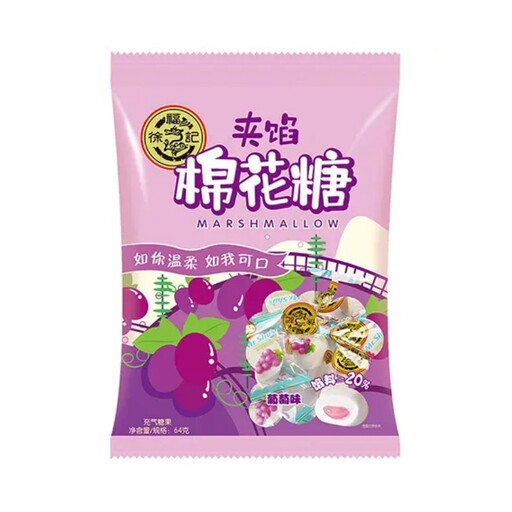 Image unavailable
HSUFUCHI Marshmallow Grape 64g
A 64g marshmallow pack for an occasional sweet treat. Nutrition is stated per 100g rather than per serving, so check the portion you intend to eat; the product information identifies egg as an allergen.
View on Joybuy
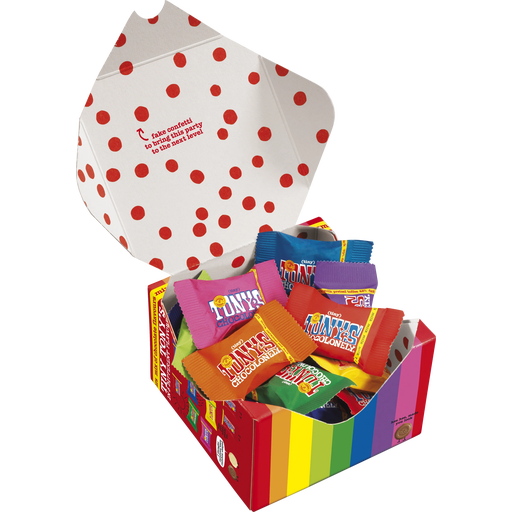 Image unavailable
Tony's Chocolonely Tiny Tony's Mix Gift Box 180g
A mixed chocolate box for gifting or sharing rather than a measured recovery snack. Nutrition is stated per 100g, and ingredients may vary across the assortment; check the current box for each piece’s ingredients and allergens.
View on Joybuy
 Image unavailable
Ferrero Rocher T24 300g
A 24-piece, 300g chocolate box suited to gifting or sharing. Nutrition is stated per 100g rather than per piece; check your chosen portion and the current pack’s allergen information, including hazelnuts, milk, soya and wheat.
View on Joybuy
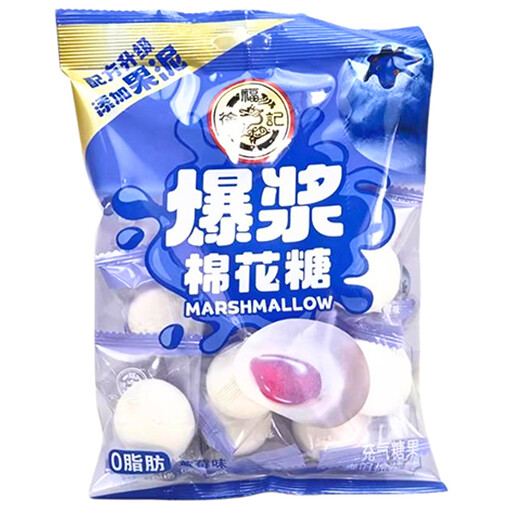 Image unavailable
HSUFUCHI Blueberry Flavored Marshmallows 64g
A 64g marshmallow pack for an occasional sweet portion. Nutrition is stated per 100g rather than per serving; check the current pack for portion information, gelatine source, allergens and its E420 and E129 warnings.
View on Joybuy
Frequently asked questions
Are marshmallows a standalone post-gym recovery snack?
Do not assume they meet that purpose. University College London Hospitals NHS Foundation Trust describes carbohydrate-and-protein snacks for use around exercise, while Tesco lists 1.1g protein and 18.0g sugars per 25g serving of its 50g marshmallows, and 1.4g protein and 26.1g sugars per 36g portion of its 360g pieces. Check the portion and consider your carbohydrate-and-protein needs separately from a sweet treat.
When would a boxed chocolate selection make sense?
Choose a box when the main purpose is gifting or sharing, rather than assuming it is a measured post-exercise snack. M&S describes its range as assorted chocolate boxes; check the serving and ingredient information for the particular box if you plan to eat it after training.
Can I assume marshmallows are pork-free or suitable for my allergies?
No. The cited Tesco and Waitrose marshmallows list pork gelatine, and Tesco’s 360g marshmallow pieces carry a possible-traces warning for nuts, egg, milk, soya and cereals containing gluten. Read the current label of the exact product you are buying.
Does an HFSS retail label decide whether confectionery can be used in a school meal?
No. The Department of Health & Social Care’s HFSS promotion guidance concerns businesses operating in and selling to England; school food is addressed separately by Department for Education guidance for state-funded schools in England and the Requirements for School Food Regulations 2014. Those regulations define confectionery to include non-chocolate confectionery and chocolate. Check the applicable school-food requirements and catering contract for an England school, and the relevant nation’s rules elsewhere in the UK.


