
24/7 Customer Support

Free returns

Same-day & Next-day Delivery

Quality Guaranteed

Unlock Your Welcome Offers: FREE Delivery | Up to 80% OFF | Free 30-day JoyPlus trial
Download the APP
Recovering after breast surgery or liposuction can make ordinary underwear feel restrictive, difficult to put on and uncomfortable against sensitive skin. A women's post-surgery compression bra may offer easier dressing and adjustable support, but choosing the wrong design can create new problems.
Marketing descriptions often focus on phrases such as “anti-sag”, “medical-grade” or “maximum support”. These terms do not automatically tell you whether the bra is suitable for your procedure, body shape or recovery stage. Use the following checks to compare options more objectively.
Compression should feel supportive rather than painfully tight. Excessive pressure, pinching, numbness, rubbing or restricted breathing are signs that the garment may not be suitable. Follow your surgeon’s or clinician’s instructions about when to wear compression clothing and what level of support is appropriate.
A bra described as a medical-grade compression bra is not automatically appropriate for every operation. Check the product details, sizing information and care instructions before purchasing.
Pull-on bras can be difficult to put on when movement is limited. They may also stretch unevenly over time. A front-hook compression bra can be easier to fasten without lifting the arms excessively, but the number and positioning of hook rows matter.
A single closure setting offers little flexibility if swelling changes. Multiple rows may allow you to adjust the fit gradually, provided the bra remains flat and comfortable against the skin.
Ventilation can help reduce heat build-up, but breathability also depends on fabric composition, cup construction, seams and how closely the garment fits. A smooth bra may still feel warm if it is too small, while a loosely fitted garment may not provide the intended support.
Look beyond promotional wording and check the actual materials, construction and washing requirements.
Product listings may describe a garment as providing “medical-grade support”. Treat this as a product specification, not personal medical advice or a guarantee of recovery results. Your healthcare professional can advise whether compression is suitable for your procedure, including after breast surgery or liposuction.
For a post-liposuction support bra, check whether the design covers the area your clinician wants supported. If you have dressings, drains, incisions or unusual swelling, ask for guidance before wearing a new garment.
Multiple hook rows can help accommodate changes in fit. The reference FeelinGirl styles use between three and ten rows, depending on the selected size and colour variant. Always confirm the exact listing because the hook count is not identical across every option.
A front closure should sit securely without digging into the sternum. Fasten it while standing naturally, then check that the band remains level and that the cups do not compress breast tissue unevenly.
The listed compression styles use 53% nylon and 47% spandex, with moulded cups and adjustable front fastening. Spandex provides stretch, while nylon contributes to a smooth, close-fitting construction. Moulded cups may help maintain a consistent shape, but they still need to match your size.
For long-term wear, follow the care label. These styles specify hand washing, reshaping and flat air drying. Avoid bleach, ironing, tumble drying and dry cleaning where stated, as heat and harsh chemicals can affect stretch fibres.
For everyday use rather than surgical recovery, a seamless wire-free bra may be more suitable. The Utree options listed below use fixed cups, stretch side wings and ventilation features for light daily activities.
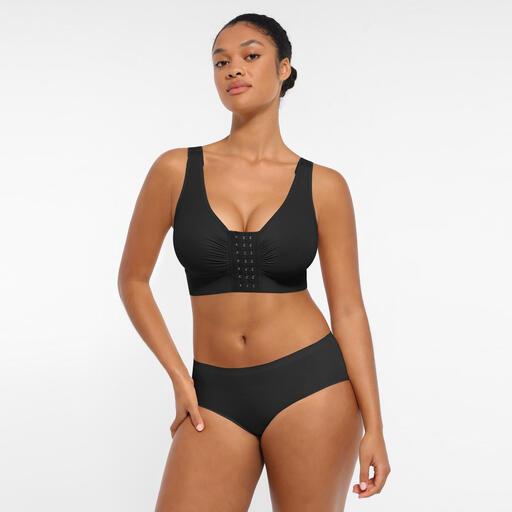
Why This Fits Their Persona: A practical starting option for someone seeking front fastening, moulded cups and adjustable support for recovery or daily supportive wear.
The front closure avoids the difficulty of pulling a tight bra over the head, while the listed multi-row fastening provides more adjustment than a fixed back band.
53% nylon and 47% spandex blend; moulded cups; hand-wash care instructions.
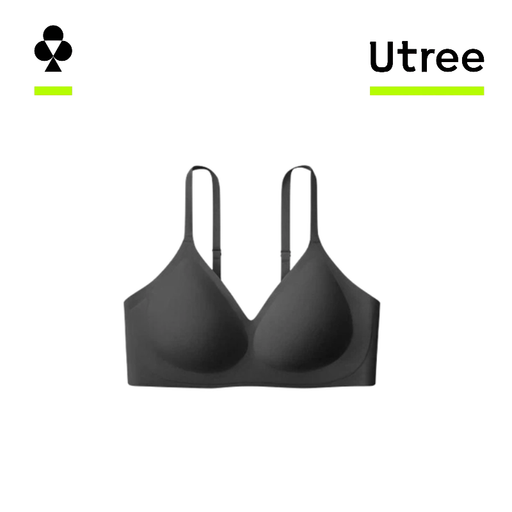
Why This Fits Their Persona: Suitable for small-busted women wanting breathable, wire-free shaping for office clothing, casual outings and light activity rather than surgical compression.
Its listed ventilation holes, stretch side wings and wire-free construction address heat, underarm rubbing and rigid underwires.
Fixed cups; machine washable; sizes M, L and XL with black, nude and pine green colour options listed.
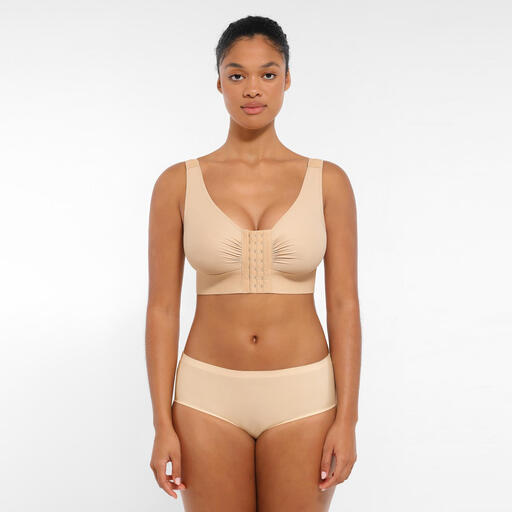
Why This Fits Their Persona: A skin-coloured option for users who want a discreet layer under pale tops and need adjustable front support during a clinician-approved recovery routine.
Moulded cups and an eight-row front hook closure are listed, giving more structured shaping and adjustment than a basic seamless bra.
53% nylon and 47% spandex; listed for post-liposuction and post-surgical support; skin colour.
We have compiled a complete, real-time list of products that fully satisfy these strict selection criteria and UK safety regulations.
Not necessarily. Timing depends on the procedure, wound condition, dressings, drains and your clinician’s instructions. Ask your surgical team what closure style, compression level and wearing schedule are suitable before ordering or using one.
Lifespan depends on washing frequency, heat exposure, stretching and the original fit. Loss of recovery, loose hook tape, damaged seams or persistent fabric distortion indicate that it may need replacing. Hand washing and flat air drying can help preserve the stated fabric properties.
Some listed styles are also described for pregnancy support and daily wear, but surgical compression bras can feel firmer than a conventional breathable supportive bra. For routine use, compare wire-free construction, side-boob control, strap comfort and washability. A light-support seamless style may be more practical once post-operative compression is no longer required.