Who is choosing a post-workout drink?
The useful choice depends on the session, when you will next eat and whether you want a drink to contribute to recovery or simply accompany a meal.
People having a meal after a usual workout
If a meal with carbohydrate and protein is coming soon, hot chocolate can be chosen as a warm drink alongside it. The British Dietetic Association places particular emphasis on prompt carbohydrate refuelling when recovery time is short.
People facing a longer session or quick turnaround
After exercise lasting longer than an hour, or when another session follows soon, consider what carbohydrate and protein the drink and accompanying food provide. The British Heart Foundation discusses protein after longer sessions, while the British Dietetic Association highlights prompt refuelling before repeated activity.
People who keep milk for occasional hot drinks
Filtered milk may be convenient when you do not use a carton quickly. Arla Cravendale says its filtered milk can keep for up to three weeks unopened in the fridge and about a week after opening; follow the date and storage instructions on the carton you buy.
What should you check before choosing?
Decide what role the drink needs to play after your session, then compare nutrition for the portion you will actually prepare.
| Priority |
What to check |
Your needs |
| Recovery role |
Consider session length and the time until your next session or meal. Compare carbohydrate and protein in the prepared drink and anything eaten with it. The British Heart Foundation gives a 15–30 g protein recommendation after exercise lasting longer than an hour. |
If I am eating a meal soon after a usual workout, I may want hot chocolate as a warm drink. If I need to refuel promptly before another session, I need to consider the food and drink together. |
| Milk contribution |
Check the milk volume used per mug and its protein per 100 ml. Arla Cravendale lists 3.6 g protein per 100 ml for both its filtered semi-skimmed milk and the regular supermarket semi-skimmed milk in its comparison. |
I want to know what the milk adds to my drink, without assuming that filtration increases its protein content. |
| Drink format |
For powder, compare nutrition for the prepared portion, not just the powder. For a ready-to-drink shake, check protein, carbohydrate and bottle size; a chocolate flavour or product category does not establish its nutritional contribution. |
A hot drink suits me when I have time to make one; a ready-to-drink option may be more practical when I need something without preparation. |
| Calories and sugars |
Compare the serving size, energy, carbohydrate and sugars on the exact product label. Marks & Spencer describes its Low Calorie Instant Hot Chocolate as 38 kcal per serving; that figure does not describe a mug prepared with added milk. |
If I mainly want a lighter warm chocolate drink, I will compare prepared portions. After demanding exercise, I will consider carbohydrate and protein separately from that preference. |
| Ingredients and allergens |
Read the ingredients and allergen declarations for both the powder and the liquid used to prepare it. GOV.UK guidance says regulated allergens present in prepacked food and drink must be clearly identified in the ingredients list. |
If I need to avoid milk or another ingredient, I cannot judge suitability from the words ‘chocolate’, ‘vegan’ or ‘filtered’ alone. |
| Milk storage |
Check the carton’s unopened date, refrigeration instructions and guidance after opening. Arla Cravendale states that its filtered milk can keep for up to three weeks unopened in the fridge and about a week after opening. |
I make hot chocolate only occasionally, so a carton’s usable time after opening matters as much as its unopened date. |
Brand and retailer references
These ranges illustrate different hot-chocolate formats; a brand name or category label cannot replace the nutrition and ingredient information for the exact product.
Cadbury
Cadbury has a hot-chocolate and cocoa-powder range; Tesco lists both a Cadbury drinking-chocolate powder and an instant hot-chocolate powder.
- Powder and instant formats offer different preparation choices.
- Check the chosen variant’s ingredients, serving directions and prepared-drink nutrition before assigning it a recovery role.
Galaxy
Tesco’s hot-chocolate category lists Galaxy instant, light and vegan-labelled variants.
- The listed variants provide a choice of formats and ingredient approaches.
- Read the exact variant’s nutrition and allergen declaration; the range name does not establish what a prepared serving contains.
Options
Tesco places Options products in its reduced-sugar and low-calorie hot-chocolate category.
- The range is relevant when comparing lighter hot-chocolate formats.
- Check nutrition for the intended preparation if carbohydrate or protein contribution matters after exercise.
Tesco
Tesco lists own-label instant and lighter hot chocolates, as well as a separate category of chocolate-flavoured protein drinks.
- Its categories make it possible to compare hot-chocolate and ready-to-drink formats.
- Products in different categories should be compared using their own serving sizes, ingredients and nutrition panels.
M&S
Marks & Spencer provides ingredient and nutrition information for standard and low-calorie instant hot chocolates.
- Its product information distinguishes a standard instant drink from a low-calorie version stated as 38 kcal per serving.
- Both product descriptions include milk-derived ingredients; check the current pack and the nutrition of any milk added.
Joybuy options for these drink choices
These options include drinking chocolates for a warm mug and chocolate-flavoured protein drinks or powder for a different post-exercise format. If you choose to make hot chocolate with filtered milk, select and check the milk separately.
 No image available
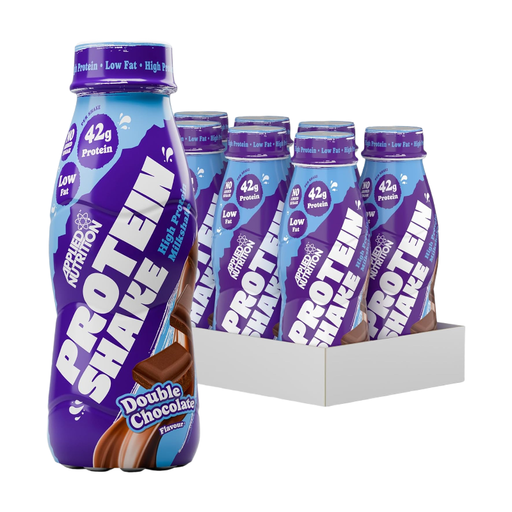
Applied Nutrition Protein Nutrition Shake Double Chocolate Flavour, 8 x 500ml
This ready-to-drink chocolate shake is an alternative when making a hot drink is inconvenient. Compare the bottle’s carbohydrate and protein information with your intended meal or snack; it contains milk and is not hot chocolate made with filtered milk.
View on Joybuy
 No image available
Cadbury Drinking Chocolate 500g
This drinking chocolate is intended for preparation with hot milk, making it a warm-drink option alongside a forthcoming meal or snack. Check the pack’s serving and preparation information before relying on nutrition figures for a finished mug; filtered milk is a separate ingredient. Check the current allergen declaration.
View on Joybuy
 No image available
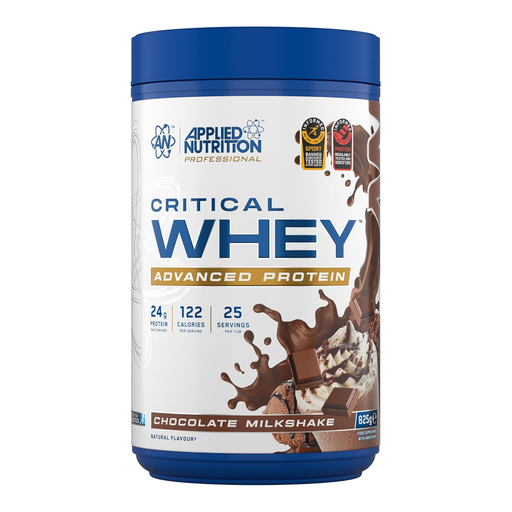
Applied Nutrition Critical Whey Protein Chocolate, 825g
This chocolate-flavoured protein powder can be mixed with water or milk, but it is a shake powder rather than hot chocolate. Check the prepared portion’s carbohydrate alongside its protein when recovery time is short. It contains milk; read the current allergen information.
View on Joybuy
 No image available
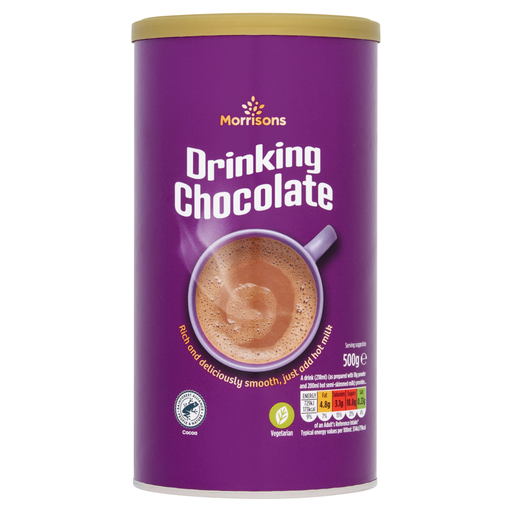
Morrisons Drinking Chocolate 500g
This drinking chocolate is prepared with hot milk, so the milk you choose affects the finished drink. Check the pack for the serving size and whether its nutrition figures describe the powder or the prepared drink before using them to plan post-workout food.
View on Joybuy
 No image available
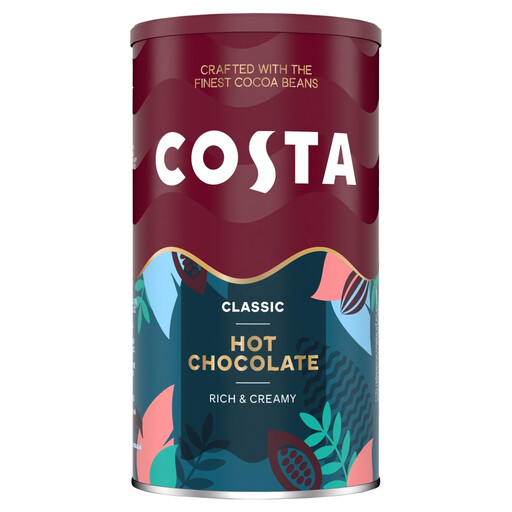
Costa Hot Chocolate 300g
This hot-chocolate powder can be prepared with milk or a plant-based alternative. The liquid chosen changes the finished drink’s nutrition, so compare the prepared portion rather than treating powder figures as figures for the whole mug. Check the current pack if allergens matter.
View on Joybuy
Questions about hot chocolate after exercise
Can ordinary hot chocolate be part of post-workout recovery?
Yes, it can accompany food after exercise, but do not assume the drink alone supplies what you need. The British Dietetic Association advises prompt carbohydrate refuelling when quick recovery is required, particularly before repeated activity; the British Heart Foundation discusses carbohydrate and protein after sessions lasting longer than an hour. Consider the prepared drink together with your next meal or snack.
Does filtered semi-skimmed milk add more protein than ordinary semi-skimmed milk?
Not in Arla Cravendale’s published comparison: it lists 3.6 g protein per 100 ml for both its filtered semi-skimmed milk and regular supermarket semi-skimmed milk. Arla describes a refrigeration convenience instead, stating that its filtered milk can keep for up to three weeks unopened and about a week after opening. Follow the instructions on your carton.
Should I make hot chocolate with water or milk after exercise?
If milk suits your dietary needs and you want it to contribute protein, its nutrition matters to the finished mug; water does not make the same contribution. Check the amount and type of milk used, plus the powder’s prepared-serving information. After a longer session or before another session, consider the drink alongside the carbohydrate and protein in your food, as advised by the British Heart Foundation and British Dietetic Association.
Is lower-calorie hot chocolate a substitute for a chocolate protein drink?
Not solely because it is lower in calories. Marks & Spencer states that its Low Calorie Instant Hot Chocolate is 38 kcal per serving, but that figure does not establish what a mug with added milk contributes or make it equivalent to a protein drink. Compare carbohydrate, protein and the portion you will actually consume if the drink has a recovery role.
Is filtered milk suitable if I need to avoid milk allergens?
Do not assume that filtration removes milk allergens: filtered dairy milk is still milk unless the specific product is clearly labelled otherwise. Check both the milk or alternative drink and the hot-chocolate powder. GOV.UK guidance says regulated allergens present in prepacked food and drink must be identified in the ingredients list; the Food Standards Agency explains the significance of a specific free-from declaration.


