Dairy-free smoothie makers
A coconut drink can provide the flavour and liquid base for a post-exercise smoothie. Plan the protein-containing part separately rather than assuming the coconut drink supplies it.


Choose an organic carton coconut drink if you want a dairy-free smoothie base after exercise, but include a separate protein-containing food: Northern Care Alliance NHS Foundation Trust advises including protein after exercise, and the listed coconut drinks provide little protein per 100ml. Choose canned organic coconut milk for a recipe rather than treating it as an equivalent pourable drink. If replacing fluid lost through sweating is the immediate concern, the NHS recommends water.
A coconut drink can provide the flavour and liquid base for a post-exercise smoothie. Plan the protein-containing part separately rather than assuming the coconut drink supplies it.
A carton drink is intended for pouring into drinks or cereal; canned coconut milk is a different ingredient for cooking or richer recipes. Compare their labels on the stated per-100ml or per-100g basis before deciding which fits your use.
If you need a dairy-free drink, compare protein and any stated calcium or vitamin fortification on the product you choose. A coconut drink’s nutritional information should not be assumed to match dairy milk’s.
Start with the job the product needs to do: make a smoothie, add richness to a meal or replace fluid after sweating. Then check the label for the nutrients and product claims that matter to that choice.
Choose it when: You want a dairy-free coconut base for a smoothie or snack alongside a separate protein-containing food.
Bear in mind: An organic claim does not tell you how much protein or sugar the drink contains.
Choose it when: You want coconut richness in a meal or recipe rather than a carton drink to pour.
Bear in mind: The Duchy Organic canned product listed by Waitrose contains 18g fat and 1.1g protein per 100g, so it does not take the place of a protein-containing ingredient.
Choose it when: Replacing fluid lost through sweating matters more than adding coconut flavour; the NHS recommends water for that purpose.
Bear in mind: Water does not provide the coconut ingredient you may want in a smoothie or meal.
| Priority | What to check | Your needs |
|---|---|---|
| Protein | Compare protein per 100ml and for the amount you plan to use. Sainsbury's lists 0.5g per 100ml for Rude Health Organic Coconut Drink; Alpro lists 0.1g per 100ml for Coconut Original. | I want coconut flavour after training, but I will include a protein-containing food in the smoothie or meal. Northern Care Alliance NHS Foundation Trust advises including a protein source after exercise. |
| Organic claim | Check whether the finished product is labelled organic, rather than relying on an ingredient described as organic. Read the ingredient list and any added-sugar wording separately. | If buying organic is important to me, I want to confirm the claim on the drink or can I actually buy. |
| Fluid and sugars | Use water to replace fluid lost through physical activity, as the NHS advises. For a coconut drink, compare sugars per 100ml: Sainsbury's lists 4.1g for Rude Health Organic Coconut Drink. | After a sweaty session, I want something to drink for thirst first. I can decide separately whether coconut drink suits the smoothie or food I am having. |
| Carton or can | Check whether the product is a pourable drink or canned cooking milk. Waitrose lists 60% coconut extract, 18g fat and 1.1g protein per 100g for Duchy Organic Coconut Milk; also follow the chosen pack's storage directions once opened. | For a pourable smoothie base, I would choose a carton format. If I am cooking and want coconut richness, a can may fit the recipe instead. |
| Fortification | If replacing dairy milk, check the chosen drink's label for stated calcium and vitamins as well as protein. Sainsbury's lists calcium and vitamins D2 and B12 for Koko Coconut UHT Drink; that listing does not establish an organic claim. | I want a dairy-free replacement, so I need to compare its labelled nutrients rather than assume every coconut drink has the same fortification. |
Sainsbury's lists 0.5g protein per 100ml for Rude Health Organic Coconut Drink. An organic label does not establish that a drink provides the protein-containing part of a post-exercise snack.
Check protein for the amount you will use and include a separate protein-containing food if you are making a recovery snack.
Waitrose lists 18g fat per 100g for Duchy Organic Coconut Milk. A can chosen for richness in a recipe serves a different purpose from a pourable coconut drink.
Decide how you will use it before buying, compare the relevant nutrition labels and check the can's instructions for storing leftovers.
A coconut drink can be an ingredient in food or a smoothie, but that does not make it the preferred way to replace fluid lost through physical activity. The NHS recommends water for that purpose.
Use water for fluid replacement, then choose a coconut product according to its flavour, ingredients and place in your meal.
Different coconut products can have different brands, ingredients and organic claims. A listing for one product does not establish the identity or claims of another.
Match the full brand and product name, then check the finished pack's ingredients and organic labelling before substituting it for a product you had shortlisted.
These examples illustrate differences between organic carton drinks, canned coconut milk and fortified coconut drinks; each claim applies to the named product, not every product from its brand.
Plenish Coconut M*lk is an organic carton-drink option for a dairy-free smoothie base.
Rude Health Coconut Drink is an organic coconut-and-rice carton drink that can be used as a smoothie base.
Duchy Organic Coconut Milk is a canned ingredient for cooking or recipes where you want coconut richness.
Koko Coconut UHT Drink provides a fortified coconut-drink comparison for shoppers replacing dairy milk.
Alpro Coconut Original is a dairy-free coconut-drink comparison when protein and calcium labelling matter.
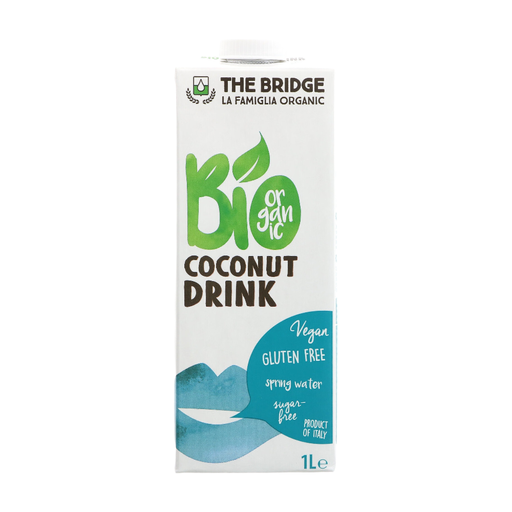
This carton coconut drink is an option to consider as a base alongside a separate protein-containing food. If you specifically want a certified organic finished drink, check its pack before choosing it.
 No image available
If using this coconut drink in a post-exercise smoothie, include a separate protein-containing food. Check protein per 100ml and the finished product's organic labelling on the pack before choosing it for an organic preference.
Do not rely on its organic claim to tell you whether it supplies protein. Sainsbury's lists 0.5g protein per 100ml for Rude Health Organic Coconut Drink, while Northern Care Alliance NHS Foundation Trust advises including a protein source after exercise. Use a coconut drink as a base alongside a protein-containing food if that is what your snack needs.
No. Coconut drinks and canned coconut milk are plant-based products, not dairy milk. If replacing dairy, check the particular drink's protein and stated fortification rather than assuming its nutrition matches dairy milk.
Check the organic wording and certification information for the finished product on its pack, not just ingredients described as organic. Defra's UK organic food guidance describes organic production rules and certification by an approved control body for organic food labelling.
Choose water when replacing fluid lost through physical activity is the priority; that is the NHS recommendation. You can choose a coconut drink separately for its flavour or as part of a smoothie, after checking its nutrition label.
Follow the storage directions on the can you buy, including any refrigeration and use-by-after-opening instructions. This matters if you need only a small amount for a smoothie or recipe.