Exercisers planning a meal later
If you want something portable after a routine gym session, walk or class, a small bar may meet your immediate need for a snack. Keep that separate from deciding what to eat for the rest of the day.


After an ordinary workout, a smaller bar can be a convenient snack if a meal will follow; compare calories per bar rather than assuming it supplies much protein. If another demanding session is close, consider a fuller carbohydrate-and-protein meal or snack instead of treating a light bar as the whole recovery intake. Check the portion size, protein and allergens on the particular product before choosing.
If you want something portable after a routine gym session, walk or class, a small bar may meet your immediate need for a snack. Keep that separate from deciding what to eat for the rest of the day.
When a meal is not practical straight after training, compare protein alongside energy per bar. An International Journal of Sport Nutrition and Exercise Metabolism review discusses approximately 20 g of intact protein in relation to early post-exercise muscle-protein synthesis; that is context for a recovery-focused choice, not a requirement that every snack bar must meet.
If you need a vegan or gluten-free product, or must avoid particular allergens, check the exact bar and its current pack. A brand name or protein-focused product name does not establish whether another product in the range meets your requirements.
Start with the role of the snack: a small portion before a later meal is a different choice from food intended to cover a short gap before another demanding session.
| Priority | What to check | Your needs |
|---|---|---|
| Portion energy | Compare kcal for the whole wrapped bar and its weight. For bars of different sizes, check the per-100 g figures as well. | I want a small snack after an ordinary session and expect to eat a meal later. |
| Protein | Read grams of protein per bar, not just a protein-focused name. Nature Valley UK lists 10.2 g per 40 g Peanut & Chocolate bar; the reviewed post-exercise literature discusses approximately 20 g of intact protein for early muscle-protein synthesis. | If my next meal is some way off, I want to know how much protein the bar contributes and what I will have with it. |
| Next session | Consider the time until further demanding exercise and whether the wider meal or snack includes carbohydrate and protein. A Current Sports Medicine Reports review discusses both nutrients when the recovery window is under eight hours. | Another demanding session is coming up soon, so I do not want a small bar to stand in for all the food I have planned between sessions. |
| Sugar wording | Check total sugars and energy per bar separately from any no-added-sugar or reduced-sugar statement. Tesco lists 13 g sugars and 191 kcal per 45 g nākd. Cocoa Hazelnut Protein Bar despite its no-added-sugar wording. | I want to compare what is in the portion, rather than decide from a claim on the front of the pack. |
| Diet and allergens | Check the exact product’s ingredients, allergen information and any may-contain statement. Confirm vegan or gluten-free suitability at product level. | I need a bar that fits my dietary requirements without assuming every flavour or product from a brand has the same ingredients. |
Weetabix Cereals lists 65 kcal and 0.9 g protein for a 19 g Alpen Light Chocolate & Fudge bar. Its small portion does not serve the same purpose as a protein-focused snack.
Choose it for a light snack when a meal will follow. If protein is central to your post-workout food plan, compare grams per bar and consider what else you will eat.
No-added-sugar wording does not give the total sugars or energy in a serving. Tesco lists 13 g sugars and 191 kcal for the 45 g nākd. Cocoa Hazelnut Protein Bar.
Read the nutrition panel for the actual bar size, including energy and total sugars, before comparing products.
A small snack after routine exercise and food between closely spaced demanding sessions have different roles. A Current Sports Medicine Reports review discusses carbohydrate and protein when recovery time is under eight hours.
If another demanding session is soon, plan the bar as part of your wider food intake rather than assuming it covers the interval on its own.
Vegan and gluten-free descriptions address particular ingredients; they do not replace the allergen information for the exact product.
Read the current pack’s ingredients, emphasised allergens and may-contain wording for any ingredient you need to avoid.
These figures describe the named products and portions, not every bar made by each brand.
Alpen Light Chocolate & Fudge illustrates the small-portion snack choice.
Cocoa Vanilla Oat Boost offers another portion to consider for a snack before a later meal.
Protein Peanut & Chocolate is a protein-containing alternative to a very small cereal bar.
Peanuts, Almonds & Salted Caramel is a nut-based protein-bar option with a different portion profile from a light cereal bar.
Cocoa Hazelnut Protein Bar is an option to compare when ingredient and sugar wording matter as well as protein.
Salted Caramel Protein Flapjack is an oat-based product to compare where vegan and gluten-free suitability are priorities.
These protein bars and flapjacks are options to compare for a portable post-workout snack. If your aim is simply a small snack before a meal, compare their portion sizes with lighter bars rather than assuming a protein-focused product is the closer fit.
 No image available
For a protein-focused snack after training, compare the nutrition information per 60 g bar with your planned meal or snack. Check the current pack’s ingredients and allergen information against your requirements.
 No image available
Compare energy and protein for one 50 g bar if you want a snack before your next meal. Confirm the current pack’s ingredients and gluten-free suitability if either affects your choice.
 No image available
Nature Valley UK lists 196 kcal and 10.2 g protein per 40 g bar. It can contribute protein to a snack while you plan the rest of your food after exercise; check the current pack for peanut and other allergen information.
 No image available
For a plant-based snack, Tesco identifies this product as vegan and gluten-free and highlights 9 g plant protein. Compare its energy per bar with your portion preference, and read the current pack’s allergen information.
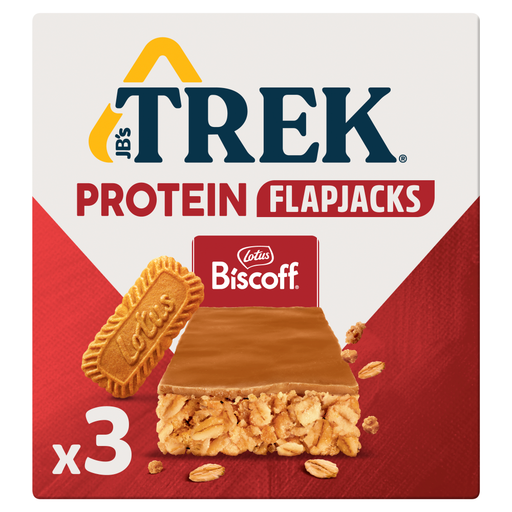 No image available
For a portable flapjack after exercise, compare the energy, protein and sugars per 50 g bar with other options. Check the current ingredients and allergen information if you need a vegan or gluten-free product.
It can serve as a convenient snack after an ordinary session if a meal will follow. If you face another demanding session soon, consider your wider carbohydrate-and-protein intake: a Current Sports Medicine Reports review discusses both nutrients when the recovery window is under eight hours.
The Nature Valley Peanut & Chocolate and Eat Natural Peanuts, Almonds & Salted Caramel examples list 10.2 g and 10.4 g respectively per bar; Tesco highlights 9 g for TREK Salted Caramel and lists 7.2 g for nākd. Cocoa Hazelnut. An International Journal of Sport Nutrition and Exercise Metabolism review discusses approximately 20 g of intact protein for early post-exercise muscle-protein synthesis, so compare the whole snack or meal rather than expecting those particular bars to supply that amount alone.
No. Check energy and total sugars separately: Tesco lists 191 kcal and 13 g sugars per 45 g nākd. Cocoa Hazelnut Protein Bar despite its no-added-sugar wording.
No. Bars come in different portion sizes, so compare both kcal per bar and kcal per 100 g. Weetabix Cereals lists 65 kcal for a 19 g Alpen Light Chocolate & Fudge bar; that per-bar figure alone is not a like-for-like comparison with a larger bar.
Read the current pack’s ingredients, emphasised allergens and may-contain statement for the exact flavour and size you intend to buy. Pay particular attention to any peanuts, tree nuts, soya, milk or cereals containing gluten relevant to your allergy; do not use a brand name or vegan label as a substitute for the product’s allergen information.