A 13- to 14.5-inch laptop is a sensible starting point when desk space is tight, provided its memory suits your design workflow and its display specifications suit the way you review posters. Prioritise stated colour-gamut information if you assess work for print, but check the exact panel, application compatibility, ports and external-display support before trading a larger built-in canvas for a smaller laptop.
Who this choice affects
Small-desk poster makers
If your laptop has to share a desk with a sketchbook, print materials or input devices, its footprint matters alongside screen size. Documented external-display support offers another way to work on a larger canvas when there is room for a monitor.
Print-conscious designers
If you assess poster colours before sending files to print, look for the selected panel’s stated gamut and colour-accuracy information rather than a general description of a vivid screen. The print provider’s colour-management guidance still matters to the final hand-off.
Mixed-media creative users
If posters regularly involve large images, several creative applications, video or 3D assets, check memory and graphics against that workload. Adobe notes that Illustrator can benefit from additional RAM, particularly when several applications run together.
What to check before choosing
Start with the space available for both the laptop and any accessories, then decide how much colour review and mixed-media work the same machine must handle. A smaller footprint does not, by itself, settle the screen, connectivity or performance trade-offs.
| Concern |
What to check |
Who this matters to |
| Desk fit and workspace |
Check the laptop’s dimensions and screen size, then confirm its ports and documented external-display support if you plan to add a monitor. |
I need room for layout tools and materials without losing the option of a larger canvas. Around 40% of consumers put usable workspace and desk fit first. |
| Colour review |
Check the exact panel’s stated colour-gamut coverage and any colour-validation information; ask your print provider about its proofing workflow. |
When I judge poster colours before a print hand-off, a vague screen description is not enough for my decision. For roughly 30% of consumers, colour-review confidence is the primary concern. |
| Creative-workload headroom |
Compare installed memory and storage with your usual files and applications; check graphics and software requirements if projects also use video or 3D assets. |
Large linked images and several open applications make basic app compatibility a poor guide to my normal workload. Around 30% of consumers chiefly need room for heavier creative work. |
Buying pitfalls
-
Choosing by screen size alone
A laptop can fit the desk yet leave too little on-screen room for a poster layout, references and application panels. Adding a monitor is useful only if the setup has space and compatible connections.
Check the exact model’s port list and documented monitor support before choosing a cable, adapter or dock. Do not assume that every USB-C port provides display output.
-
Assuming every OLED display suits print review
Colour-gamut and validation statements can differ between panels and configurations. A claim for a product family does not establish the specification of the laptop you are considering.
Find the exact panel specification and any stated validation or colour-accuracy information. If matching printed colour is important, use proofs or your print provider’s colour-management guidance rather than relying on the laptop screen alone.
-
Buying to an application’s minimum requirements
Being able to open Illustrator does not establish how a laptop will suit large assets or several applications running together. Adobe identifies 8GB RAM as a good baseline when multiple applications are open and says additional RAM can improve Illustrator performance.
Assess memory, storage and graphics against your heaviest regular project, including any other design applications you keep open.
-
Leaving returns and disposal until later
Specifications cannot show exactly how the laptop will fit your workspace and workflow. An old laptop also needs appropriate handling as electrical waste.
Read the retailer’s cancellation and return instructions before ordering. Back up and erase personal data before using a suitable electrical-recycling or take-back route for an old device.
Relevant brands for reference
These examples indicate specifications worth comparing on particular laptop lines. Check the configuration you intend to buy rather than applying a brand-level description to every model.
Apple
The 13-inch MacBook Air is a compact macOS reference point when desk footprint, a stated P3 display and external-monitor use matter.
- Apple UK specifies a 13.6-inch, 2560 × 1664 P3 display and support for up to two external displays on the current MacBook Air.
- Check that your design applications, plug-ins, storage devices and monitor connections work with your intended macOS setup; built-in port variety is limited.
Lenovo
Yoga Pro configurations offer a Windows route for buyers comparing compact creator laptops with stated display-colour specifications.
- Lenovo UK specifies a 14.5-inch 3K OLED display with 100% P3 and Adobe RGB gamut coverage for its Yoga Pro 7i Gen 10 Aura Edition.
- Display, memory and graphics specifications vary by configuration; confirm them for the exact model and variant under consideration.
ASUS
Selected Zenbook and ROG laptops provide Windows options to investigate when display specifications or graphics configuration are important.
- ASUS describes 100% DCI-P3 coverage and Pantone Validated colour fidelity for its Lumina OLED display range; its ROG Zephyrus G14 (2025) page specifies a 3K OLED display with 100% DCI-P3 coverage.
- Those manufacturer statements do not describe every ASUS laptop. Confirm the selected model’s panel and graphics specifications rather than assuming they carry across the range.
Joybuy laptops for poster work
These configurations cover smaller 13- and 14-inch laptops as well as a 15.6-inch option for consumers willing to give more desk space to the built-in screen. Compare the exact display, software compatibility and connections with your own poster workflow.
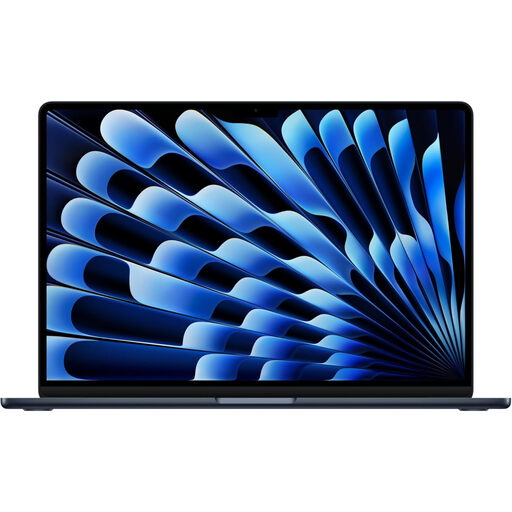 No image available
Apple 13-inch MacBook Air (2026, M5), 24GB, 1TB SSD, Midnight
Consider this compact macOS configuration if desk footprint matters and your design applications and peripherals are compatible.
The listed M5 chip has a 10-core CPU and 10-core GPU. A smaller built-in screen may leave less room for complex layouts; confirm the exact external-monitor connections you would use.
Joybuy
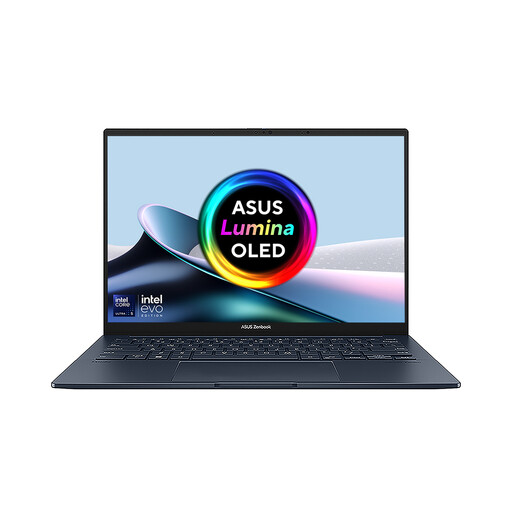 No image available
ASUS Zenbook DUO UX8406CA-QL135W, dual 14-inch OLED
The dual-screen design is worth considering if you want separate on-device space for a poster and reference material, but check how much desk area it needs when open.
This configuration names an Intel Core Ultra 7 255H processor, 16GB LPDDR5X memory and a 1TB SSD. Confirm the exact screen resolution before buying, as the supplied listing descriptions conflict.
Joybuy
 No image available
Lenovo LOQ Essential 15ARP11, Ryzen 7 170, RTX 5050, 16GB, 1TB SSD
Consider the larger built-in canvas if your poster work also involves graphics tasks and your desk can accommodate a 15.6-inch laptop; a graphics-chip name alone does not establish how your applications will perform.
The product name specifies a 144Hz FHD screen and GeForce RTX 5050 graphics. Check whether the display’s stated colour characteristics suit your print-review workflow and whether the memory capacity covers your regular projects.
Joybuy
 No image available
ASUS Vivobook 14 X1407QA-LY003W, Snapdragon X, 16GB, 512GB SSD, Quiet Blue
This 14-inch option keeps the built-in screen smaller than the 15.6-inch configuration above. Confirm that your exact design applications, plug-ins and peripherals work with its Snapdragon X platform before choosing it.
If you rely on the laptop display to assess colours for print, check the exact panel specification against your colour-review needs.
Joybuy
Frequently asked questions
Is a 13-inch laptop too small for designing posters?
Not necessarily: a 13-inch laptop can suit a tight desk, although complex layouts may feel cramped on its built-in screen. Check documented external-display support if you have space for a larger monitor; Apple UK specifies a 13.6-inch display and support for up to two external displays on the current 13-inch MacBook Air.
How much memory should I look for if I use Illustrator?
Choose memory for the applications and files you normally use together, rather than treating basic compatibility as your buying target. Adobe describes 8GB RAM as a good baseline when multiple applications run and says additional RAM can improve Illustrator performance.
Can I cancel a UK online laptop order if it does not suit me?
For most UK online purchases, you can cancel without giving a reason within 14 days after delivery; GOV.UK sets out this requirement for distance sellers. Check the retailer’s cancellation instructions and return terms before ordering. A change-of-mind cancellation is distinct from remedies for goods that are faulty, damaged or misdescribed.
What should I do with an old laptop?
Back up and securely erase personal data before passing an old laptop to an appropriate electrical-recycling or take-back service. UK waste-electrical rules cover this type of equipment; check your retailer’s take-back options or your local council’s collection and recycling arrangements.


