Parents choosing regular toddler snacks
If you are stocking snacks for everyday use, the main question is whether crisps belong in that routine. The NHS advises avoiding salty foods such as crisps for babies and young children.


For routine toddler snack time, choose something other than a potato-crisp multipack: the NHS advises avoiding salty foods, including crisps, for babies and young children. If crisps are occasionally part of a family snack for an older toddler, check the exact flavour’s salt and saturated fat, consider what the child can manage safely, and check the setting’s packed-lunch policy before sending any to nursery or school.
If you are stocking snacks for everyday use, the main question is whether crisps belong in that routine. The NHS advises avoiding salty foods such as crisps for babies and young children.
If an older toddler occasionally shares crisps, compare the exact flavour and bag size rather than treating a small multipack bag as toddler-specific. Check the label and consider whether the child can manage the texture while supervised.
A decision about snacks at home does not establish what a nursery or school permits in a packed lunch. Check the individual setting’s current policy before packing crisps.
Consider this when: You are choosing a snack to offer a toddler regularly; the NHS advises avoiding salty foods such as crisps for young children.
Trade-off: It will not meet a preference for potato crisps, so check the alternative’s age guidance, ingredients and texture on its own terms.
Consider this when: An older toddler occasionally shares a family snack and can manage its texture while supervised.
Trade-off: Individual bags show the amount offered, but a multipack does not change the crisps’ salt or saturated-fat content.
| Priority | What to check | Your needs |
|---|---|---|
| Salt | For any occasional crisp choice, compare salt per bag and per 100g on the exact flavour. Check the bag size before comparing two packs. | I want to avoid making salty packaged foods an everyday toddler snack. According to the NHS, crisps are among the salty foods to avoid giving babies and young children. |
| Saturated fat | Read saturates per bag and per 100g. Do not use a small bag or a hand-cooked description as a substitute for the nutrition label. | A lunchbox-sized bag would be convenient, but I do not want pack size alone to decide whether crisps become a regular snack. |
| Texture and ingredients | Check the stated age guidance and ingredients for the exact product. Consider whether the child can manage its texture, and supervise eating. | For my child, I need a snack they can manage safely; a familiar or mild flavour does not answer that question. |
| Packed-lunch rules | Check the nursery or school’s current packed-lunch policy. Do not treat retail HFSS promotion rules as a packed-lunch rule. | Before putting a snack in a lunchbox, I need to know what the individual setting permits for food brought from home. |
Separate bags are convenient, but packaging does not change the NHS advice to avoid salty foods such as crisps for babies and young children.
Choose a non-crisp option for regular toddler snack time. If crisps are occasionally shared with an older toddler, check the product label and supervise eating.
Flavour names do not establish salt content. Walkers UK lists 1.3g salt per 100g for Ready Salted, and Seabrook Crisps lists 1.3g per 100g for Sea Salted.
Compare salt per bag as well as per 100g on the exact pack you intend to use.
Department of Health and Social Care guidance describes England’s HFSS retail rules as restrictions on certain promotions and placements. School-food requirements and a setting’s policy are separate matters.
Check the nursery or school’s written packed-lunch policy for food brought from home.
These brand and variant details can help with label comparisons; none makes potato crisps a routine toddler snack.
Walkers UK lists Ready Salted crisps in a 25g bag format.
Tyrrells describes its potato crisps as hand-cooked, made from English potatoes with the skins left on.
KETTLE Chips lists a Sea Salt & Crushed Black Pepper variant.
Seabrook Crisps lists a Sea Salted potato-crisp variant.
Pipers lists an Anglesey Sea Salt potato-crisp variant.
REAL Hand Cooked Crisps lists a Sea Salt variant.
These options include non-crisp snacks to consider for toddler snack time and potato-crisp multipacks to assess for occasional family use. Check each product’s age guidance, ingredients and current label before choosing.
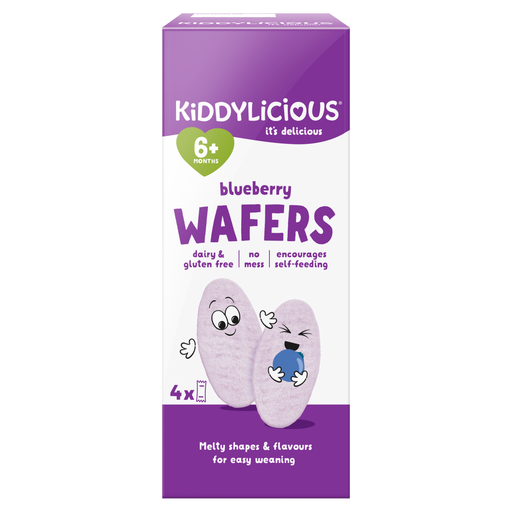 No image available
A non-crisp option to consider when choosing a toddler snack. The pack is labelled 6+ months and contains four 4g portions; check the ingredients and whether the texture suits your child.
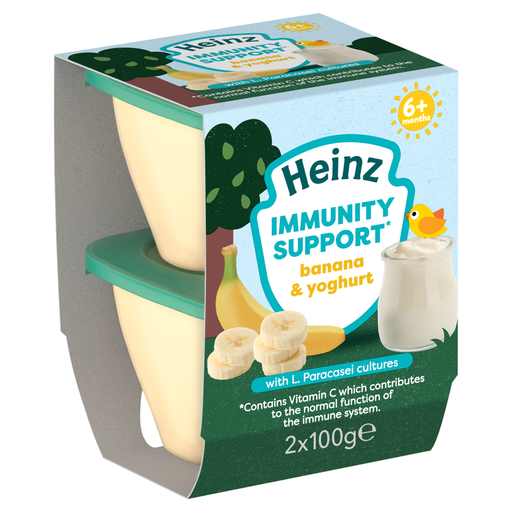 No image available
This non-crisp pot offers a different format from crunchy crisps. The product name specifies 6+ months and two 100g pots; check its ingredients and age guidance for your child.
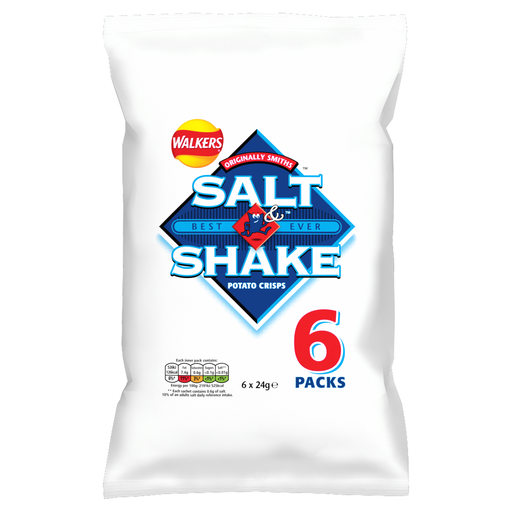 No image available
For an occasional family crisp snack rather than regular toddler snack time, this pack contains six 24g bags. Check the exact pack’s instructions and nutrition label, including how the salt is supplied and used.
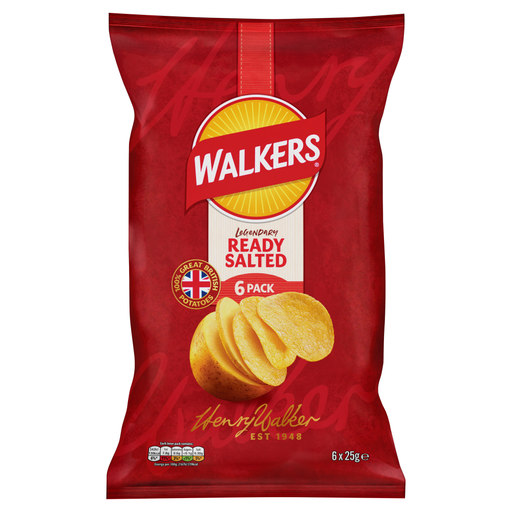 No image available
These six 25g bags provide individual portions for an occasional family crisp snack, not a regular toddler snack. Check salt and saturates on the pack; the Ready Salted name does not indicate a low-salt product.
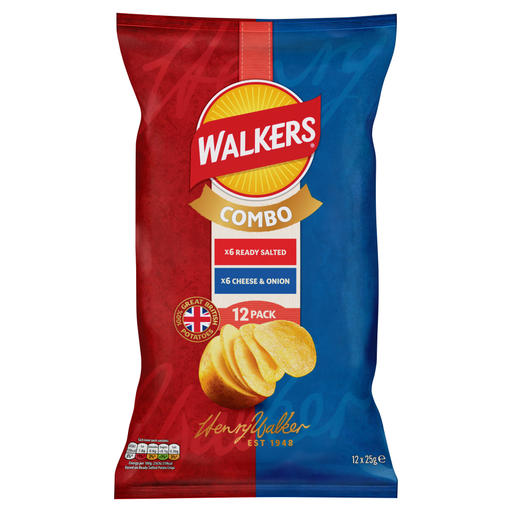 No image available
This 12-pack contains 25g bags in two named flavours for occasional family use, not regular toddler snack time. Check the nutrition and ingredient statements for each flavour separately rather than applying one flavour’s details to the whole pack.
Choose a non-crisp snack for regular use. The NHS advises avoiding salty foods, including crisps, for babies and young children; a multipack format does not change that advice.
A smaller bag shows how much is being offered, but it does not change the crisps’ composition. For an occasional family snack, compare the exact flavour’s salt and saturates per bag and per 100g, and consider whether an older toddler can manage the texture while supervised.
No conclusion about salt content follows from those flavour names. Walkers UK lists 1.3g salt per 100g for Ready Salted, while Pipers lists 0.94g per 100g for Anglesey Sea Salt; compare the exact packs rather than using their names as a shortcut.
Check the individual nursery or school’s current packed-lunch policy before sending them. England’s Department for Education guidance addresses food and drink provided in state-funded schools; it does not, on its own, answer what your child’s setting permits in food brought from home.