
24/7 Customer Support

Free returns

Same-day & Next-day Delivery

Quality Guaranteed

Unlock Your Welcome Offers: FREE Delivery | Up to 80% OFF | Free 30-day JoyPlus trial
Download the APP
Choosing potato crisps sounds straightforward until you are comparing multipacks, sharing bags, baked recipes, imported snacks and products labelled with bold flavour claims. A pack that looks suitable for a lunchbox may be too large, while a sharing bag can lose its crunch before it is finished.
This guide explains the practical details to check before buying potato crisps for UK households, offices, picnics, parties and everyday snacking.
A 150g sharing bag and a 6 x 25g crisps multipack both contain 150g, but they serve different needs. Individual snack bags are easier to portion for lunchboxes, workplace drawers and outings. A sharing bag is more convenient for serving several people, but it may encourage repeated handfuls and needs to be resealed or consumed promptly after opening.
Not every savoury snack is made in the same way. Some products use sliced potatoes, while others combine potato flakes, starch or wheat flour. For example, the SOEK tomato-flavoured snack lists wheat flour as its main ingredient and potatoes at 7.41%. This may suit shoppers looking for a crisp, seasoned snack, but it is not equivalent to a product made predominantly from potatoes.
Flavoured crisps can contain or may be produced around milk, wheat, barley, soya, mustard or sulphites. Cheese and onion crisps commonly contain milk ingredients, while salt and vinegar crisps may include barley malt vinegar. Always read the current packaging, particularly when buying for children, guests or anyone with a food allergy.
Choose the format around how the crisps will be eaten:
Check both the total net weight and the number of inner bags. A 6 x 25g multipack contains six servings of 25g, whereas a 165g tube or 400g bag is generally intended to be opened and shared over time.
Look beyond the front-of-pack flavour name. A product’s ingredient list shows whether it is primarily potato-based and identifies seasonings, oils, colours and flavour enhancers.
For example:
Allergen information on the product packaging takes priority over online descriptions, as recipes and manufacturing details can change.
Use the per 100g panel to compare different products, but also check the per-pack figures when buying individual bags. A 25g bag of Walkers Salt & Vinegar Crisps lists approximately 129 kcal and 0.15g salt per serving, while the per-100g figure is considerably higher.
Baked crisps may have a different fat profile from standard fried crisps. The Walkers Oven Baked Variety Pack is described as containing 50% less fat than regular potato crisps, according to its product information. It includes Sea Salt, Cheese & Onion and Salt & Malt Vinegar varieties, with each inner pack weighing 22g. This is a product characteristic, not a reason to treat crisps as a replacement for balanced meals.
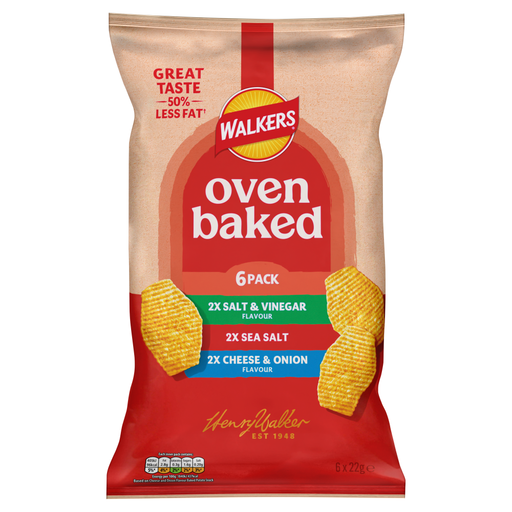
Why This Fits Their Persona: Six individually packed bags and three familiar flavours make this a practical starting point for families, lunchboxes or shoppers who want variety without buying several separate packs.
The six 22g inner packs make the serving format clear, while the flavour split is stated as two bags of each variety rather than leaving the assortment to guesswork.
Baked format; suitable for vegetarians; no artificial colours, preservatives or added MSG listed in the product information.
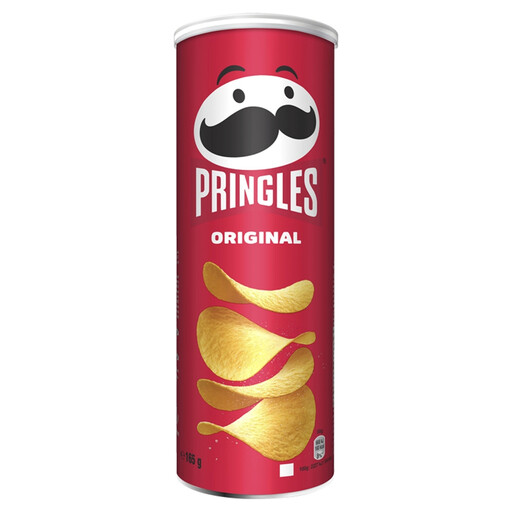
Why This Fits Their Persona: The 165g tube suits shoppers who value a structured container for home sharing, film nights, office breaks or picnics.
The tube protects the stacked crisps and can be closed after serving, helping address the breakage and freshness issues associated with an opened sharing bag.
Stackable saddle-shaped crisps; resealable tube; per-30g nutrition information is provided.
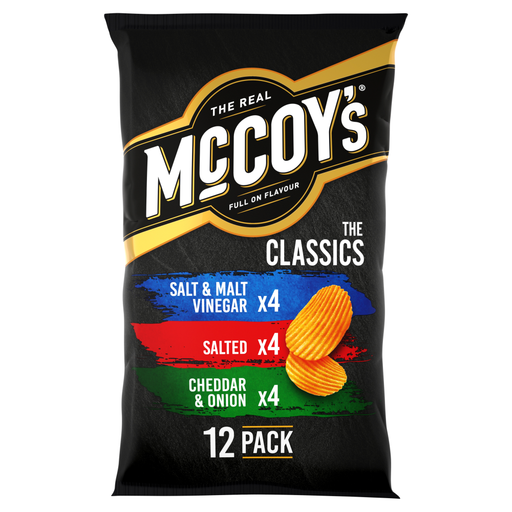
Why This Fits Their Persona: Twelve 25g bags are suited to larger households, busy offices, children’s lunchboxes and hosts preparing snacks for several people.
The pack clearly divides into four Salt & Malt Vinegar, four Salted and four Cheddar & Onion bags, avoiding an assortment with unclear flavour quantities.
Three classic flavours; single-serving 25g bags; ridged texture stated in the product name and description.
For stronger seasoning, consider speciality options such as black pepper or garlic-flavoured potato crisps, but check the salt and saturated fat figures. The 400g SOEK tomato-flavoured snack is a larger format with wheat flour as its main ingredient, so it may appeal to shoppers seeking a substantial pantry pack rather than a conventional multipack.
For meal accompaniment, frozen chips are a separate category from ready-to-eat potato crisps. McCain Chunky Home Chips 1kg are stored at -18°C or below and cooked in an oven or air fryer. They are designed for serving with meals, not for lunchboxes or immediate snacking.
We have compiled a complete, real-time list of products that fully satisfy these strict selection criteria and UK safety regulations.
They can be practical because the serving size is already defined and the unopened bag helps protect freshness. Check the allergen declaration and avoid placing damaged or inflated packs in a lunchbox.
Sharing crisps in 150g bags or larger tubes are designed for bowls and group occasions. For mixed preferences, a variety multipack can provide ready salted crisps, salt and vinegar crisps and cheese and onion crisps in separate bags.
Some baked crisps contain less fat than a comparable regular crisp, but this varies by recipe. Compare the nutrition panels per 100g and per serving rather than relying only on front-of-pack wording. Portion size, salt and total energy still matter when choosing savoury snacks.