Choose potato crisps as a lunch accompaniment, not as the part of a school-holiday lunch intended to provide protein: the manufacturer-labelled examples discussed here provide about 1.5–2.4g per stated individual pack. If you want the crunchy snack itself to contribute more, compare lentil-based options by protein per actual serving, then check the salt, ingredients and allergens on the pack.
Who is this choice for?
Parents looking for protein in the lunch
If the aim is a protein-focused lunch, decide whether the crunchy snack needs to contribute protein or whether that role belongs to the main meal. The labelled individual packs of standard potato crisps discussed here provide about 1.5–2.4g protein.
Families choosing familiar potato crisps
If crisp texture or flavour is the reason for buying, compare pack size, protein and salt on the exact product. A meat- or cheese-flavoured name does not tell you its protein content.
Families checking dietary suitability
Ingredients and allergen statements matter for the particular flavour and pack. A gluten-free or vegetarian description does not, by itself, answer questions about milk or other allergens.
What should you check?
Decide what the crunchy item is meant to contribute to lunch, then compare the serving you would actually pack rather than relying on a product category or flavour name.
Potato crisps
Choose when: You want a familiar crisp alongside a lunch whose protein comes from other food.
Bear in mind: The manufacturer-labelled single packs discussed here provide about 1.5–2.4g protein, so flavour alone is no reason to treat them as protein-focused snacks.
Lentil crisps or puffs
Choose when: You want to compare crunchy snacks that contribute more protein per serving than the potato-crisp examples.
Bear in mind: They are different products from potato crisps; the amount per pack, flavourings and allergen information still need checking.
A different crunchy item
Choose when: You want to include crisps less often. NHS Healthier Families suggests plain popcorn or plain rice cakes as lunchbox swaps.
Bear in mind: That swap does not establish how much protein the lunch contains; consider the main meal separately.
| Priority |
What to check |
Your needs |
| Protein per portion |
Read protein per bag or serving alongside the serving weight. For context, Tyrrells lists 3.9g per 30g serving for two lentil-crisp flavours; Walkers lists 1.5g per 24g Salt & Shake pack. |
I want to know what the portion going into lunch contributes, rather than comparing only per-100g figures. |
| Product type |
Check whether the snack is made as a potato crisp, lentil crisp or another type of snack. A lentil ingredient does not, on its own, establish a high-protein claim. |
If I choose an alternative to potato crisps, its texture and flavour still need to work for the child eating it. |
| Lunch balance |
Consider what else is in the lunch and how often crisps are included. NHS Healthier Families suggests reducing their frequency in children’s lunchboxes. |
I may want a crunchy accompaniment, but I do not want to rely on crisps for the lunch’s protein. |
| Salt and allergens |
Compare salt for the portion being packed. Read the exact flavour’s ingredients, highlighted allergens and any precautionary statements. |
Where an allergy or dietary preference matters, I need to check this pack rather than assume every flavour in a range is suitable. |
Common buying mistakes
-
Taking a savoury flavour name as a protein claim
Meat-, cheese- or beefy-flavoured potato crisps need not contain much protein. Manufacturer figures for the individual potato-crisp packs discussed here range from about 1.5g to 2.4g.
Read protein for the actual serving, and choose the rest of the lunch separately if protein is the main aim.
-
Comparing only the per-100g figure
Per-100g panels help compare products on the same basis, but a child may eat a much smaller bag. For example, Seabrook lists 6.9g protein per 100g of Beefy potato crisps and 2.2g per stated 31.8g bag.
Compare the amount in the bag or portion you plan to pack.
-
Using one dietary label as a complete allergen check
Gluten-free or vegetarian suitability does not settle whether a particular flavour contains milk or carries a precautionary allergen statement.
Check the current pack’s ingredients, highlighted allergens and any precautionary statement for the exact variant.
-
Letting convenience decide how often crisps appear
Including a crisp packet does not address a protein-focused lunch on its own. NHS Healthier Families advises cutting down how often crisps go into children’s lunchboxes.
If you want a different crunchy accompaniment, the NHS suggests plain popcorn or plain rice cakes; plan the rest of the lunch on its own merits.
Brand and product-line references
Walkers
Salt & Shake is an individual-pack potato crisp with a separate salt sachet, relevant if the family wants a familiar crisp rather than a protein-focused snack.
- Walkers lists 1.5g protein per 24g Salt & Shake pack.
- The manufacturer says the product is made in a factory handling milk, wheat, soya, gluten, barley, celery and mustard; check the current pack where these matter.
Tyrrells
The range includes potato crisps and separate lentil crisps. The lentil products are the relevant comparison when protein from the crunchy snack matters.
- Tyrrells lists 3.9g protein per 30g serving for its Sour Cream & Onion and Sweet Chilli & Red Pepper Lentil Crisps.
- These are lentil crisps, not potato crisps; check the chosen flavour’s ingredients and allergen statement.
Kettle Chips
Its potato-crisp flavours are relevant when flavour and texture drive the choice, with nutrition and ingredients checked by variant.
- Kettle Chips lists 6.0g protein per 100g for Sriracha Mayo.
- That variant contains milk ingredients; a dietary description elsewhere in the range would not establish its suitability for a milk allergy.
Seabrook
The Beefy potato crisps and Really Cheesy Lentil Puffs illustrate why product type and actual bag size both matter.
- Seabrook lists 2.2g protein per 31.8g bag for Beefy potato crisps and 3.2g per 18g bag for Really Cheesy Lentil Puffs.
- The lentil puffs carry a may-contain warning for soya and sulphites; check the exact product before packing it for someone with an allergy.
Pipers
A potato-crisp range to consider by flavour and the dietary information for the chosen variant, rather than by an assumed protein advantage.
- Pipers describes Biggleswade Sweet Chilli as gluten-free and suitable for vegetarians and vegans.
- Those descriptions do not state its protein contribution; use the chosen pack’s nutrition panel for that decision.
REAL Hand Cooked Crisps
The Jalapeno Pepper potato crisps offer a labelled example for comparing protein per 100g with the amount in a stated pack.
- REAL lists 6.9g protein and 0.65g salt per 100g for Jalapeno Pepper; 6.9g per 100g equates to about 2.4g protein in 35g.
- The variant is spicy and carries a gluten-related allergen warning, so check its suitability for the intended lunch.
Joybuy product options
These options include lentil-based crunchy snacks, potato crisps and a wheat-and-potato snack. Compare the actual pack and product type before choosing one for a school-holiday lunch; the list is not a high-protein ranking.
 No image available
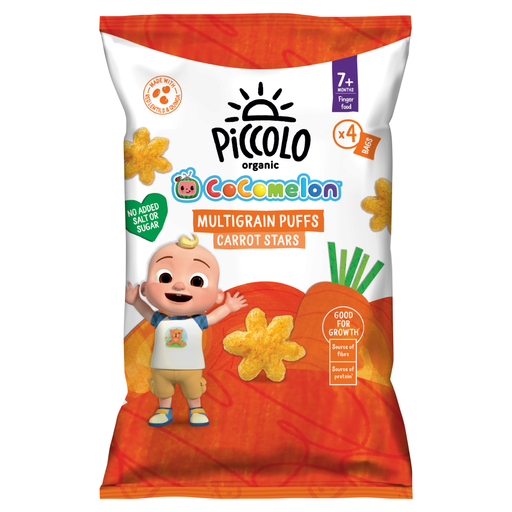
Piccolo Organic Carrot Star Puffs 7+ Months, 4 x 15g
A four-pack of 15g puff snacks to consider if a small individual bag suits the lunch. The product is labelled 7+ months; check whether its intended age range, ingredients and texture suit the child.
View on Joybuy
 No image available
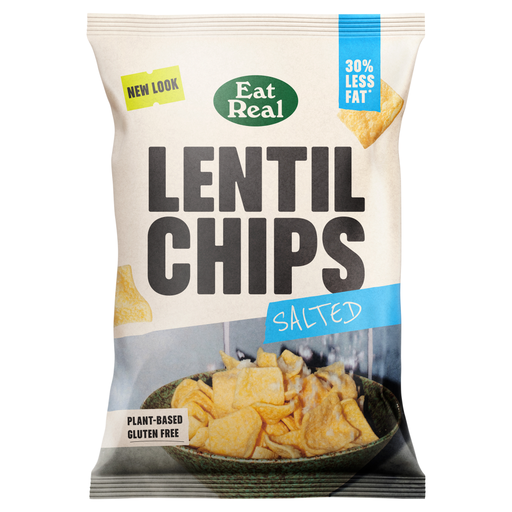
Eat Real Sea Salt Lentil Chips 95g
A lentil-chip alternative to potato crisps in a 95g bag. If packing a smaller portion, compare the nutrition information for the amount served and check the salt and allergens on the pack.
View on Joybuy
 No image available
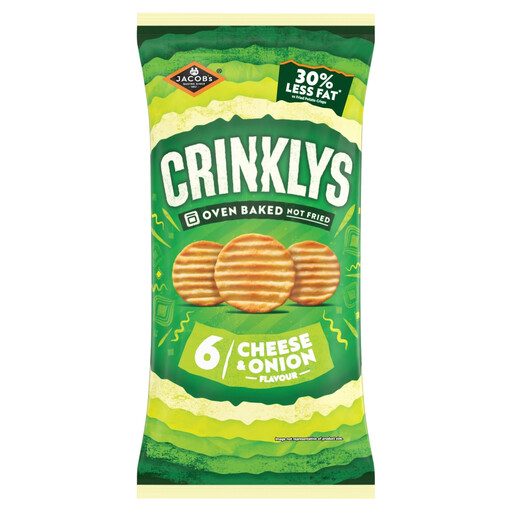
Jacob's Crinklys Cheese & Onion Snacks, 6 x 23g
The six individual 23g bags may suit lunches packed separately. These are snacks rather than a stated high-protein choice; check the nutrition and allergen information for the exact pack.
View on Joybuy
 No image available
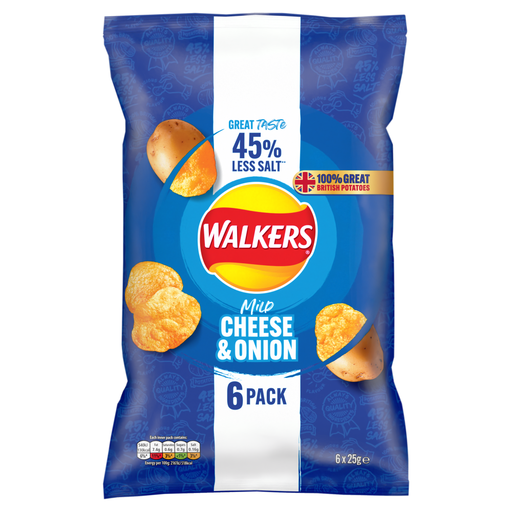
Walkers 45% Less Salt Mild Cheese & Onion, 6 x 25g
Six individual 25g bags provide a potato-crisp option for separate lunches. The salt comparison in the product name is not a protein claim; read the pack’s protein, salt and allergen information for this flavour.
View on Joybuy
 No image available
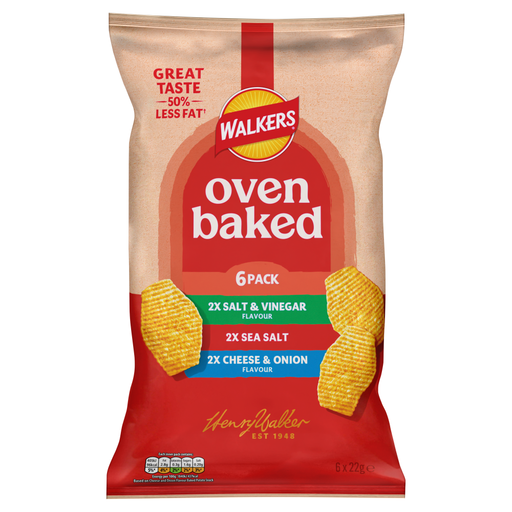
Walkers Oven Baked Variety Pack Crisps, 6 x 22g
This variety pack contains six 22g bags of oven-baked snacks. Check the nutrition and ingredients for the particular flavour going into lunch; baking alone does not establish its protein contribution.
View on Joybuy
Questions about crisps and lunch
Are standard potato crisps a high-protein choice?
Do not assume they are. The manufacturer-labelled individual potato-crisp packs discussed here provide about 1.5–2.4g protein; check the exact product’s serving information rather than treating a flavour name or the presence of some protein as a high-protein claim.
Should potato crisps provide the protein in a school-holiday lunch?
Plan the lunch’s protein from other food if you include potato crisps as an accompaniment. NHS Healthier Families also advises reducing how often crisps feature in children’s lunchboxes and suggests plain popcorn or plain rice cakes as crunchy swaps.
Are lentil crisps automatically high in protein?
No: a lentil base alone does not establish a high-protein claim. Tyrrells lists 3.9g protein per 30g serving for two lentil-crisp flavours, while Seabrook lists 3.2g per 18g bag for its Really Cheesy Lentil Puffs. Compare the serving you would pack, along with salt, ingredients and allergens.
What allergen details should I check on a crisp packet?
Check the exact pack’s ingredient list, highlighted allergens and any precautionary statements. Flavours within a brand can differ, and a gluten-free or vegetarian description does not answer every allergen question.


