For a regular toddler snack, choose something other than potato crisps: the NHS identifies crisps as salty foods and gives fruit, vegetable sticks, toast, bread and plain yoghurt as snack examples for children aged 12 months and over. If you are considering crisps occasionally for a child in that age group, compare the exact pack’s salt per bag, weight and allergen statement; a smaller bag does not necessarily contain less salt.
Who is choosing the snack?
Parents planning regular snacks for children aged 12 months and over
The NHS gives fruit, vegetable sticks, toast, bread and plain yoghurt as snack examples for this age group. If the snack is an everyday one, start with those foods rather than an individual bag of crisps.
Carers considering crisps occasionally
For an occasional choice, the useful comparison is the salt in the particular bag, alongside its weight and current allergen statement. A flavour described as plain or lightly salted does not answer those questions on its own.
People planning snacks for an England setting
Food supplied by an early-years provider or state-funded school raises different questions from a home purchase. The Department for Education’s England guidance addresses nutrition in early-years settings and food supplied in state-funded schools; check the setting’s policy for the snack you plan to provide.
What should you check?
Decide whether this is a regular snack before comparing crisp bags. If it is an occasional choice, read the figures for the exact pack rather than treating the printed serving information as toddler guidance.
| Priority | What to check | Your needs |
|---|
| Regular snacks |
For children aged 12 months and over, compare the snack with the NHS examples of fruit, vegetable sticks, toast, bread and plain yoghurt. The NHS identifies crisps as salty foods. |
For an everyday between-meal snack, I would choose from the NHS examples rather than make a crisp bag the default. |
| Salt and bag size |
Read salt per declared bag and its weight, not just salt per 100g. Tyrrells lists 0.26g per 40g pack, Walkers 0.34g per 25g pack and Seabrook 0.40g per 31.8g bag for the specified varieties. |
If I am opening an occasional bag, I want to compare the amount in that bag. The Walkers bag is smaller than the Tyrrells bag but lists more salt per pack. |
| Allergens |
Check the current pack’s ingredients and allergen statement. Walkers says its Ready Salted crisps are made in a factory handling several allergens; Tyrrells says its Lightly Sea Salted crisps may contain milk. |
Where an allergy or intolerance matters, I need the declaration on the pack I am about to use, rather than an assumption based on the brand or flavour. |
| Food supplied by a setting |
Check the setting’s policy and the rules that apply where it operates. Department for Education guidance says meals, snacks and drinks in England early-years provision must be healthy, balanced and nutritious; its state-funded school-food guidance has a separate England scope. |
For a nursery or school snack, I need to check what the setting can supply rather than assume a product sold for home use is suitable there. |
Mistakes to avoid
-
Treating an individual bag as an everyday toddler snack
A small, sealed bag controls how much is opened, but packaging does not change the NHS advice identifying crisps as salty foods.
For regular snacks from 12 months onwards, consider the fruit, vegetable sticks, toast, bread or plain yoghurt named in NHS guidance instead.
-
Comparing only the per-100g figure
Bag weights differ. On the manufacturer figures for three specified varieties, the 25g Walkers bag lists more salt per bag than the 40g Tyrrells pack.
Check both the bag weight and salt per bag on the exact variety you are buying. Do not treat an adult reference-intake percentage as a toddler portion recommendation.
-
Assuming an HFSS description settles a setting’s rules
A product’s HFSS classification requires a nutrient-profiling calculation, according to the Department of Health and Social Care. England retail-promotion guidance and Department for Education guidance for food supplied in settings address different activities.
For a nursery or school snack, check the setting’s policy and the guidance applicable to that setting; do not infer permission from a retail listing or from the crisp category alone.
-
Skipping the allergen statement
A familiar flavour name cannot tell you everything about ingredients or factory handling. The manufacturer statements for Walkers Ready Salted and Tyrrells Lightly Sea Salted differ.
Read the physical pack before serving, particularly where a child has an allergy or intolerance, and follow any individual allergy plan already in place.
Brand and product references
These manufacturer figures describe particular varieties and pack sizes, not every product sold under each brand. Salt per pack and salt per 100g are different measures.
Walkers
Walkers Ready Salted is listed in a 25g individual pack.
- Walkers UK lists 0.34g salt per 25g pack.
- The manufacturer says this product is made in a factory handling milk, wheat, gluten, barley, soya, celery and mustard; check the current pack if these matter.
Tyrrells
Tyrrells Lightly Sea Salted is listed in a 40g pack.
- Tyrrells lists 0.26g salt per 40g pack, less per listed pack than the specified Walkers and Seabrook varieties.
- Its bag is larger than the other two in that comparison, and the manufacturer says the product may contain milk.
KETTLE Chips
KETTLE Lightly Salted Chips have manufacturer nutrition information stated per 100g.
- KETTLE Chips lists 0.7g salt per 100g for this variety.
- To compare an individual bag with the pack figures above, check the weight and nutrition declaration on the bag you intend to open.
Seabrook
Seabrook Sea Salted is represented by a 31.8g bag.
- Seabrook Crisps lists 0.40g salt per 31.8g bag.
- That is more salt per listed bag than the specified Walkers and Tyrrells varieties; check that you are comparing the same pack sizes and flavours.
Pipers
Pipers Anglesey Sea Salt is a sea-salt potato crisp variety.
- Pipers Crisps lists 0.94g salt per 100g.
- Use the exact pack’s declaration before comparing its salt per bag with individual packs from other brands.
REAL Hand Cooked Crisps
REAL Sea Salt is sold by the brand in a case of 24 x 35g bags.
- REAL Hand Cooked Crisps lists 1.3g salt per 100g for this variety.
- Read the individual bag’s nutrition declaration before comparing salt per bag with the specified Walkers, Tyrrells or Seabrook packs.
Crisp options on Joybuy
These options comprise a multipack of 40g tubes and a 160g sharing bag. They are products to assess if you are considering crisps occasionally, not alternatives to the NHS snack examples for regular toddler snack time.
 No image available
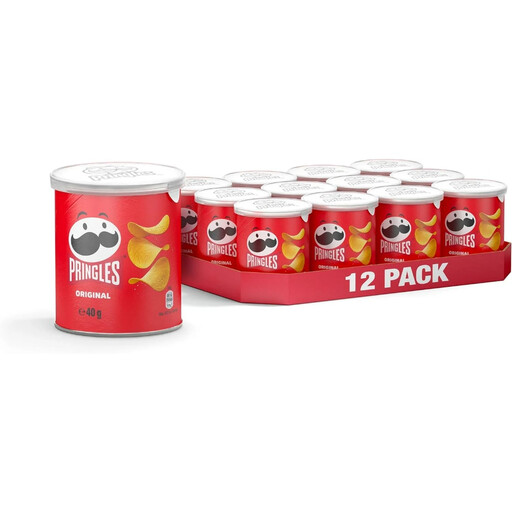
Pringles Original 12 x 40g
The 12 x 40g format lets you identify the amount in one tube when considering an occasional snack. Check that tube’s current salt and allergen declarations; the multipack format does not make crisps a regular toddler snack under NHS guidance.
View on Joybuy
 No image available
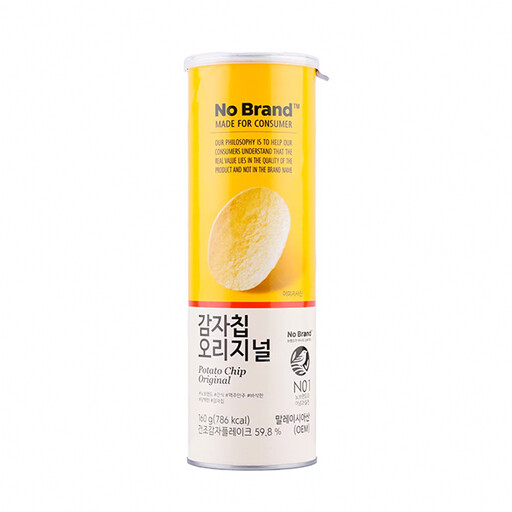
No Brand Korean Potato Chips Original 160g
This is a 160g bag rather than an individual grab bag. If considering it for an occasional snack, decide how much to serve and check the current salt and allergen declarations on the pack; NHS guidance identifies crisps as salty foods.
View on Joybuy
Questions about crisps and toddler snacks
Should potato crisps be a regular toddler snack?
No. The NHS identifies crisps as salty foods and, for children aged 12 months and over, gives fruit, vegetable sticks, toast, bread and plain yoghurt as snack examples. An individual bag does not change that distinction.
What should I compare if I choose a crisp bag occasionally?
Start with the exact bag’s salt per pack, its weight and its allergen statement. Tyrrells lists 0.26g salt per 40g Lightly Sea Salted pack, Walkers 0.34g per 25g Ready Salted pack and Seabrook 0.40g per 31.8g Sea Salted bag. Those manufacturer figures compare packs; they are not toddler portion recommendations.
Does ‘lightly salted’ mean a crisp is suitable for a toddler?
No. The flavour description does not replace the nutrition and ingredient information for the exact product. Read the pack, and bear in mind that NHS guidance identifies crisps as salty foods.
Can a retail listing tell me whether crisps may be supplied at nursery or school?
No. A listing does not establish a setting’s food policy or the rules applicable to it. Department for Education guidance addresses nutrition in England early-years provision and food supplied in state-funded schools in England; check the relevant setting’s policy and guidance rather than applying a retail rule across every UK setting.


