Parents planning everyday toddler snacks
If crisps are being considered as a regular snack, the NHS advice to avoid giving them to babies and young children is the starting point. Consider a different snack for everyday use.


For everyday toddler snack time, choose something other than potato crisps: NHS guidance lists crisps among salty foods to avoid giving babies and young children. If an older toddler occasionally shares crisps, compare the exact product’s salt, fat and saturated fat figures and the amount served; a no-salt or lightly salted label does not make crisps an everyday snack.
If crisps are being considered as a regular snack, the NHS advice to avoid giving them to babies and young children is the starting point. Consider a different snack for everyday use.
For an older toddler occasionally sharing crisps, compare the exact flavour’s nutrition label. A lower-salt or no-salt recipe answers only part of the question.
A retail product’s HFSS description does not, by itself, settle whether it belongs on a setting’s menu. Check the requirements and food policy applicable to that setting.
Decide whether the snack is for everyday use before comparing crisp packets. For an occasional purchase, compare like-for-like nutrition figures for the exact product and the amount likely to be served.
| Priority | What to check | Your needs |
|---|---|---|
| Everyday snack choice | Consider a non-crisp snack. NHS Healthier Families suggests options including plain rice cakes, chopped fruit and vegetable sticks; prepare food appropriately for the child. | I’m choosing something to offer regularly, rather than an occasional family crisp. |
| Salt | Compare salt per 100g and the amount in the portion offered. Read separate sachet figures as well as the crisp’s figures. | If an older toddler occasionally has crisps, I want to know what the complete serving contains, not just what a flavour name suggests. |
| Other nutrition figures | Read fat and saturated fat alongside salt, using the same per-100g basis when comparing products. Check how the stated serving relates to the amount offered. | A no-salt or lower-salt packet should not distract me from the rest of its nutrition label. |
| Food-setting rules | For a school or early-years setting, check the exact product, the relevant nation’s requirements and the setting’s current food policy. | I need a decision for a particular setting, not an assumption that every potato crisp has the same status. |
Walkers UK lists 0.67g salt and 31g fat per 100g for Walkers Lightly Salted. Its lower-salt comparison does not address whether crisps should be a regular snack.
Choose a different snack for everyday use; if comparing crisps for an occasional occasion, read the full nutrition panel.
Tyrrells lists 0.06g salt, 29.5g fat and 519 kcal per 100g for Naked (no salt). The no-salt description refers to one part of its nutritional profile.
Compare fat and saturated fat as well as salt, on the same per-100g basis.
Walkers UK lists 0.00g salt for a 24g portion of Salt & Shake crisps, with 0.60g salt separately listed for the sachet.
Check every component of a packet before interpreting its salt figure.
A crisp category or flavour name does not establish the status of every variant. Retail-promotion rules and food requirements for a particular setting are different questions.
Check the exact product and the rules and food policy applicable to the school or early-years setting.
These brand examples illustrate why the exact variant matters; they are not endorsements for routine toddler snacks.
The range includes Lightly Salted, Oven Baked and Salt & Shake variants with different nutrition figures.
Its Naked (no salt) variant provides a no-added-salt crisp example.
The range includes hand-cooked potato crisps in salted and flavoured varieties.
Seabrook offers crinkle-cut crisps, including a Sea Salted variant.
Pipers describes its Anglesey Sea Salt crisps as salted with Welsh sea salt.
The Sea Salt variant lists potatoes, vegetable oils and sea salt.
These are non-crisp products relevant to toddler snack shopping, not a comparison of potato crisp brands. Check each product’s current ingredients, nutrition label and age guidance before choosing it for a child.
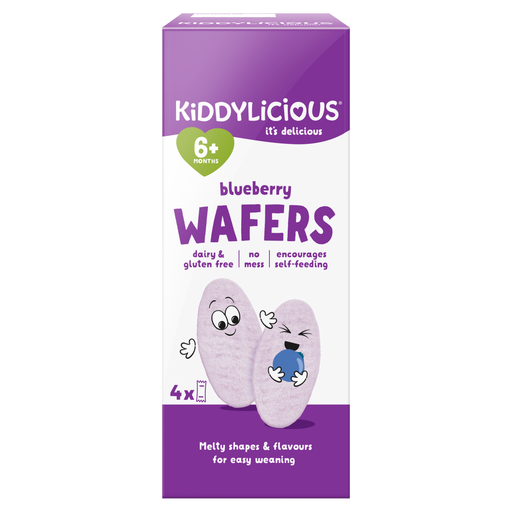 No image available
A wafer option rather than a potato crisp for snack time. The pack contains four 4g portions; check the label and supervise the child while eating.
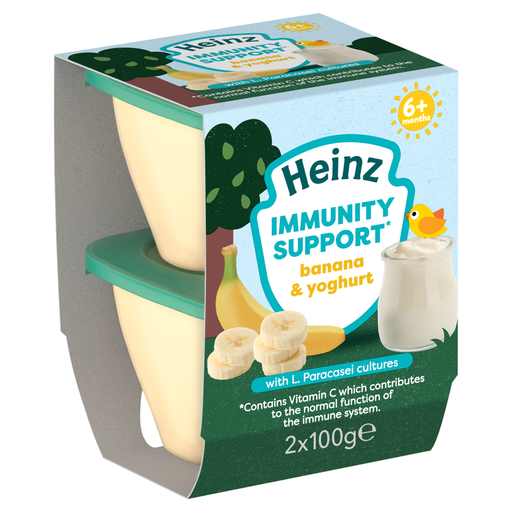 No image available
A banana and yoghurt pot rather than a crisp or crunchy finger food. The pack contains two 100g pots; check its ingredients and storage directions before serving.
 No image available
A rusk rather than a potato crisp. The pack is 300g; compare its sugar as well as its salt on the nutrition label when considering it for snack time.
Choose something else for everyday snack time. NHS guidance lists crisps among salty foods to avoid giving babies and young children; NHS Healthier Families suggests swaps such as plain rice cakes, chopped fruit and vegetable sticks, prepared appropriately for the child.
No. Walkers UK lists 0.67g salt and 31g fat per 100g for Walkers Lightly Salted. If comparing an occasional crisp for an older toddler, read salt, fat and saturated fat for the exact product rather than relying on its name.
It can change the salt comparison, but it does not settle the wider snack choice. Tyrrells lists 0.06g salt, 29.5g fat and 519 kcal per 100g for Naked (no salt), so compare the full label when considering an occasional crisp.
Compare salt, fat and saturated fat per 100g, then check the amount likely to be served and any separate sachet. NHS food-label guidance defines low salt as 0.3g or less per 100g and high salt as more than 1.5g per 100g; those thresholds describe the food’s salt content, not whether it is a suitable everyday toddler snack.