Who each option suits

Fast-boil soup cooks

If you regularly cook a pot of potato soup, you may put particular value on heating it promptly and then turning it down to a controlled simmer. A suitable induction pot is essential; a boil-control feature should be checked on the specific hob rather than assumed.

Cookware-compatibility buyers

If you want to keep a favourite soup pot that lacks a magnetic base, cookware compatibility may decide the choice. Bosch describes ceramic electric hobs as working with all kinds of pots and pans, whereas induction requires suitable magnetic cookware.

Flexible-kitchen users

If you need a cooking zone you can move or store, a portable induction hob may suit a small, temporary or supplementary setup. It still needs a compatible pot and an electrical connection appropriate for the appliance.

What matters when choosing

Built-in induction

Consider it when: You have a magnetic soup pot and want a fitted hob that heats the pan directly.

Trade-off: The pot must suit the zone, and boil-to-simmer assistance is specific to selected models.

Built-in ceramic electric

Consider it when: Keeping a non-magnetic soup pot is a priority and a fitted hob suits your kitchen.

Trade-off: The cooking surface remains hot after switch-off, so residual heat needs attention.

Portable induction

Consider it when: One movable zone is enough for your soup pot or an occasional extra cooking station.

Trade-off: A single zone cannot take the place of a multi-zone hob when you need to cook several pans at once.

Concern What to check Who this matters to
Boiling and simmering Look for the heat controls you want on the exact model. If you want automatic boil control, check its stated pot contents and fill limits. I want to bring my soup pot to the boil, then turn it down without an over-vigorous boil; around 42% of consumers would put that control first.
Keeping the soup pot For induction, test whether a magnet sticks to the pot base and compare its diameter with the cooking zone. I would rather keep my existing pot than change cookware to suit a hob. Roughly 33% of consumers would make pot compatibility their primary concern.
Kitchen fit For built-in models, check the cut-out, ventilation and connection instructions; for portable models, check the electrical requirements. If I need a movable zone or must fit a hob into an existing kitchen, the setup comes first; about 25% of consumers would prioritise that fit.

Mistakes to avoid

  • Assuming every electric hob works with your soup pot

    An induction hob needs a pot with a magnetic base of an appropriate size. A pot can sit on the glass yet still be unsuitable for induction; Bosch describes ceramic electric as the option compatible with all kinds of pots and pans.

    Try a magnet on the pot base and check its diameter against the intended induction zone. If keeping a non-magnetic pot is the deciding need, consider ceramic electric instead.

  • Choosing a built-in hob by its stated width alone

    The worktop opening, space below the hob, ventilation and electrical connection depend on the model. Bosch advises checking model-specific installation instructions, while the AEG TI64IB10FB is specified as hardwired only.

    Compare the installation diagram for the exact hob with your kitchen before ordering, and seek qualified installation advice where the electrical arrangement is uncertain.

    A mismatch may require worktop alterations or changes to the installation arrangement.

  • Treating a plug-in hob as free of electrical and heat risks

    A portable hob still places a load on its socket, and its panel can become hot during use. Electrical Safety First warns that overloaded sockets and extension leads create a fire risk.

    Follow the appliance instructions, check any extension lead’s rating against the connected load and keep watch over the soup while it cooks.

  • Expecting every induction hob to control boiling automatically

    SenseBoil is a selected-model AEG feature, not a standard feature of induction. AEG says its function works with water or water with potatoes subject to stated fill and load conditions.

    If automatic reduction to a simmer matters to you, check both the named feature and its operating instructions for the exact model.

Brands to consider

AEG

Relevant if you are considering a built-in induction hob with boil-to-simmer assistance for water or water with potatoes.

  • AEG lists four zones, a bridge function, PowerBoost and SenseBoil on the TI64IB10FB. AEG says SenseBoil detects rising bubbles and adjusts the heat to a simmer.
  • The TI64IB10FB is hardwired only and requires a 560 × 490 mm cut-out. SenseBoil has pot-fill and load conditions and is not available on every AEG hob.

Bosch

Relevant when comparing a standard four-zone induction hob with ceramic electric models that accommodate a wider range of cookware.

  • Bosch lists four zones, TouchSelect, PowerBoost, QuickStart, Restart and ChildLock for the PUE611BB5E induction hob.
  • Bosch says induction requires magnetic cookware. Cut-out, connection and ventilation requirements must be checked for the chosen model.

NEFF

Relevant if flexible induction zones interest you for larger cookware or cooking with more than one pan.

  • NEFF describes Flex Induction zones as accommodating different pan sizes on models with that feature.
  • NEFF advises using cookware with a magnetic base suited to the zone. Flexible zones and sensor features vary by model.

Joybuy product choices

These choices cover a movable, single-zone induction hob and a compact built-in ceramic electric hob. Decide which kitchen setup and soup pot you need to accommodate before comparing their controls.

ochama 2000W portable induction hob

ochama 2000W Portable Induction Hob

Consider this portable hob when one movable cooking zone is enough for your soup pot. Its listing specifies 2000W, 10 power settings and a soup-making function; check how those controls suit the simmer you want.

Induction needs a suitable magnetic pot. Check the hob’s electrical instructions and the rating of any socket or extension lead you intend to use.

View on Joybuy
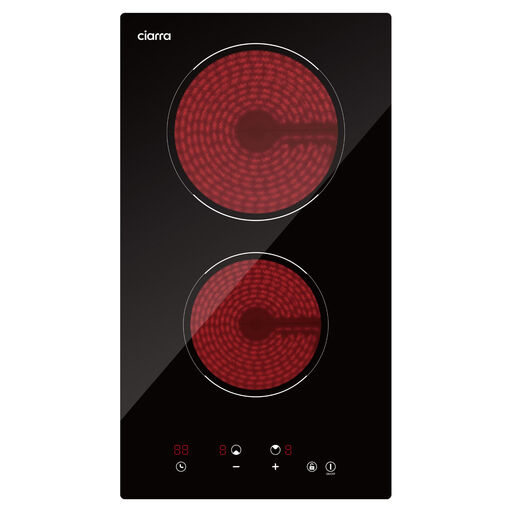
CIARRA CBBCH292T two-zone ceramic hob

CIARRA CBBCH292T 2-Zone 2900W Ceramic Hob

Consider this built-in ceramic hob if keeping a non-magnetic soup pot matters and two cooking zones meet your needs. Its product name specifies nine power levels, touch control, a timer and a child lock.

Check the model’s cookware guidance for your pot, then compare its installation instructions with your worktop opening, ventilation space and electrical arrangement.

View on Joybuy

Questions about soup cooking and hobs

Will my current soup pot work on an induction hob?

It will work if its base is magnetic and appropriately sized for the cooking zone. NEFF advises that the pot base should attract a magnet and match the zone size; if you need to retain a non-magnetic pot, consider a ceramic electric hob instead.

Can a boil-control feature help with potato soup?

It can help when you boil water or water with potatoes before simmering, but the feature and its conditions depend on the model. AEG says SenseBoil on selected hobs reduces boiling to a controlled simmer; its instructions specify 1–5 litres of water, a total water or water-with-potatoes load of 1–5 kg, and space below the pot rim.

Can I fit a built-in induction hob above a drawer?

Possibly, if the exact model’s installation instructions allow the available clearance and ventilation. Bosch says installation measurements vary by model, so compare its diagram with the drawer, worktop opening and surrounding space rather than relying on the hob’s stated width.

Can I use a portable induction hob with an extension lead?

Only use an extension lead if the appliance instructions permit it and the lead is rated for the connected load. Electrical Safety First warns against overloading extension leads and sockets; check the hob’s stated electrical requirements before setting up a portable soup station.