Single-phone full-day users
If navigation, calls, photographs or work records keep one phone busy, look for enough practical reserve without carrying more than you need. A nominal capacity rating is not the amount the bank will deliver to the phone.


Choose a power bank by the energy your devices need during the day, then check its output, ports and cables against those devices; nominal mAh alone cannot promise a number of full charges. A compact bank may suit one phone, while repeated charging or several devices may call for more capacity. Check the exact model against UK recalls before buying or using it.
If navigation, calls, photographs or work records keep one phone busy, look for enough practical reserve without carrying more than you need. A nominal capacity rating is not the amount the bank will deliver to the phone.
For a USB-C phone, tablet or other device, match the bank’s output, the device’s supported input and the cable. Capacity alone does not establish whether a faster charging mode will work.
If you need to charge more than one USB device during the day, consider the port mix and how output is shared, as well as the bank’s total energy reserve.
Start with the devices and how often they may need charging, then check whether the bank is practical to carry and connect throughout the day.
| Concern | What to check | Who this matters to |
|---|---|---|
| Practical energy reserve | Compare stated Wh, nominal capacity and any usable-output information with your devices and planned use. Do not treat mAh as a promised charge count. | When navigation and photographs keep my phone busy all day, I need enough reserve to get home; around 36% of consumers put usable energy first. |
| Charging compatibility | Check the output of the port you will use, your device’s supported input and the cable. Check shared-output conditions if charging several devices. | If my USB-C device supports faster charging, I want a bank and cable that can provide a compatible mode; around 29% of consumers make charging compatibility their primary concern. |
| Portability | Check dimensions and weight where stated, alongside the capacity you need. An integrated cable is useful only if its connector suits your device. | A bank that fits my pocket or small bag is easier to keep with me throughout the day; for around 21% of consumers, ease of carrying comes first. |
| Devices and connections | Count the devices and connector types you need at once, then check the ports, cables and stated simultaneous-charging arrangement. | Charging my phone alongside another USB device means I need connections that work together; roughly 14% of consumers prioritise multi-device convenience. |
Energy is lost as a power bank delivers power to a device. Anker’s UK capacity guide gives roughly 30–35Wh of usable output from a nominal 10,000mAh, approximately 37Wh bank; that manufacturer estimate is not a guaranteed result for every model or phone.
Compare Wh and any stated usable-output figure, allowing reserve for your planned phone use rather than relying on an advertised charge count.
A bank’s maximum output does not mean your device will receive that wattage. The relevant port, charging protocol, device and cable all affect the charging arrangement.
Check the output for the port you intend to use and your device’s supported input. If several devices will be connected, check the maker’s simultaneous-output details.
UK product recalls concern specified products, not every bank from the same brand. The Office for Product Safety and Standards has published recalls involving named power banks and fire risks.
Find the exact model number and check official UK product-safety notices before purchase or use. If your product matches a recall, follow its instructions and do not use it.
The UK Civil Aviation Authority says power banks belong in the cabin, not checked luggage, and advises passengers to check with their airline.
If you are flying, confirm your carrier’s current rules for the itinerary before packing.
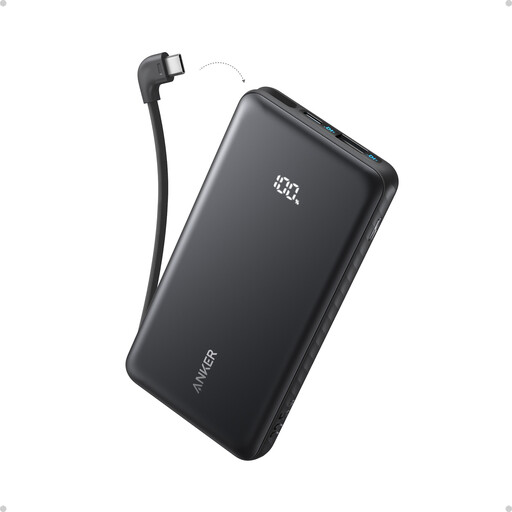
Anker’s UK range includes the Nano A1259, which Anker lists as a 10,000mAh bank with a built-in USB-C cable and 30W charging. Judge those features for the named model rather than assuming they apply across the brand.
Belkin lists 10K and 20K versions of its UltraCharge 45W power bank, with an integrated USB-C cable, a USB-C port and a USB-A port.
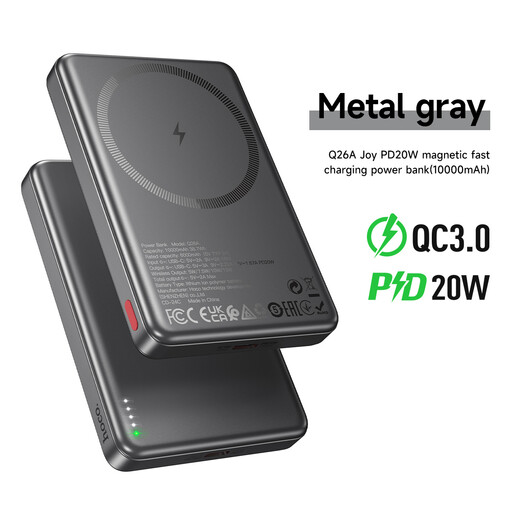
UGREEN lists its MagFlow Air as a 10,000mAh magnetic bank with a 13.9mm profile and Qi2 15W wireless charging.
These power banks cover carry-focused magnetic designs, built-in-cable options and a higher-capacity model. Compare each one with your device and daily charging plan; a listed capacity or maximum wattage does not establish how it will charge your particular phone.
 No image available
Consider this magnetic option if you want to carry a bank for one phone and your device and case suit magnetic charging.
 No image available
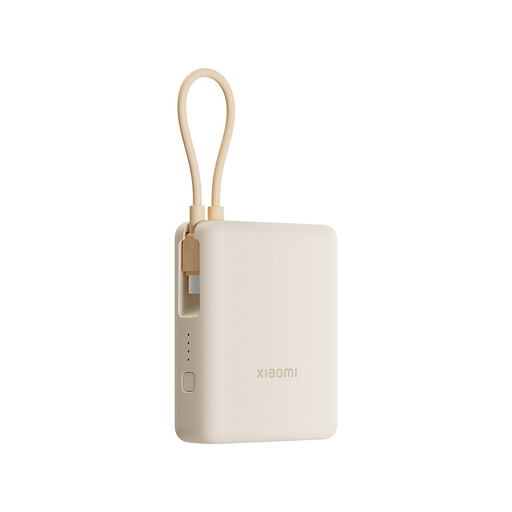
The integrated cable may suit consumers who want one fewer separate lead to pack.
 No image available
The built-in USB-C cable may suit a compatible phone when carrying a separate lead is inconvenient.
 No image available
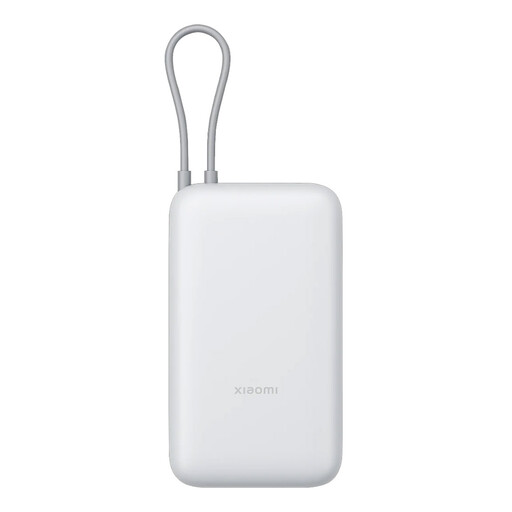
This higher nominal-capacity option is worth considering if one phone top-up may not cover your day, provided its carrying size suits you.
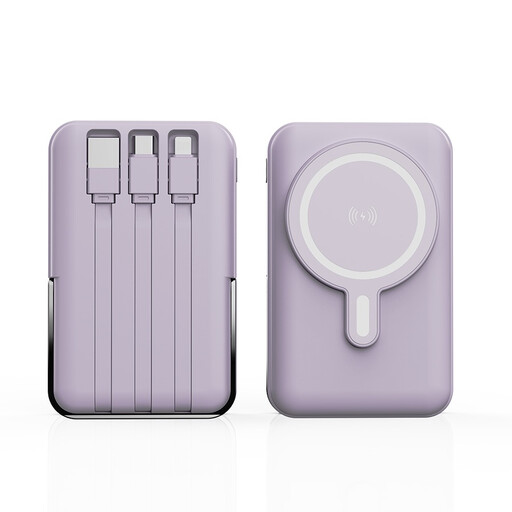 No image available
Consider the adjustable stand if you want to position your phone while charging, but check that its magnetic charging arrangement suits your device.
There is no single mAh figure that guarantees a full day: your device and how you use it affect the energy required. Compare the bank’s Wh and any usable-output information with your planned use. Anker’s UK guide estimates roughly 30–35Wh usable output from a nominal 10,000mAh, approximately 37Wh bank; that is a manufacturer illustration, not a promised charge count for every phone.
Not automatically: the bank’s relevant port, your phone’s supported input and the cable must work together. USB Implementers Forum describes USB Power Delivery as enabling more flexible power delivery over a cable; check the capabilities of your particular charging setup rather than relying on the bank’s maximum wattage alone.
Check the exact brand and model against official UK product-safety recalls, and follow any notice that applies to your unit. Electrical Safety First advises buying from a reputable retailer and registering a power bank where possible so you can be contacted about a recall.
No: the UK Civil Aviation Authority says to keep power banks in the cabin, not checked luggage. Check your airline’s current requirements for your trip before travelling.
Use an appropriate battery or electrical recycling route rather than general waste or ordinary household recycling. Electrical Safety First advises recycling old power banks properly.