
24/7 Customer Support

Free returns

Same-day & Next-day Delivery

Quality Guaranteed

Unlock Your Welcome Offers: FREE Delivery | Up to 80% OFF | Free 30-day JoyPlus trial
Download the APP
A dead phone battery in the middle of a busy day is a modern frustration we all know too well. A reliable power bank seems like a simple solution, yet the market is flooded with options that often fail to deliver on their promises. Many UK consumers find themselves with a portable charger that is slow, bulky or stops working after a few months.
Before you make a purchase, it is important to be aware of a few common pitfalls. Understanding these can help you avoid disappointment and find a device that truly meets your needs.
To choose the right portable charger, you need to look beyond the marketing and focus on three core parameters.
Capacity is measured in milliampere-hours (mAh). A 10000mAh power bank is a popular middle ground, offering enough power to charge a typical smartphone around two times. However, for air travel, the crucial figure is Watt-hours (Wh). UK and international aviation regulations limit power banks in carry-on luggage to 100Wh.
You can calculate Wh by multiplying the mAh by the battery voltage (usually 3.7V) and dividing by 1000. For example, a 25,000mAh power bank is around 92.5Wh, making it safe for flights. Always check for the Wh rating printed on the device, especially for a high-capacity laptop power bank.
The speed of your charge is determined by the output power, measured in Watts (W).
Look for a USB C power bank that supports the Power Delivery (PD) protocol. This is an intelligent charging standard that negotiates with your device to deliver the fastest possible safe speed. More advanced versions like PD 3.1 with PPS (Programmable Power Supply) offer even more efficient charging for compatible devices.
Consider how you will use the power bank. Do you need a slim portable charger that fits in your pocket for daily top-ups? Or do you need a high-capacity model for long trips?
Features like a power bank with built in cable or a MagSafe power bank for compatible iPhones offer significant convenience, eliminating the need to carry extra accessories. These integrated designs are often a more practical choice for on-the-go use.
To help you navigate the options, we have matched several power banks to different user needs, focusing on how they solve common problems.
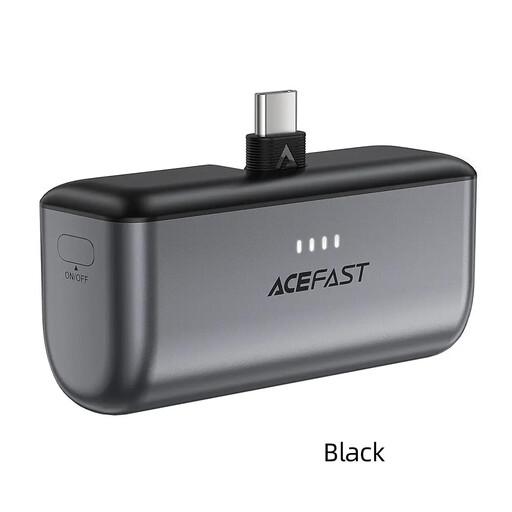
Why This Fits Their Persona: This power bank is designed for ultimate portability. Its tiny, capsule-like form factor and integrated USB-C connector mean it plugs directly into a phone without any cables, making it perfect for slipping into a pocket or small bag for an emergency boost during the daily commute.
It completely eliminates the "Cable Chaos" pitfall. There are no separate wires to remember or untangle; the entire unit functions as a single, convenient charger.
20W PD Fast Charging: Provides a meaningful power boost quickly. Ultra-Compact Design: One of the smallest and lightest forms available for its capacity.
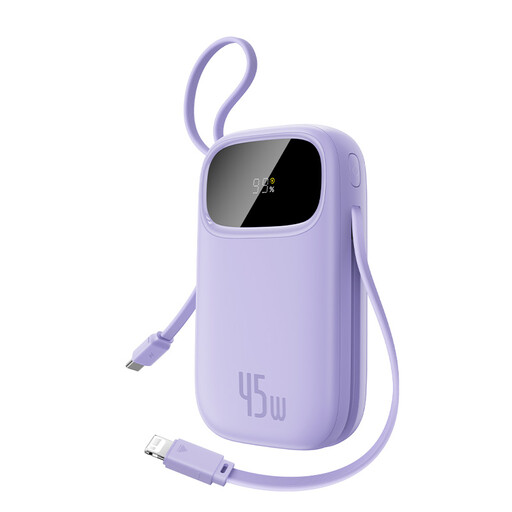
Why This Fits Their Persona: For the student or professional who carries multiple gadgets, this power bank is a complete charging station. It has a solid 10,000mAh capacity and can charge up to four devices at once, making it ideal for long days on campus or while travelling.
It solves the "Cable Chaos" pitfall by integrating both USB-C and Lightning cables, catering to Android, newer iPhones and older Apple devices without needing extra wires.
Built-in Cables: Includes both USB-C and Lightning cables. 45W Fast Charging: The USB-C port can output up to 45W, enough to charge some tablets and ultrabooks.
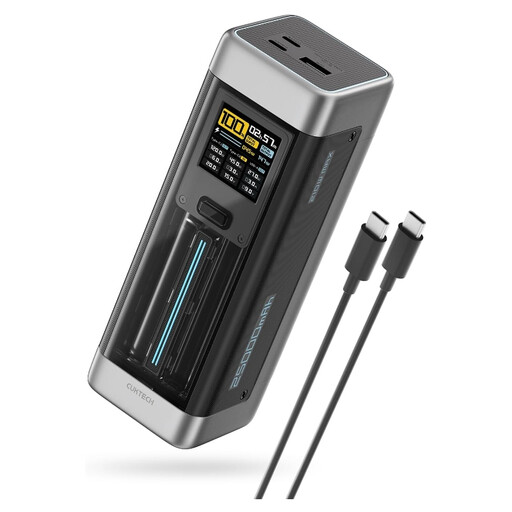
Why This Fits Their Persona: This is a serious tool for professionals who rely on high-powered devices like a MacBook Pro or Dell XPS. With a massive 25,000mAh capacity and a formidable 140W output, it can charge a laptop at nearly the same speed as its wall adapter, ensuring productivity is never interrupted.
It avoids the "Fake Fast Charge" trap by delivering genuine high-wattage power. Its PD 3.1 protocol is specifically designed for power-hungry laptops, unlike cheaper models that claim fast charging but can't handle more than a phone.
140W Single-Port Output: Capable of fast-charging high-performance laptops. Flight-Approved Capacity: At just under 100Wh, it offers maximum capacity allowed on flights.

Why This Fits Their Persona: This ultra-slim power bank is tailor-made for users of MagSafe-compatible iPhones. It snaps securely to the back of the phone for effortless wireless charging. The integrated kickstand is a standout feature, allowing for hands-free video calls or media viewing while powering up.
As a MagSafe power bank, it offers another elegant solution to "Cable Chaos." The magnetic connection is secure and efficient, providing a seamless charging experience without any wires.
Integrated Adjustable Stand: A highly practical feature for hands-free use. Premium Build: The alloy construction aids heat dissipation and adds a durable, high-quality feel.
We have compiled a complete, real-time list of products that fully satisfy these strict selection criteria and UK safety regulations.
A common rule of thumb is to expect about 60-70% of the advertised capacity. For a 10000mAh power bank, this means you will have approximately 6,000 to 7,000mAh of usable charge. If your smartphone has a 3,500mAh battery, you can expect between 1.5 and 2 full charges from empty.
Yes, but with strict rules. Power banks must be carried in your hand luggage, not in checked baggage. The capacity must not exceed 100Wh. Most power banks, including high-capacity 27,000mAh models, fall under this limit. Always check the Wh rating printed on the casing before you travel.
The price difference often reflects the quality and safety of the internal components. More expensive models typically use higher-grade lithium-polymer cells that last longer and are more stable. They also incorporate more advanced safety circuits to protect against overheating, overcharging and short circuits, safeguarding both the power bank and your valuable devices.